
A Health-First Look at Acetate in Clothing
Organization-authored. Editorial policy · Report an error
Acetate is the smooth, silky material often used for linings in coats and the fabric in drapey dresses. It’s a semi-synthetic fiber, meaning it starts as natural cellulose from wood pulp but undergoes intensive chemical processing to become a fabric. This transformation is where the health considerations arise, as the final material is a bioplastic with a unique profile of tradeoffs.
What People Commonly Assume
It’s easy to see why people think acetate is a more "natural" alternative to polyester. It comes from wood pulp, and the idea that plant-based materials are inherently better than petroleum-based ones is a powerful assumption. You might even group it with fibers like cotton or linen when checking a clothing label.
But this is where the narrative gets more complex. The journey from wood pulp to finished garment involves substances like acetic anhydride and solvents like acetone. The natural cellulose is chemically altered so profoundly that it becomes a new substance: cellulose acetate, a form of plastic. The final fabric is a product of sophisticated chemical engineering, not a simple gift from the forest.
The Tradeoffs
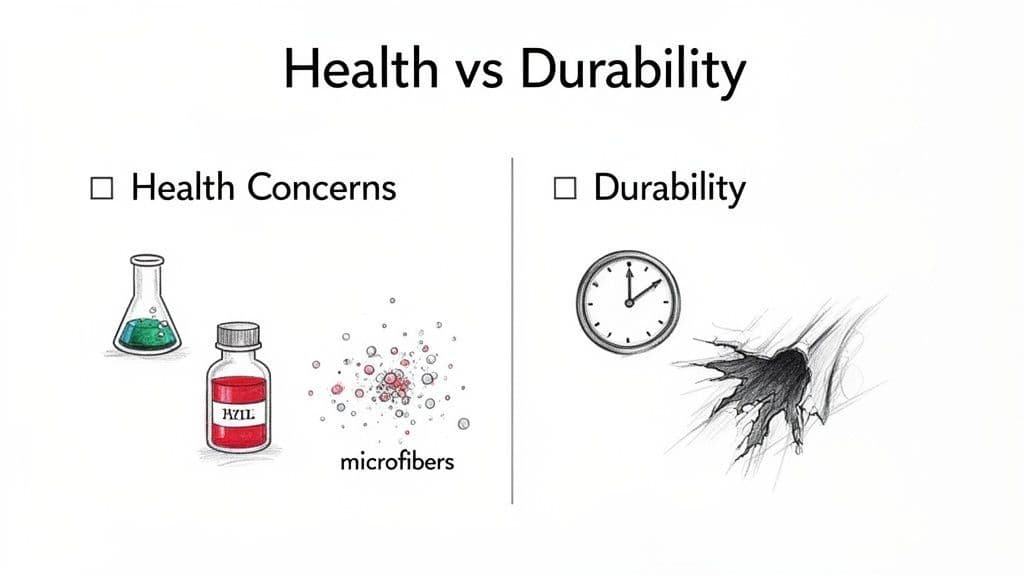
When considering acetate in clothing, the tradeoffs center on chemical exposure, durability, and microfiber shedding. What touches your skin matters, but so does how a garment holds up over time.
- Potential Chemical Exposure: The process to create acetate uses strong chemicals. While manufacturers aim to recover these substances, questions remain about what trace residues might linger on the final fabric. Additionally, acetate requires a specific class of dyes called disperse dyes. Some of these are known skin sensitizers and, in certain cases, can break down to release harmful aromatic amines. The sheer number of chemicals used in textile production can make an otherwise safe fabric a vehicle for irritants.
- Microfiber Shedding: Because it is chemically a bioplastic, acetate sheds microscopic fibers when washed and worn. These particles can enter waterways and eventually our bodies. The full health impact of inhaling or ingesting these microfibers is still an area of active research, but it is a potential concern.
- Durability and Care: Acetate is not a strong fiber. It has poor abrasion resistance and weakens significantly when wet. This makes it a poor choice for everyday, high-wear items. Its greatest weakness is chemical—a single drop of nail polish remover (which contains acetone) will literally dissolve the fabric, creating a permanent hole. This fragility often means it must be dry-cleaned, introducing another layer of chemical exposure and cost.
What to Look For on Labels
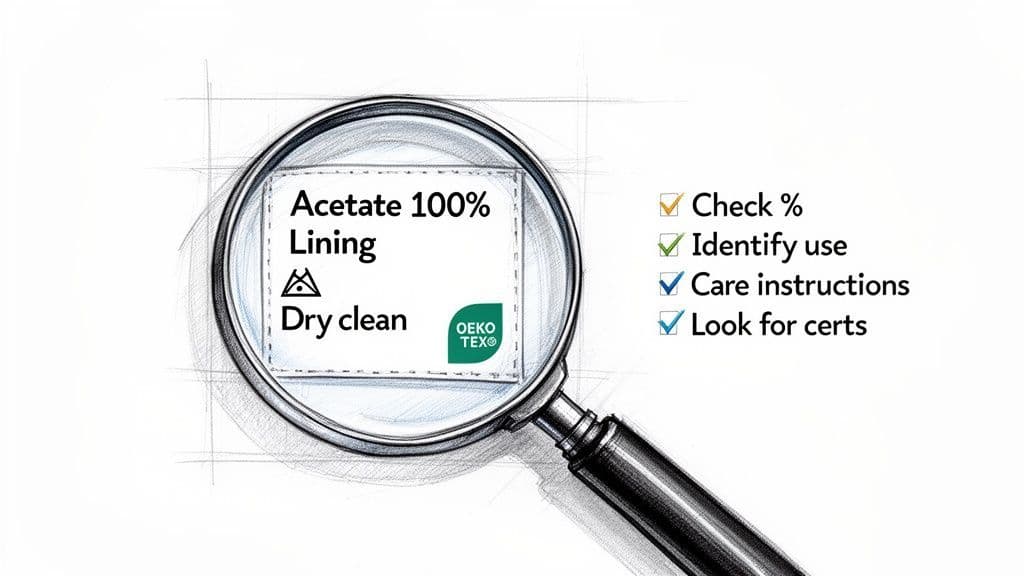
The label is your starting point for making an informed decision. Here’s what to check.
- Fabric Composition: Is it 100% acetate or a small part of a blend? A formal dress made entirely of acetate has a different risk profile than a wool coat where acetate is only used for the lining. The percentage tells you how much the material will define your experience.
- Garment Use: Context matters. Consider a suit jacket lining. It's not the primary fabric, but it may have low-level contact with your skin all day. In a situation like that, the potential for irritation from processing chemicals or dyes becomes more relevant.
- Certifications: The care tag often says "Dry Clean Only," which has its own chemical implications. A more helpful sign is a third-party certification. Look for OEKO-TEX Standard 100, which guarantees the final product has been tested for a long list of harmful substances, including the specific disperse dyes used on acetate.
Key Takeaways
- Acetate is a bioplastic. It starts as wood pulp but is chemically transformed into a new material.
- Health concerns are linked to chemicals. The primary risks come from residual processing chemicals and the disperse dyes used to color the fabric.
- It's a delicate material. Acetate is not durable and requires specific care, often dry cleaning.
- Look for certifications. An OEKO-TEX label is the best assurance that the garment has been tested for harmful substances.
Limitations and Uncertainty
This analysis is based on available research, but there are clear limitations.
- Most brands do not disclose the specific chemicals used in their supply chains.
- We have not performed our own lab testing on individual acetate garments.
- Individual sensitivity to chemicals varies greatly.