
Why Organic Cotton Is a Healthier Choice for What Touches Your Skin
Organization-authored. Editorial policy · Report an error
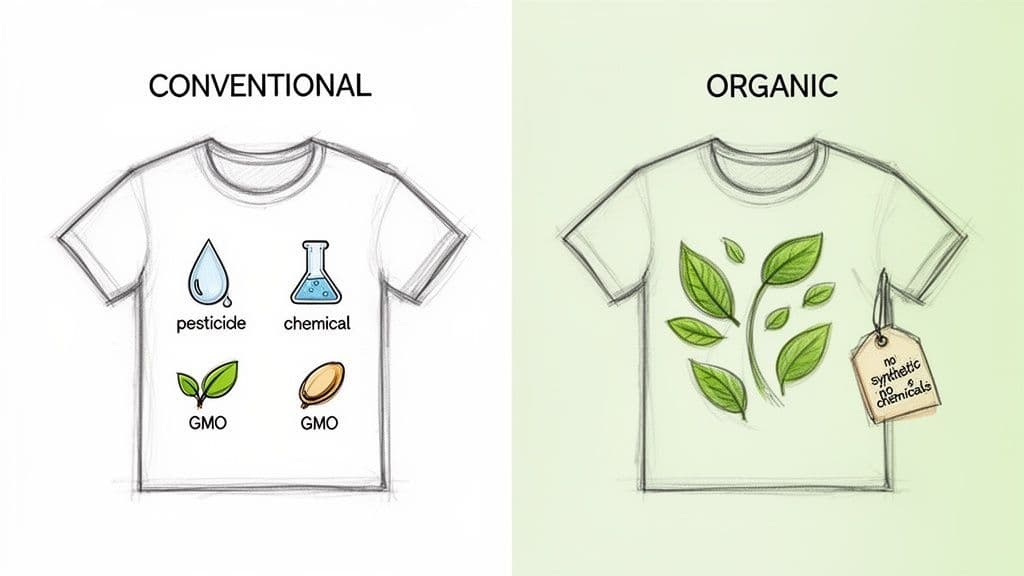
Organic cotton’s primary benefit is not what it adds, but what it avoids. Because it is grown without synthetic pesticides, herbicides, or genetically modified seeds, choosing organic is a straightforward way to reduce your body's exposure to chemicals from the fabrics you wear daily. This matters most for items worn directly against the skin for long periods, like underwear or bedsheets.
What People Commonly Assume
It's reasonable to think of cotton as a pure, natural fiber. The image of a soft, white cotton boll is synonymous with gentle and safe, which is why we trust it for everything from baby clothes to t-shirts. That perception isn't wrong, but it's incomplete. The reality of how most cotton is produced today is far more industrial than that pastoral image suggests.
The Tradeoffs: Conventional vs. Organic Cotton
The choice between conventional and organic cotton involves significant tradeoffs, primarily concerning chemical exposure for both the wearer and the agricultural worker.
- Your Personal Exposure: The most direct health question is what remains in the fabric. While processing washes away many agricultural chemicals, the bigger concern for some comes from finishing agents like formaldehyde (for wrinkle resistance) or certain azo dyes, which can be skin irritants. Organic processing standards, like GOTS, restrict these chemicals.
- Worker and Community Health: This is where the tradeoff becomes less obvious. The most severe health impacts of conventional cotton are borne by farmers and their communities. The World Health Organization classifies many pesticides used in cotton farming as highly hazardous. Runoff can also contaminate local water supplies.
- Environmental Impact: Conventional cotton is a water-intensive crop that relies on synthetic, fossil-fuel-based fertilizers. Organic farming methods, such as crop rotation and composting, improve soil health, which helps the soil retain water and sequester carbon from the atmosphere. The pesticides used in conventional cotton farming are among the most hazardous chemicals in the world—responsible for thousands of poisoning cases among farmers annually.
- Cost and Availability: Organic cotton products often come with a higher price tag. This is due to more labor-intensive farming practices, smaller yields, and the costs associated with certification. This is a practical consideration for many households.
An everyday example highlights the exposure context: an organic cotton t-shirt may offer a marginal benefit for the wearer, but choosing organic cotton underwear—which is in close, constant contact with sensitive skin all day—presents a more meaningful reduction in potential chemical exposure.
What to Look For on Labels
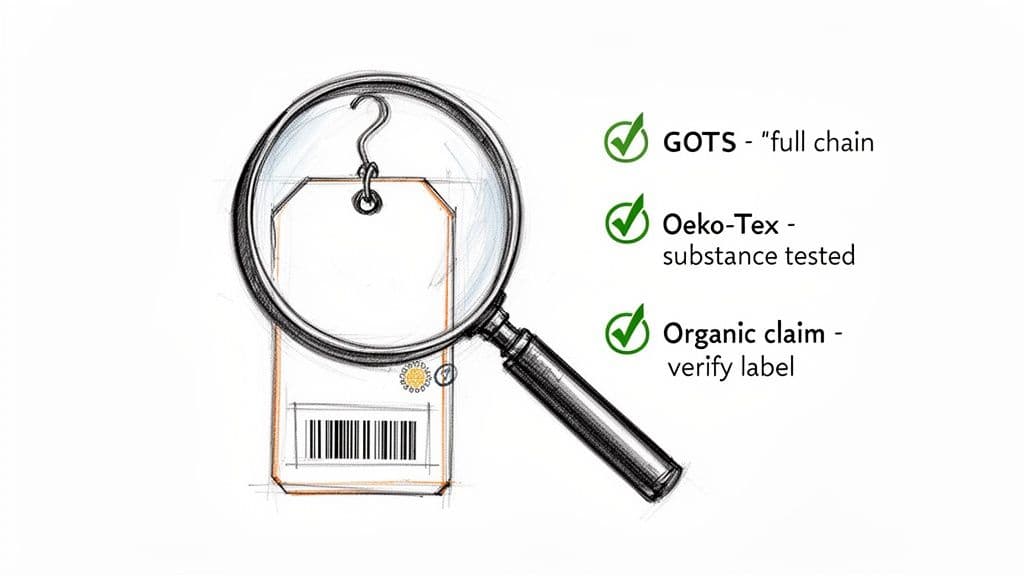
Labels can be confusing, so knowing which certifications matter is key to making an informed decision. The term "organic cotton" alone only describes how the fiber was grown.
- Global Organic Textile Standard (GOTS): This is the most comprehensive certification. It verifies the cotton is organically grown and—more importantly for your health—that the entire processing chain (dyeing, finishing) avoids a long list of harmful chemicals, including specific azo dyes, formaldehyde, and heavy metals. This is the gold standard for health-focused consumers.
- Oeko-Tex Standard 100: This is a safety certification, not an organic one. It tests the final product for a list of over 350 harmful substances. A garment can be made from conventional cotton and still earn an Oeko-Tex label. It’s a good indicator of final product safety, but it doesn't speak to the farming practices or the full environmental footprint.
The analytical stance here is clear: for those prioritizing health, a GOTS certification offers a far more robust assurance than a simple "organic" claim or an Oeko-Tex label alone, as it covers the entire production process from seed to finished garment.
Key Takeaways
- The primary health benefit of organic cotton is reducing your cumulative exposure to agricultural and processing chemicals.
- What touches your skin matters. The choice is most impactful for items worn for long hours against sensitive areas, like underwear, socks, and bedding.
- The most significant and certain health risks of conventional cotton are faced by agricultural workers, not the end consumer.
- The GOTS certification is the most reliable indicator that a garment is both organically grown and processed without a long list of harmful chemicals.
Limitations and Uncertainty
There are potential concerns that research has not fully settled. We do not have definitive data on the long-term health effects of low-level pesticide or finishing chemical residues in clothing. Individual sensitivity to these residues varies greatly, and this analysis is not based on our own lab testing of products. Retailer disclosure on processing chemicals can also be incomplete, making a full assessment difficult without third-party certification.
Curious about the materials in your wardrobe? Use our tool to get a clear analysis of any product.