Your Health and Eco-Friendly Clothing Materials: A Guide
Organization-authored. Editorial policy · Report an error
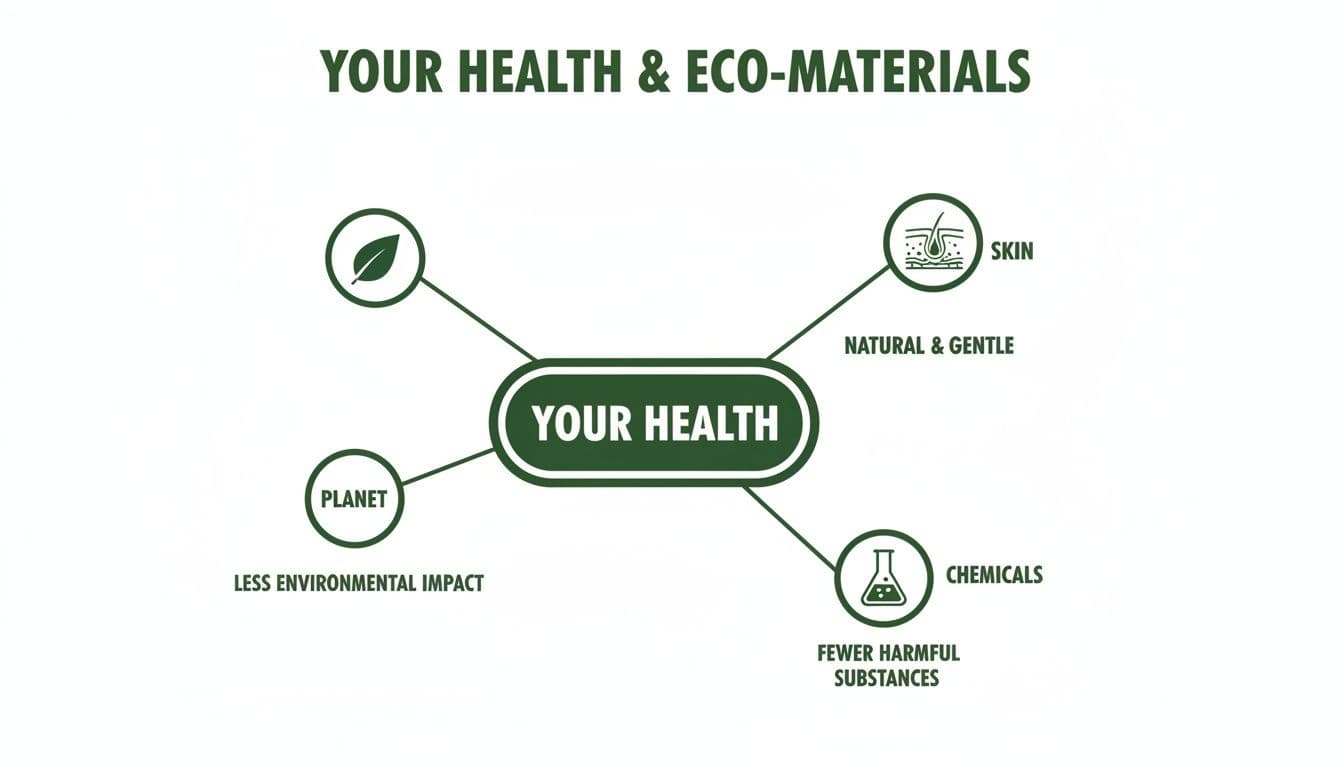
Eco-friendly clothing material is a broad marketing term, not a scientific one. When evaluating a fabric, the primary question is not just its environmental footprint, but its direct impact on your health. What touches your skin matters most, as this is the primary route for potential exposure to residual chemicals from manufacturing.
What people commonly assume
It's easy to see why people think "100% natural fiber" automatically means "safer." A material grown from the earth, like cotton, feels inherently cleaner than a synthetic one created in a lab.
This reasonable assumption misses the crucial middle steps. A natural fiber's journey from field to finished garment is often saturated with chemicals for processing, dyeing, and finishing. What a fabric is made of is only half the story; how it is made into clothing is what determines its potential health impact.
The tradeoffs of common materials
Choosing a material involves weighing its properties against its production realities. The context of how you wear the garment—like a pair of underwear worn all day versus an occasional outer jacket—changes which tradeoffs are most significant.
- Organic Cotton: The primary benefit is the elimination of agricultural pesticides. However, unless the final garment is certified, it can still be treated with irritating synthetic dyes and chemical finishes. Its health advantage is strongest for items with prolonged, direct skin contact.
- Recycled Polyester (rPET): This material reduces landfill waste and energy use, a clear environmental win. The potential health concerns are twofold: the shedding of microplastics during washing, and the possibility of "legacy chemicals" like BPA from the original plastic bottle being present in the final fabric. The risk is most relevant for tight, sweat-wicking activewear.
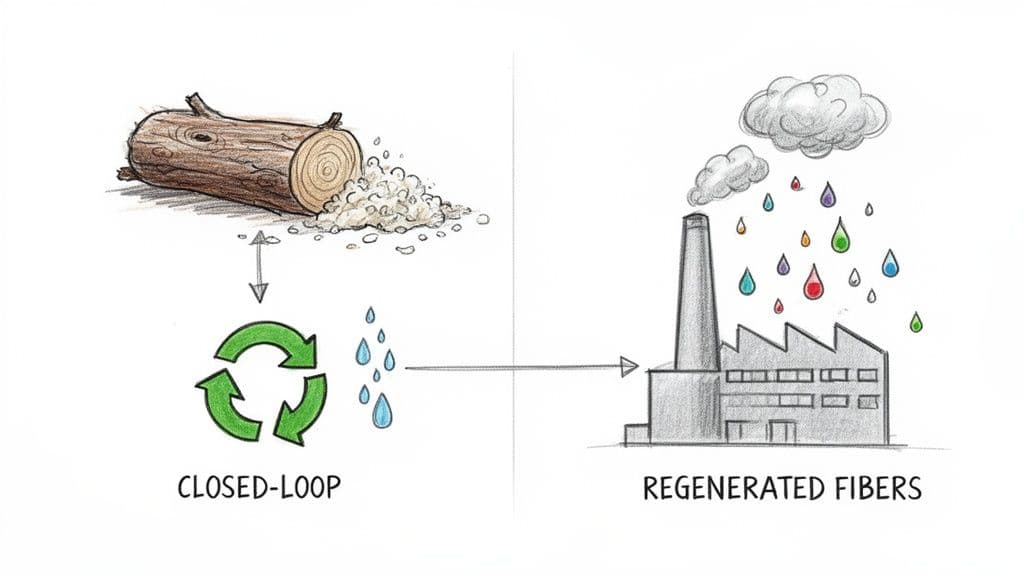
- Conventional Rayon/Viscose: These begin as natural wood pulp, but the standard process uses carbon disulfide—a known neurotoxin dangerous to factory workers and local environments. This is where the tradeoff becomes less obvious; a plant-based origin does not guarantee a safe production cycle. The human cost of manufacturing cheap viscose can be catastrophic.
- Tencel™ Lyocell: A specific type of rayon, Lyocell uses a non-toxic solvent in a closed-loop system, where over 99% of chemicals and water are captured and reused. This effectively contains the chemical process, protecting both workers and the environment. It represents a significant improvement over conventional viscose.
What to look for on labels
Clothing labels can provide critical information if you know how to interpret them. Here is what to look for to make a more informed decision.
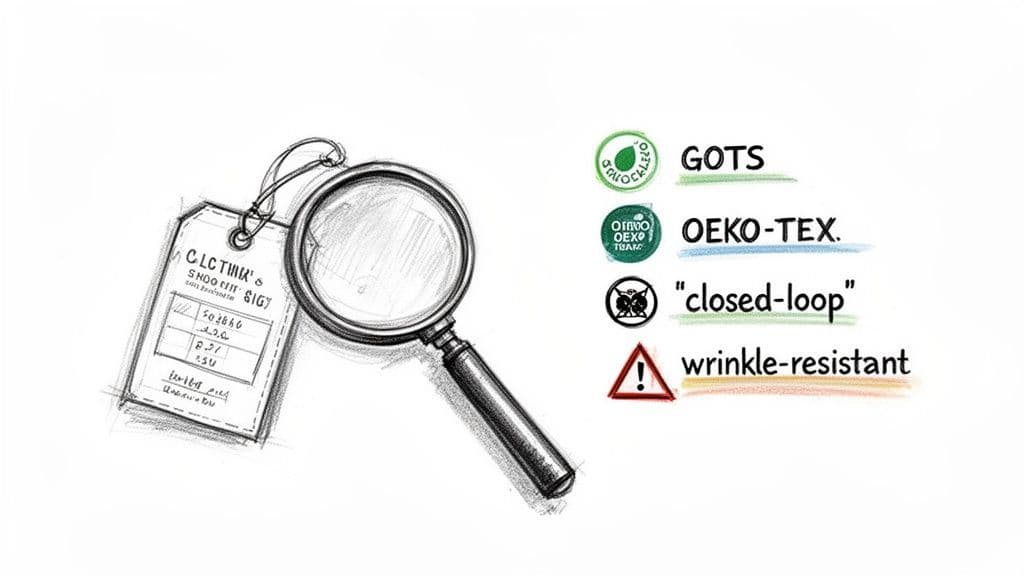
- GOTS (Global Organic Textile Standard): For organic cotton, this is the most important certification. It verifies the organic origin and ensures the entire manufacturing process—including dyeing and finishing—adheres to strict health and environmental standards.
- OEKO-TEX Standard 100: This label certifies that the final, finished garment has been tested and found free from a list of over 100 substances known to be harmful to human health. It’s a strong indicator of a safer product, regardless of the fiber type.
- "Closed-Loop Production": When you see lyocell (often branded as Tencel™), this phrase confirms the safer, contained manufacturing process was used. It's a key differentiator from generic viscose or rayon.
- Performance Claims: Be cautious with terms like "wrinkle-resistant," "stain-repellent," or "easy care." These properties are often achieved by treating fabrics with chemical finishes, such as formaldehyde-based resins or PFAS, which you may prefer to avoid.

Key takeaways
- Focus on what touches your skin first. The most immediate impact of a fabric is its direct contact with your body.
- Context matters. The ideal material for a rain jacket is different from what's best for underwear.
- No material is perfect; it's about understanding the specific tradeoffs for each one.
- Use certifications like GOTS and OEKO-TEX to verify claims about a garment's production.
Limitations and uncertainty
This analysis is based on available research and industry reporting. Key limitations remain.
- Retailer disclosures are often incomplete, making it difficult to trace a garment's full history.
- The long-term health effects of low-level chemical exposure from textiles are still an evolving area of research.
- Individual sensitivity to materials and chemicals varies widely.