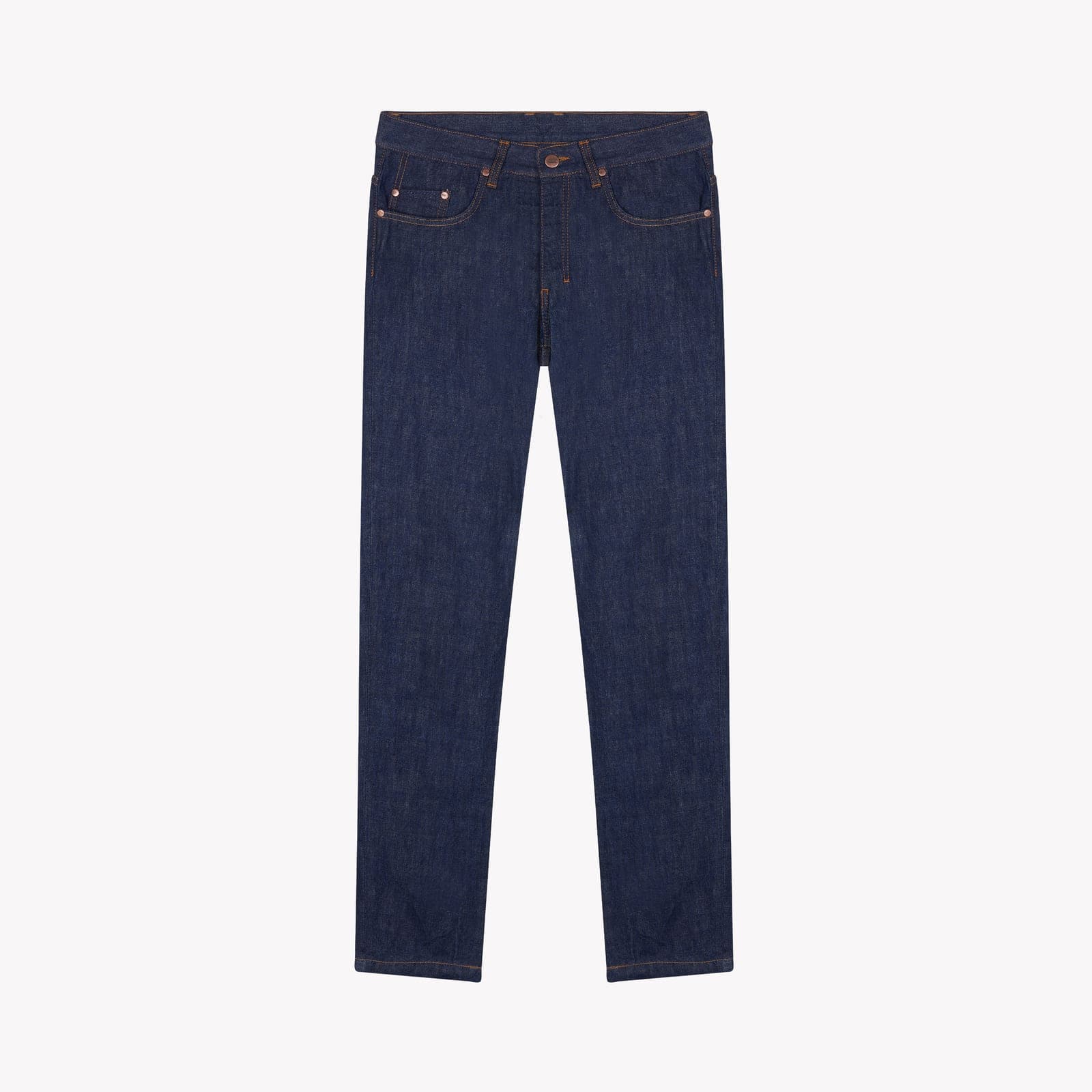
The Health Case for Better Denim
Organization-authored. Editorial policy · Report an error

Environmentally friendly denim is a term with no regulated meaning, often used for marketing. From a health-first perspective, the focus isn't finding a "perfect" jean but understanding the tradeoffs involved—primarily what materials and chemical finishes are touching your skin all day.
What People Commonly Assume
It’s easy to see why people think a jean labeled "eco" is inherently safer. The assumption is that if a brand is taking steps to be environmentally conscious, they are also prioritizing human health. You trust that the label means the homework has been done for you.
This is where the tradeoff becomes less obvious. "Eco" can refer to a single aspect, like using organic cotton. But that same jean might be processed with conventional dyes and chemical finishes, which are potential concerns for what touches your skin. The initial benefit can be undermined later in production.
The Tradeoffs
Making a pair of jeans involves a series of choices, each with practical implications for your health. Context matters, and there are no universally "good" or "bad" options, only different sets of outcomes.
- Raw Materials: The core fabric determines long-term exposure. Jeans made with 100% organic cotton avoid pesticide residues from the farm. However, if that cotton is blended with synthetics like polyester for stretch, it introduces a new issue: microfiber shedding. Wearing and washing these jeans releases plastic particles that become part of the dust in your home.
- Dyeing Process: The iconic indigo color is traditionally achieved with a water- and chemical-intensive process. A potential concern here is the use of certain Azo dyes, which can, in some cases, break down to release aromatic amines, some of which are suspected carcinogens. Newer dyeing technologies reduce water and chemical use, but brands rarely disclose the specifics.
- Finishing Treatments: Any jean advertised with "performance" features like stain or water resistance should be scrutinized. These functions are often created using PFAS (per- and polyfluoroalkyl substances), also known as "forever chemicals." These compounds are linked to numerous health issues and can be absorbed through skin contact. This is where a single pair of jeans becomes a potential delivery system for chemicals you'll never see listed on the tag.
What to Look For
To make an informed decision, you need to look for specific, verifiable information, not vague marketing claims.
- Check the Fiber Content: Look for 100% organic cotton, hemp, or linen. These natural fibers are biodegradable and don't contribute to microplastic pollution in your home.
- Scan for Third-Party Certifications: These are your most reliable indicators. GOTS (Global Organic Textile Standard) certifies the entire production process is organic and low-toxin. OEKO-TEX STANDARD 100 verifies the final product has been tested and is free of a long list of harmful substances.
- Investigate the Dyes and Finishes: Does the brand mention its dyeing methods? Look for terms like "ozone," "laser finishing," or "PFAS-free." If a product page is silent on these details, it is safest to assume conventional methods were used.
Key Takeaways
- The term "environmentally friendly denim" is unregulated. Focus on materials and production methods instead.
- What touches your skin is paramount. Organic cotton reduces pesticide exposure, but synthetic blends (for stretch) create plastic microfiber dust in your home.
- Finishing chemicals, particularly PFAS used for stain resistance, are a significant potential concern for direct, long-term skin exposure.
- Look for third-party certifications like GOTS and OEKO-TEX, which provide independent verification of health and safety claims.
Limitations and Uncertainty
This analysis is based on publicly available information and evolving research. We have not conducted our own lab testing. Retailer disclosures are often incomplete, making a full assessment of any single product challenging. What is known is that certain chemicals are used in textile production; what remains uncertain is the full long-term health impact of low-dose, cumulative exposure.