
Your Health-First Guide to Ethical and Sustainable Clothing
Organization-authored. Editorial policy · Report an error
Ethical and sustainable clothing aims to reduce harm to people and the planet, but the most direct way to think about it is through a personal, health-first lens: what is actually touching your skin? This focus prioritizes materials and production methods that limit your exposure to potentially concerning substances like synthetic dyes, finishing agents, and plastic fibers.
What People Commonly Assume
It's easy to see why people think a label like 'organic' or 'recycled' automatically means a healthier choice. We’re all looking for clear signals to make better decisions without needing a degree in materials science.
But this reasonable assumption can be misleading. A t-shirt made from 100% organic cotton might later be processed with azo dyes, some of which can release irritating compounds on contact with skin. Similarly, a fleece jacket made from recycled plastic bottles sheds microplastic fibers with every wash, which can become part of the dust in your home. These labels are a starting point, not the full story.
The Tradeoffs
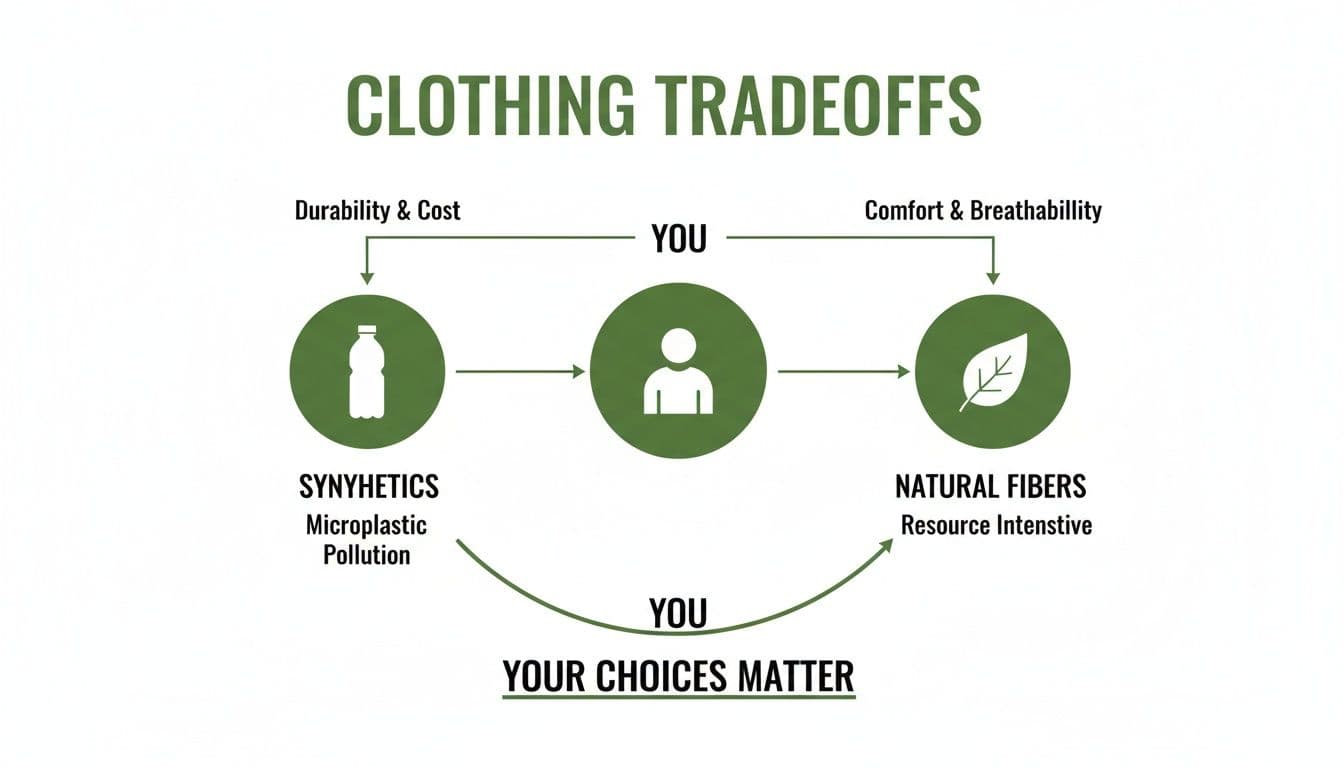
No single material is perfect. Every fabric choice involves a compromise, and the goal is to make an informed decision based on the tradeoffs that matter for what touches your skin.
This is where the tradeoff becomes less obvious. Your body is designed to process and shed millions of non-human cells daily, but it's the synthetic materials it cannot break down that may accumulate over a lifetime—prioritizing materials that your body can safely process, or that don't leave a permanent residue, is the most direct analytical stance for personal health.
-
Synthetics (Polyester, Nylon): These fabrics offer high performance, like wicking sweat during a workout. The tradeoff is direct, prolonged skin contact with petroleum-based plastic. Potential concerns include the shedding of microplastic fibers and the presence of chemical additives, such as PFAS (per- and polyfluoroalkyl substances) used for water-resistance, which are linked to health issues.
-
Natural Fibers (Cotton, Wool, Linen): These materials are breathable, biodegradable, and don't shed microplastics. The tradeoff involves their environmental footprint. Conventional cotton, for example, is a resource-intensive crop that often relies on pesticides. Even organic cotton still requires processing—dyeing, finishing—that can introduce chemicals unless the entire process is certified.
The impact of these tradeoffs depends entirely on context. A synthetic rain jacket that barely touches your skin presents a different exposure scenario than synthetic underwear worn all day against some of the most absorbent skin on your body.
What to Look For
Vague marketing terms like ‘eco-friendly’ or ‘conscious’ have no legal definition and offer no verifiable information about a garment's safety. To make an informed decision, focus on material composition and third-party certifications.
Here is what to check on labels or product pages:
-
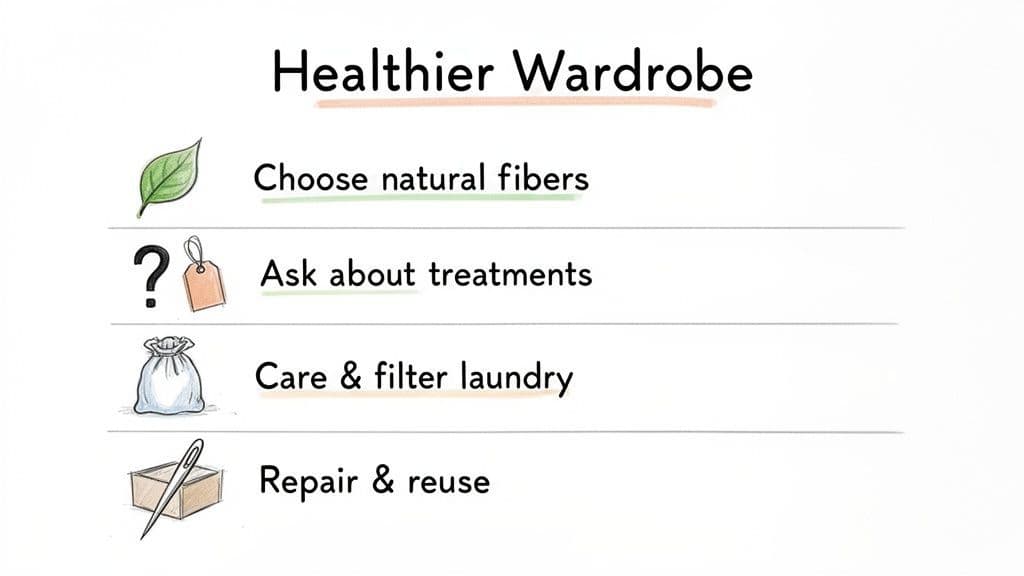
Prioritize Natural Fibers: For items with high skin contact, look for organic cotton, linen, hemp, and wool. The tag is legally required to list fiber content.
-
Seek Third-Party Certifications: These provide independent verification. The two most valuable are GOTS (Global Organic Textile Standard), which certifies the entire production chain, and OEKO-TEX STANDARD 100, which tests the final product for a list of known harmful substances.
-
Question "Recycled" Synthetics: A garment made from recycled polyester is a positive step for waste reduction, but the material is still plastic. Ask if it has also been tested and certified by a program like OEKO-TEX to ensure no hazardous chemicals were introduced during recycling and redyeing.
Key Takeaways
- A health-first approach focuses on what materials touch your skin, prioritizing those that minimize your exposure to synthetic chemicals and plastics.
- Labels like ‘organic’ and ‘recycled’ are starting points, not guarantees of safety. The processing and finishing of a garment matter just as much.
- Every fabric has tradeoffs. The goal is to choose the compromise that makes the most sense for how you will use the garment.
- Prioritize certified natural fibers for high-contact items like underwear, socks, and sleepwear to reduce your daily chemical load. The synthetic workout clothes you sweat in daily could be a greater source of exposure than an old jacket you rarely wear.
- Third-party certifications like GOTS and OEKO-TEX are your most reliable tool for verifying a product's safety claims.
Limitations and Uncertainty
Retailer disclosures on materials and chemical treatments are often incomplete, making it difficult to trace every input without independent lab testing. Furthermore, research into the long-term health effects of low-level exposure from clothing is still evolving. Individual sensitivity to different materials and chemicals also varies significantly. Context matters.
Analyze a product URL with Greener Closet, which scores clothing on its potential impact on your health and the planet.
View all the products at Greener Closet that have already been scored