
Regenerated Cellulose Fiber in Clothing: Viscose, Modal & Lyocell
Organization-authored. Editorial policy · Report an error
Viscose, modal, and lyocell begin with plant cellulose, but their manufacturing processes and finished garments can differ. A cellulosic fiber name alone does not prove a garment's overall health or environmental profile.
Viscose, modal, and lyocell are often marketed as plant-based fabrics. They do start as wood pulp, but they are chemically processed into a unique category of material: regenerated cellulose fiber. This guide explains what that means for your health.
The Plant-Based Assumption
It's common to see a tag for viscose or modal and assume it's as natural as cotton or linen. That's understandable. Brands often emphasize the plant origins of these materials.
However, the journey from wood pulp to soft fabric involves significant chemical processing. This transforms the natural cellulose into a semi-synthetic fiber. This process introduces tradeoffs that matter for what touches your skin.
What Are Regenerated Cellulose Fibers?
Regenerated cellulose fiber is created by dissolving plant pulp, such as wood, bamboo, or eucalyptus, in a chemical solvent to form a thick liquid. This liquid is then extruded through small holes into another chemical bath, where it turns into fine threads. These threads are then spun into yarn. The term "regenerated" indicates that the cellulose from the plant is broken down and reformed into a new type of fiber not found in nature.
Why This Fiber Category Is Growing
The market for these man-made cellulosic fibers (MMCFs) is expanding as an alternative to petroleum-based synthetics like polyester. Production recently reached 8.4 million tonnes, about 6% of the global fiber market. For more detail, see the latest global fiber market data from Texdata.
The Tradeoffs: Viscose vs. Modal vs. Lyocell
Not all regenerated cellulose fibers are created equal. The manufacturing process is what separates them and creates different health and durability considerations.
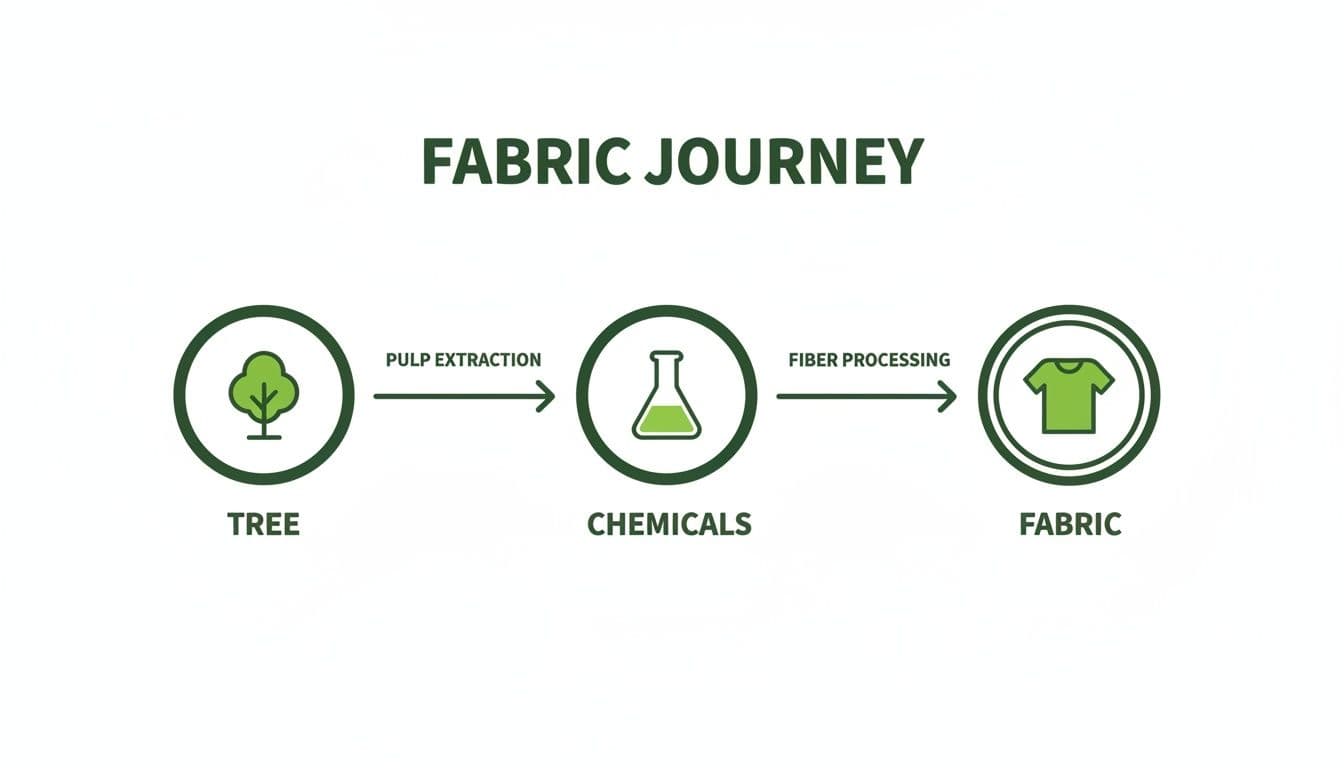
The specific chemicals used and how waste is managed determine a fabric’s final profile. Understanding these differences helps in making an informed decision.
Viscose (Rayon)
This is the first-generation version, known for its low cost and silky feel. It's common in fast fashion.
-
Potential Concerns: Traditional viscose production uses carbon disulfide, a toxic chemical. In facilities with poor controls, it can pose health risks to workers and pollute the local environment.
-
Practical Implications: Viscose is weak when wet and often requires dry cleaning to avoid stretching or warping.
Modal
A second-generation fiber, typically made from beechwood. It's softer and more durable than viscose.
-
Potential Concerns: The process is an improvement on viscose but can still use similar chemicals. The impact depends on the specific factory's standards.
-
Practical Implications: Modal holds its shape well when wet, making it suitable for underwear, pajamas, and t-shirts. See an analysis of Woron's modal mid-rise panties.
Lyocell (e.g., Tencel™)
The most modern version, representing a significant technological advance.
-
Potential Concerns: Lyocell production is generally considered to have a low health and environmental impact. It uses a non-toxic solvent (N-Methylmorpholine N-oxide) in a closed-loop system.
-
Practical Implications: This process recycles over 99% of the solvent and water. The resulting fabric is strong, absorbent, and wrinkle-resistant, making it a durable choice for activewear and everyday clothing. Explore an analysis of these Tencel leggings.
Health Considerations
The choice of fabric involves balancing performance, durability, and potential health impacts. There is no single "best" material; context matters.
-
Chemical Residues: The solvents used in manufacturing can potentially leave trace residues in the final fabric. While levels are usually low, individuals with high chemical sensitivity may be affected. Certifications like OEKO-TEX Standard 100 test for harmful substances.
-
Microfiber Shedding: All fabrics shed microfibers during washing. Unlike plastic-based synthetics, fibers from regenerated cellulose are biodegradable. However, these fibers can carry dyes and finishing agents into waterways. Common doesn’t mean harmless. Washing gently in a laundry bag can help reduce shedding.
-
Skin Health: These fibers are very soft, breathable, and highly absorbent. They pull moisture away from the skin, which can help prevent irritation and bacterial growth. This makes them a common choice for items worn close to the body.
The main tradeoff is between avoiding plastic microfibers (from synthetics like polyester) and the potential for chemical residues. The choice of fiber—viscose, modal, or lyocell—largely determines the nature of this tradeoff. For example, bamboo viscose pajamas are popular for softness, but the production has known tradeoffs. You can see how Greener Closet analyzes a product like this.
These materials are different from truly natural fibers, which are harvested and spun with minimal chemical alteration. To understand the contrast, you can read about the benefits of French linen. Recent studies highlight the superior durability and lower environmental impact of alternatives like lyocell compared to viscose.
What to Look For on Labels
Decoding product tags helps you make a more informed decision based on facts, not just marketing.
-
Specific Fiber Name: Look for viscose, modal, or lyocell. "Rayon" is a generic term, often for viscose. Lyocell (often sold as Tencel™) generally indicates a cleaner production process.
-
Health Certifications: The OEKO-TEX Standard 100 label confirms the product has been tested for a list of harmful substances and is safe from a human-ecological perspective.
-
Fabric Blend: Most garments are blends. The addition of spandex (elastane) means the fabric is no longer fully biodegradable. A blend with polyester reintroduces plastic microfiber shedding.
-
Care Instructions: A "Dry Clean Only" tag is a strong indicator of low-quality viscose that is not durable when wet. Modal and lyocell are typically machine washable on a gentle cycle.
Key Takeaways
-
They are semi-synthetic. Regenerated cellulose fibers start as plants but are chemically re-formed. They are not natural fibers.
-
The process matters most. The manufacturing method determines the fiber's health, environmental, and durability profile. Lyocell (Tencel™) is produced in a closed-loop system with a non-toxic solvent.
-
Look for certifications. An OEKO-TEX Standard 100 label is the best way to ensure the final garment has been tested for harmful chemical residues.
-
Read the care tag. It provides clear clues about the fabric's durability. Machine-washable options like modal and lyocell last longer than dry-clean-only viscose.
Limitations
This analysis is based on publicly available data about manufacturing processes and certifications. We do not conduct our own laboratory tests for chemical residues. Individual sensitivity to materials varies. This information is intended to help you make a more informed choice, not to provide a universal recommendation.
Ready to cut through the marketing noise? Greener Closet analyzes fabrics based on health-first criteria, from chemical safety to microfiber shedding. Analyze a product URL or browse our curated collections of healthier options.