
Sustainable Children's Clothing: A Health-First Guide
Organization-authored. Editorial policy · Report an error
Sustainable children's clothing prioritizes what touches your child's skin. It focuses on materials free from known irritants and avoids persistent chemical finishes, creating a healthier immediate environment for your child. An informed decision considers the entire lifecycle of a garment, from its creation to its disposal, but the most direct impact is on daily health and exposure.
What People Commonly Assume About "Eco-Friendly" Clothes
It's easy to see why an "organic" label feels like the safest choice. Brands use terms like "natural" and "eco-friendly" to signal quality and simplicity, and it's reasonable to assume they represent the best option. This is a good starting point, but it isn’t the complete picture. The potential concerns often arise not from the fiber itself—like cotton—but from the dyes, softeners, and performance finishes added during manufacturing.
The Health Tradeoffs of Clothing Materials
Every material presents a different set of tradeoffs. The choice between a natural fiber and a synthetic one involves balancing factors like durability, function, and potential chemical exposures. The context of how a garment is used matters significantly.
-
Synthetic Fibers and Indoor Air: Materials like polyester, nylon, and fleece are plastics. They shed microscopic fibers, known as microplastics, which can become airborne and contribute to indoor dust. The full health implications of inhaling these particles are not yet fully understood, but their presence in home environments is well-documented. A child's fleece pajamas, worn nightly and washed weekly, are a concrete, everyday example of a garment that can be a consistent source of these airborne particles in their sleeping area.
-
Chemical Finishes and Skin Contact: Performance features like water or stain resistance often rely on chemical treatments. Some of these, like PFAS (per- and polyfluoroalkyl substances), are known as "forever chemicals" because they persist in the environment and the body. A jacket can be made from organic cotton, yet its waterproof coating may introduce a potential concern that the base material does not have. This is where the tradeoff becomes less obvious.
-
Dyes and Skin Sensitivity: Bright, durable colors are often achieved with azo dyes, a large class of synthetic colorants. While most are benign, a small subset can release chemicals called aromatic amines, which are potential skin irritants and, in some cases, are suspected carcinogens. For children with sensitive skin or eczema, this is a relevant factor.
What to Look for on Labels
Certifications act as a third-party check on a product's claims. They provide specific information that helps you make an informed decision.
-
GOTS (Global Organic Textile Standard): This confirms the fiber is certified organic and sets strict limits on chemicals used during processing—including a ban on certain azo dyes and PFAS.
-
OEKO-TEX Standard 100: This certification tests the final product for a list of harmful substances. It ensures the item you buy, from the fabric to the thread and buttons, is free from specific chemicals known to be hazardous to human health.
-
bluesign® APPROVED: This standard focuses on the manufacturing process, ensuring that the chemical inputs are safer for workers, the environment, and the end consumer from the start.
Extending the Life of Children's Clothes
Durability is a key component of a healthier approach. The longer a garment lasts, the less exposure there is to the waste and chemical inputs of new production. How clothes are cared for directly impacts their lifespan and fiber shedding.
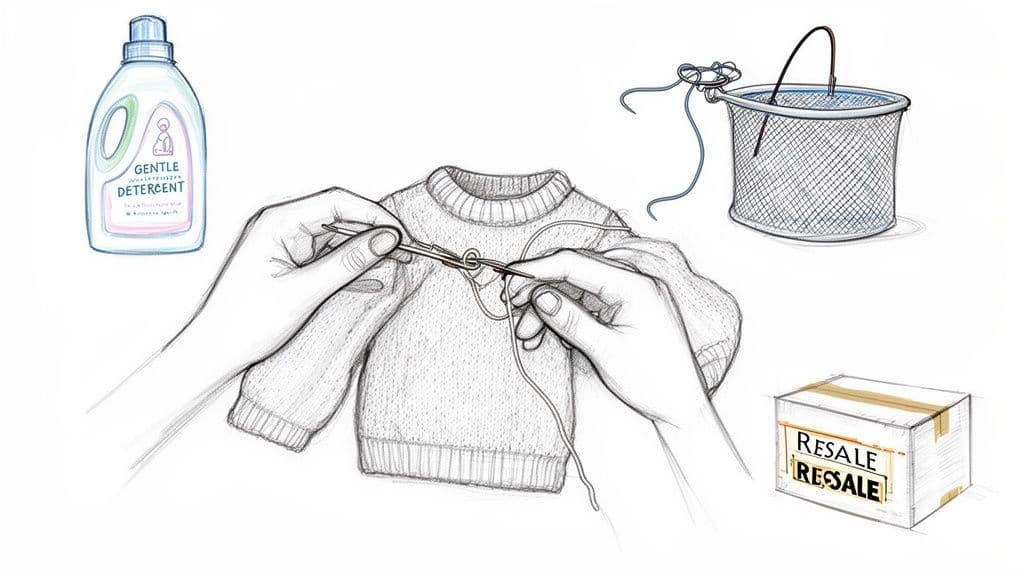
Washing synthetics less frequently, using cold water, and choosing gentle detergents can reduce wear and minimize the release of microplastic fibers. Repairing small tears or reattaching buttons keeps clothing in use. When an item is outgrown, resale or donation is preferable to disposal in a landfill, where synthetic materials can persist for centuries.
Key Takeaways
The most useful analytical stance is this: a garment's health impact comes from its total chemical load, not just the fiber it's made from.
-
Focus first on items with prolonged skin contact, like pajamas and underwear. For these, untreated natural fibers are the most straightforward choice.
-
Use certifications like GOTS and OEKO-TEX as reliable third-party verification for claims about organic content and chemical safety.
-
Recognize that synthetic materials like polyester shed microplastics, which contribute to indoor dust.
-
Performance features like waterproofing often involve chemical finishes that introduce health tradeoffs.
-
Extending the life of clothing through proper care, repair, and reuse is a practical way to reduce overall exposure and environmental impact.
Limitations and Uncertainty
This analysis is based on public information and evolving research. There are known limitations.
-
Brands are not required to disclose all chemical treatments, creating information gaps for consumers.
-
This guide is based on current scientific understanding, which continues to develop, especially regarding the long-term effects of microplastic exposure.
-
We do not perform our own lab testing on products.
-
Individual sensitivity to materials and chemicals varies widely.