
What's Really in Your Clothes? A Guide to Chemicals in Fabric
Organization-authored. Editorial policy · Report an error
Many fabrics contain a cocktail of chemicals used for performance, color, and finish—from the PFAS in a waterproof jacket to the formaldehyde in a wrinkle-free shirt. While these additives provide convenience, some are linked to potential health concerns like skin irritation, hormone disruption, and other long-term risks. Let's look closer at the chemicals used in creating fabrics so you can make informed decisions.
Common Assumptions vs. Reality
It's common to assume that clothes sold today are inherently safe. That’s understandable. We expect regulations to protect us from harmful substances.
The reality is that regulations on textile chemicals vary widely, and many substances used to achieve specific performance features—like stain resistance or vibrant colors—have known health tradeoffs. Common doesn’t mean harmless. The goal is to understand these tradeoffs, not to feel alarmed.
Key Chemical Classes and Their Tradeoffs
Chemicals serve a purpose, but their benefits often come with potential downsides. Here’s a breakdown of the most common ones.
-
PFAS (Per- and Polyfluoroalkyl Substances): Used for water and stain repellency in outerwear and activewear.
- Tradeoff: Known as "forever chemicals," they accumulate in the body and environment. Evidence links some PFAS to endocrine disruption and other health issues.
-
Azo Dyes: Used to create bright, long-lasting colors, especially in reds, oranges, and yellows.
- Tradeoff: Certain types can break down on contact with skin, releasing aromatic amines, some of which are suspected carcinogens.
-
Formaldehyde: Used to create "wrinkle-free" or "easy-care" finishes, primarily on cotton blends.
- Tradeoff: It's a known skin irritant and can trigger allergic contact dermatitis. Inhaled formaldehyde is classified as a carcinogen.
-
Phthalates: Used as softening agents (plasticizers) in the plastisol inks for graphic prints on t-shirts.
- Tradeoff: They are known endocrine disruptors, meaning they may interfere with the body's hormonal systems. They are not tightly bound to the fabric and can be absorbed through skin.
-
Flame Retardants: Added to textiles like children's sleepwear and some uniforms to slow the spread of fire.
- Tradeoff: Many, like organophosphates, are linked to potential endocrine and neurodevelopmental concerns. They can migrate from fabric to skin and household dust.
How to Identify Safer Clothing
You don’t need to be a chemist to make more informed choices. Focus on materials and look for reliable, third-party verification(though sometimes that information can be hard to find!).
Here is an actionable checklist for what to look for on labels and product pages.
-
[ ] Prioritize Natural Fibers: Opt for materials like organic cotton, linen, hemp, and wool. This helps you avoid microplastic shedding from synthetics like polyester and nylon.
-
[ ] Look for Third-Party Certifications: These are your most reliable indicators of chemical safety. The two most credible are:
-
GOTS (Global Organic Textile Standard): Ensures the fiber is organic and bans hazardous chemicals (e.g., specific azo dyes, formaldehyde) throughout the entire production process.
-
OEKO-TEX Standard 100: Tests the final product for a long list of harmful substances, certifying it is safe for skin contact.
-
-
[ ] Question Performance Claims: Be skeptical of marketing terms that imply a chemical treatment.
-
"Wrinkle-resistant" often means a formaldehyde finish.
-
"Stain-resistant" or "water-repellent" is a red flag for PFAS.
-
"Anti-odor" may indicate antimicrobial additives with their own set of concerns.
-
How Chemicals Can Affect Your Health
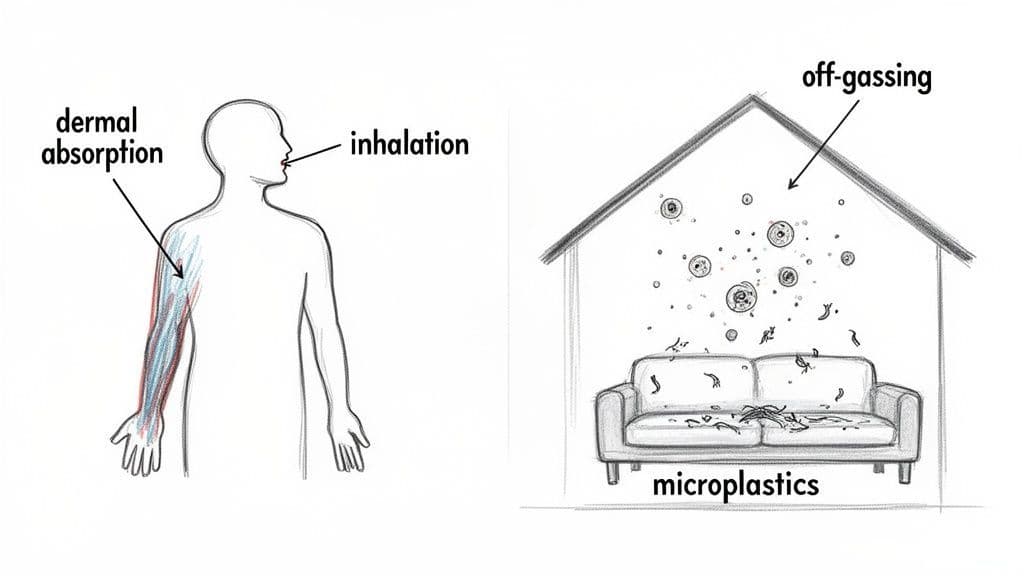
Exposure to chemicals in clothing primarily happens in two ways: through direct skin contact (dermal absorption) and by inhaling chemicals that off-gas into the air.
The potential health impact depends on the specific chemical, the level of exposure, and individual sensitivity. Here are the main areas of concern based on current evidence.
-
Skin Irritation and Allergies: Formaldehyde and certain dyes are well-documented triggers for allergic contact dermatitis.
-
Endocrine Disruption: Chemicals like phthalates and some PFAS are associated with disrupting the body's hormone systems. Evidence is still developing on the long-term impact of low-dose exposure from clothing.
-
Carcinogenic Risk: The International Agency for Research on Cancer (IARC) classifies inhaled formaldehyde as a known human carcinogen. Some aromatic amines released from azo dyes are also considered potential carcinogens.
-
Developmental Concerns: Certain flame retardants have been linked in studies to potential reproductive and neurodevelopmental issues, a key reason why choices like finding the best non-toxic crib mattress matter.
Effectively identifying what's in our clothes requires sophisticated methods. For brands committed to safety, techniques like VOC product emission testing are essential to verify that their products don't release harmful chemicals - although that type of product testing is rare in the textile industry.
The Role of Synthetic Fibers and Microplastics
Fabrics like polyester, nylon, and acrylic are essentially plastics. While not a chemical treatment, the fibers themselves present a health and environmental challenge.
Each wash cycle releases thousands of tiny microplastic fibers. These fibers can carry residual processing chemicals and absorb other pollutants from wastewater, eventually entering the food chain.
Key Takeaways
Navigating this topic is about reducing overall exposure, not achieving perfection.
-
Focus on what touches your skin most. Prioritize safer materials for items worn daily, like underwear, sleepwear, and basics like organic cotton leggings.
-
Trust certifications over marketing claims. Labels like GOTS and OEKO-TEX provide independent verification that a product has been tested for harmful substances. They are your most reliable tool.
-
Opt out of unnecessary performance features. If you don't need a shirt to be wrinkle-free or stain-proof, you can easily avoid entire classes of chemicals like formaldehyde and PFAS.
-
Wash new clothes before wearing. This can help rinse away some residual finishing chemicals and reduce initial exposure. It is less effective for chemically bonded treatments.
-
Context matters. The goal is to make an informed decision by weighing the tradeoffs between a garment's performance and its potential health impact. Consider safer alternatives like non-toxic activewear where performance is key.
Limitations and What Remains Unknown
A complete picture is often impossible. The science is still evolving, particularly around the long-term effects of low-dose, combined chemical exposures (the "cocktail effect").
-
Retailer Disclosures: Brands rarely disclose their full chemical supply chain, making a garment's complete history difficult to trace.
-
Individual Sensitivity: People react differently to chemicals. What causes a rash in one person may have no noticeable effect on another.
-
No Lab Testing: This guide is based on public data and certifications, not direct laboratory testing of individual products.
This isn’t about fear—it’s about information. Every choice is an opportunity to reduce your chemical load, and even small, consistent steps can make a meaningful difference.
At Greener Closet, we analyze products for you. Our system evaluates fabrics for risks like PFAS, azo dyes, and microplastic shedding to help you build a healthier wardrobe with confidence. Browse our curated collections of safer clothing.