
Analyzed Product Profile
Carter's
This Analyzed Product Profile is based on 109 distinct analyzed products in the Greener Closet catalogue. Median, range, and material mix are computed from those products' disclosed composition. They are not a corporate sustainability score.
Sample and scores
Most common materials
Counted by distinct product, not fiber percentage. One product can appear in several rows.
| Material | Products |
|---|---|
| Cotton | 71 |
| Elastane | 23 |
| Organic Cotton | 21 |
| Polyester | 18 |
| ECOVero Viscose | 12 |
| Recycled Polyester | 3 |
Category mix
| Category | Products |
|---|---|
| Pajamas | 66 |
| Bodysuits | 36 |
| Babywearing | 10 |
| Sleep sacks | 6 |
| One-Pieces | 4 |
| Sweatshirts | 2 |
Highest-scoring analyzed products
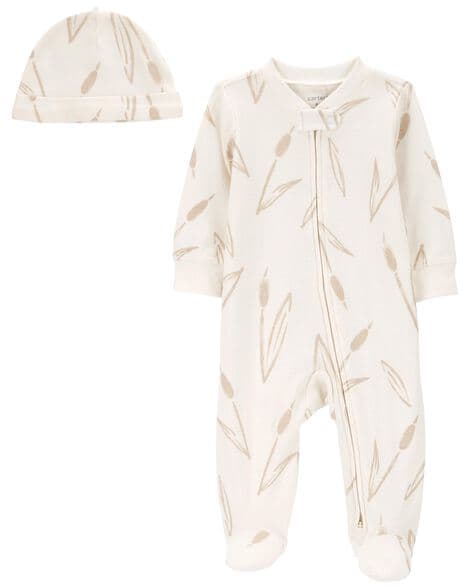
Baby 2-Piece Sleep & Play Pajamas and Cap Set
Brand: Carter's
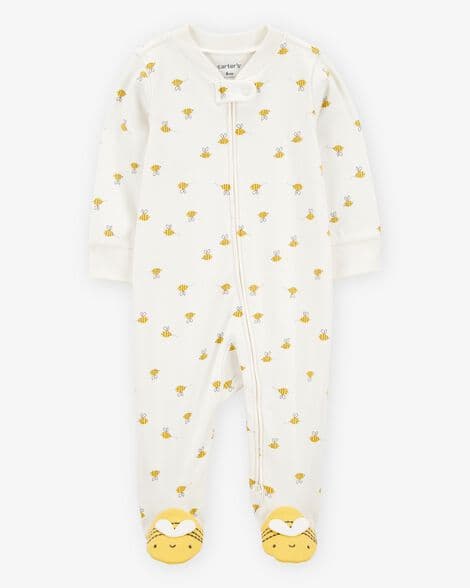
Baby Bee Print 2-Way Zip Cotton Sleep & Play Pajamas - Cream
Brand: Carter's
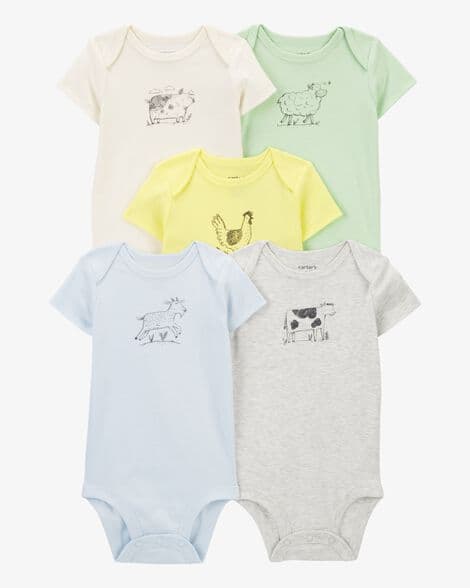
Baby 5-Pack Farm Animal Short Sleeve Bodysuits
Brand: Carter's
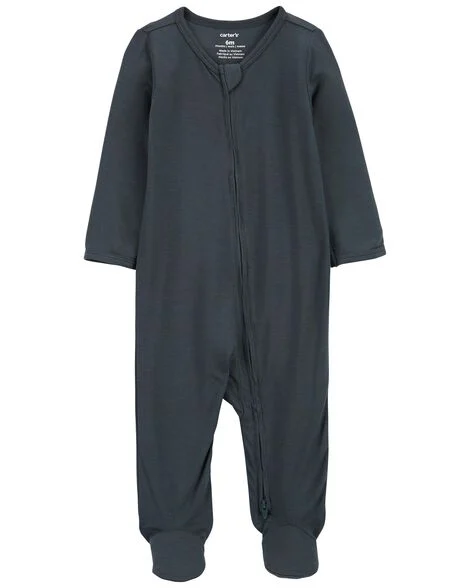
Baby Zip-Up PurelySoft Sleep & Play Pajamas
Brand: Carter's

Baby 1-Piece Organic Cotton Coat Style Pajamas
Brand: Carters
Baby Organic Cotton Sleep and Play Pajamas in Stripes
Brand: Carters
Baby 3-Pack Organic Cotton Bodysuits
Brand: Carters
Baby Organic Cotton Wrap Sleep and Play Pajamas in Stripes
Brand: Carters
How these scores are produced
Product scores on this page are produced automatically. We read the composition and certification details a retailer discloses on the product page, match each material to our research database, and apply the published clothing-score process: every product starts at 100; five material factors — microplastics, PFAS, material half-life, production energy, and fiber shedding — apply penalties weighted by how much of the garment that material makes up; a sixth factor, azo dyes, applies to the garment as a whole; and a small adjustment reflects whether any certification was disclosed. GOTS, bluesign, OEKO-TEX Standard 100, and Cradle to Cradle can also mark a product azo-dye-free. We do not lab-test garments. The Analyzed Product Profile then summarizes those product scores. It is not a corporate sustainability score, and it is not the retired LLM brand assessment.
Are you this brand?
If a figure on this page is wrong, send a correction. We aim to respond within 24 hours. A review can temporarily hide a disputed claim; it is not an automatic permanent removal.
Sourced corporate evidence
These are sourced claims, not a corporate score. Missing topics are not assessed, not scored as zero.
Carter’s, Inc. describes itself as North America’s largest and most enduring apparel company exclusively for babies and young children, with Carter’s as one of its core brands.
company_disclosure
For 2025, Carter’s reported that 86% of its cotton was sustainably sourced: 84% BCI Cotton and 2% organically grown cotton. The company has committed to sourcing 100% of its cotton more sustainably by 2030.
company_disclosure
Carter’s reported that more than 60% of its 2025 sales were supported by responsible cotton sourcing through BCI Cotton or came from Little Planet and PurelySoft collections using organically grown cotton or viscose sourced from responsibly managed forests.
company_disclosure
Carter’s reported a 36% reduction in Scope 1 and Scope 2 greenhouse-gas emissions from its 2019 baseline in 2025. Its stated goal is to reduce absolute Scope 1 and 2 emissions by 50% by 2030 and achieve net zero in direct operations by 2040.
company_disclosure
Carter’s reported 2025 Scope 1 emissions of 7,912 metric tons CO2e, Scope 2 market-based emissions of 28,548 metric tons CO2e, and Scope 1 plus Scope 2 market-based emissions of 36,461 metric tons CO2e.
company_disclosure
Carter’s reported that its responsible-sourcing program includes supplier onboarding, reputational screening, third-party audits covering social compliance, annual assessments, targeted training, corrective-action plans, and ongoing monitoring.
company_disclosure
In 2025, Carter’s reported 666 active factories, of which 657 had passing audit scores and 9 were below passing; it also reported conducting 29 unannounced audits and terminating relationships with nine suppliers that could not demonstrate sustained improvement.
company_disclosure
Carter’s set a goal to improve the well-being of at least 1 million workers in its global value chain by 2030 and reported that more than 797,400 workers had been positively impacted since 2021.
company_disclosure
Carter’s reported that 99% of its baby apparel and sleepwear carried the OEKO-TEX Standard 100 certification label in fiscal 2025, which it describes as a certification for textiles tested for harmful substances.
company_disclosure
- Not assessed — Animal welfare