
Analyzed Product Profile
H&M
This Analyzed Product Profile is based on 34 distinct analyzed products in the Greener Closet catalogue. 35 catalogue rows collapse to this distinct-product count. Median, range, and material mix are computed from those products' disclosed composition. They are not a corporate sustainability score.
Sample and scores
35 catalogue rows collapse to 34 distinct products: 1 duplicate row folded into a product already counted.
Most common materials
Counted by distinct product, not fiber percentage. One product can appear in several rows.
| Material | Products |
|---|---|
| Cotton | 18 |
| Polyester | 13 |
| Recycled Polyester | 10 |
| Spandex | 8 |
| Viscose | 7 |
| Acrylic | 6 |
Category mix
| Category | Products |
|---|---|
| Shirts | 9 |
| Pants | 7 |
| Sweaters | 7 |
| Pajamas | 6 |
| Dresses | 3 |
| Jackets | 3 |
Highest-scoring analyzed products
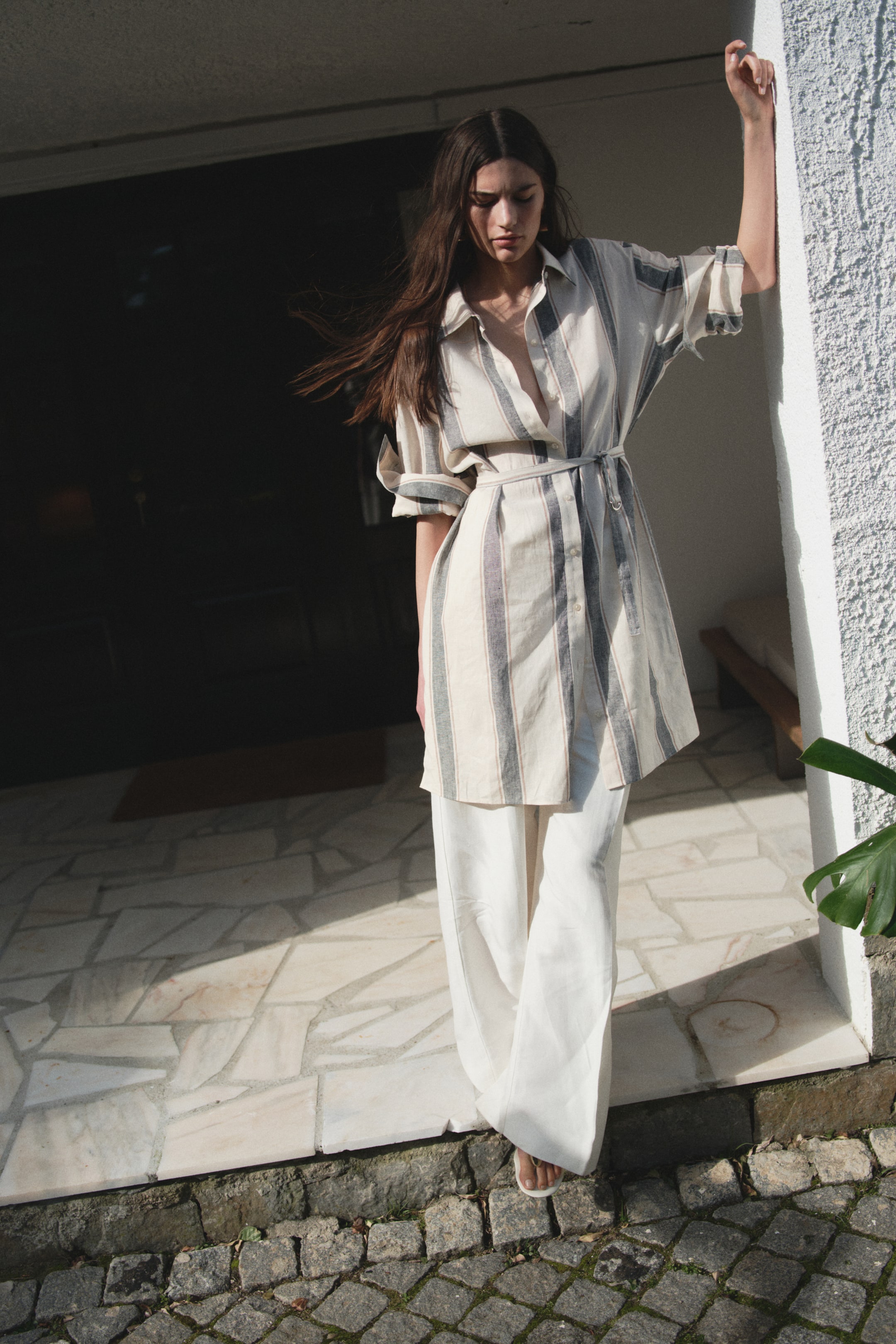
Linen-Blend Shirt Dress - Light beige/black striped - Ladies
Brand: H&M
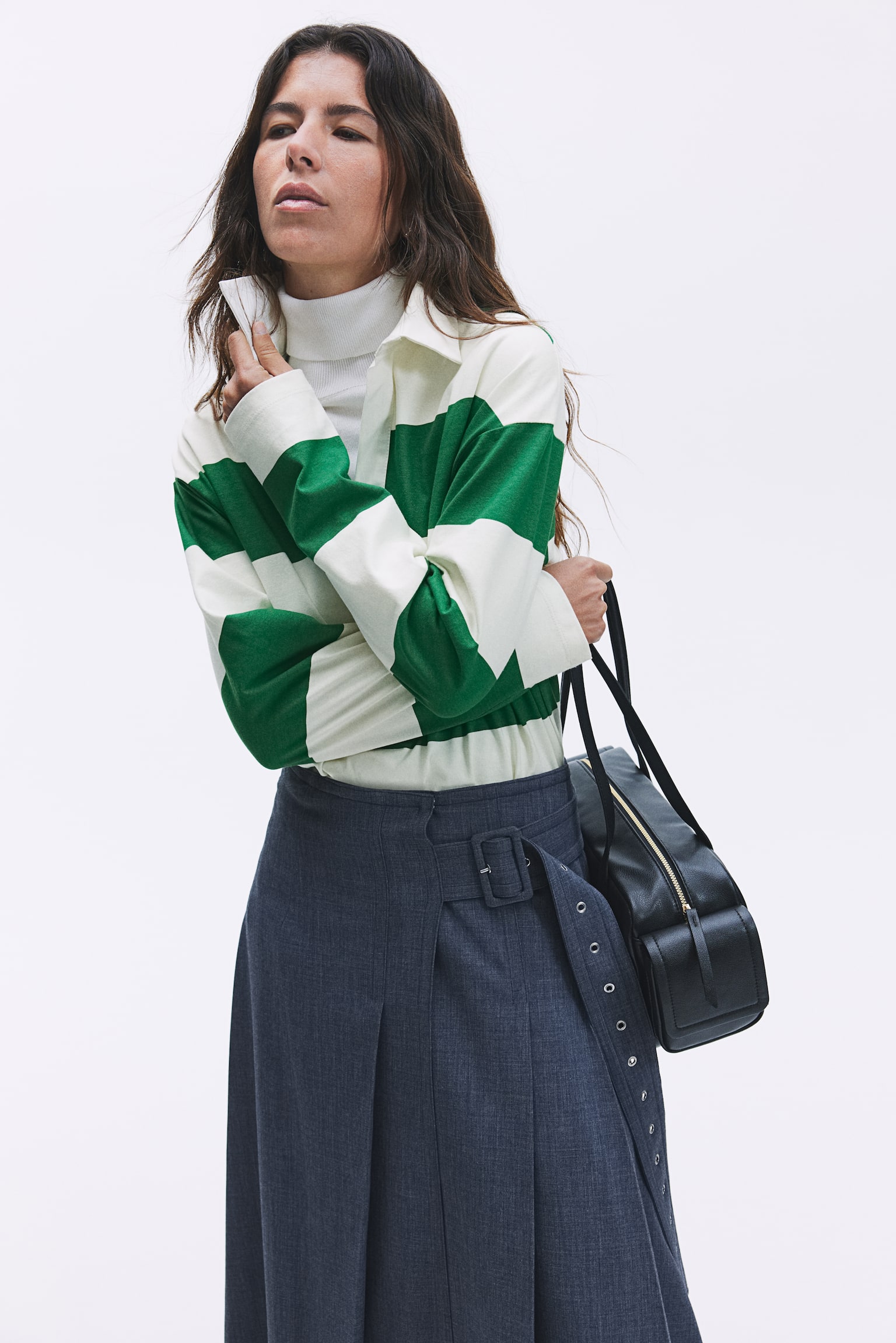
Loose-Fit Polo Shirt
Brand: H&M

Frilled-collar cotton blouse
Brand: H&M

Denim Shirt
Brand: H&M
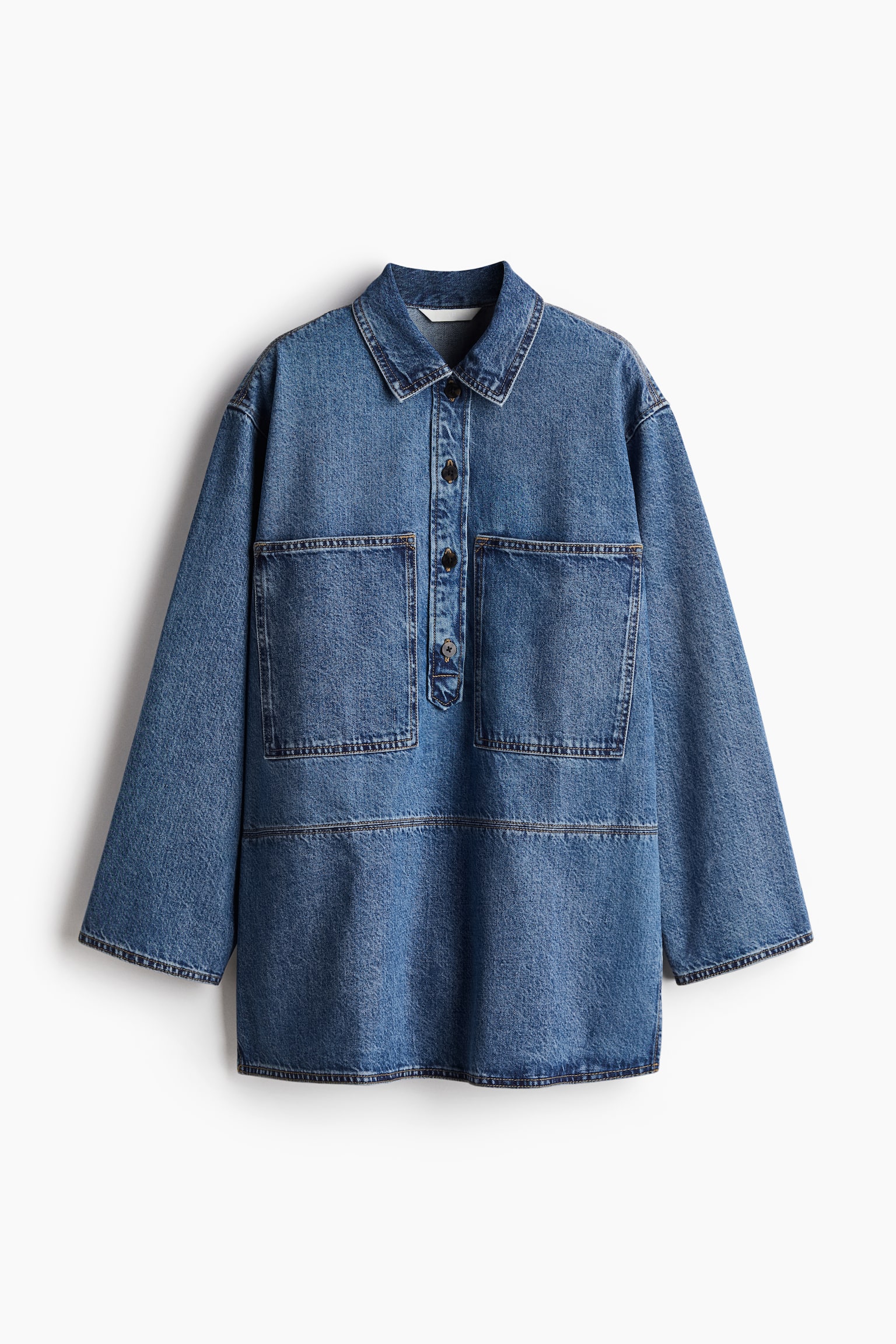
Long Denim Shirt
Brand: H&M
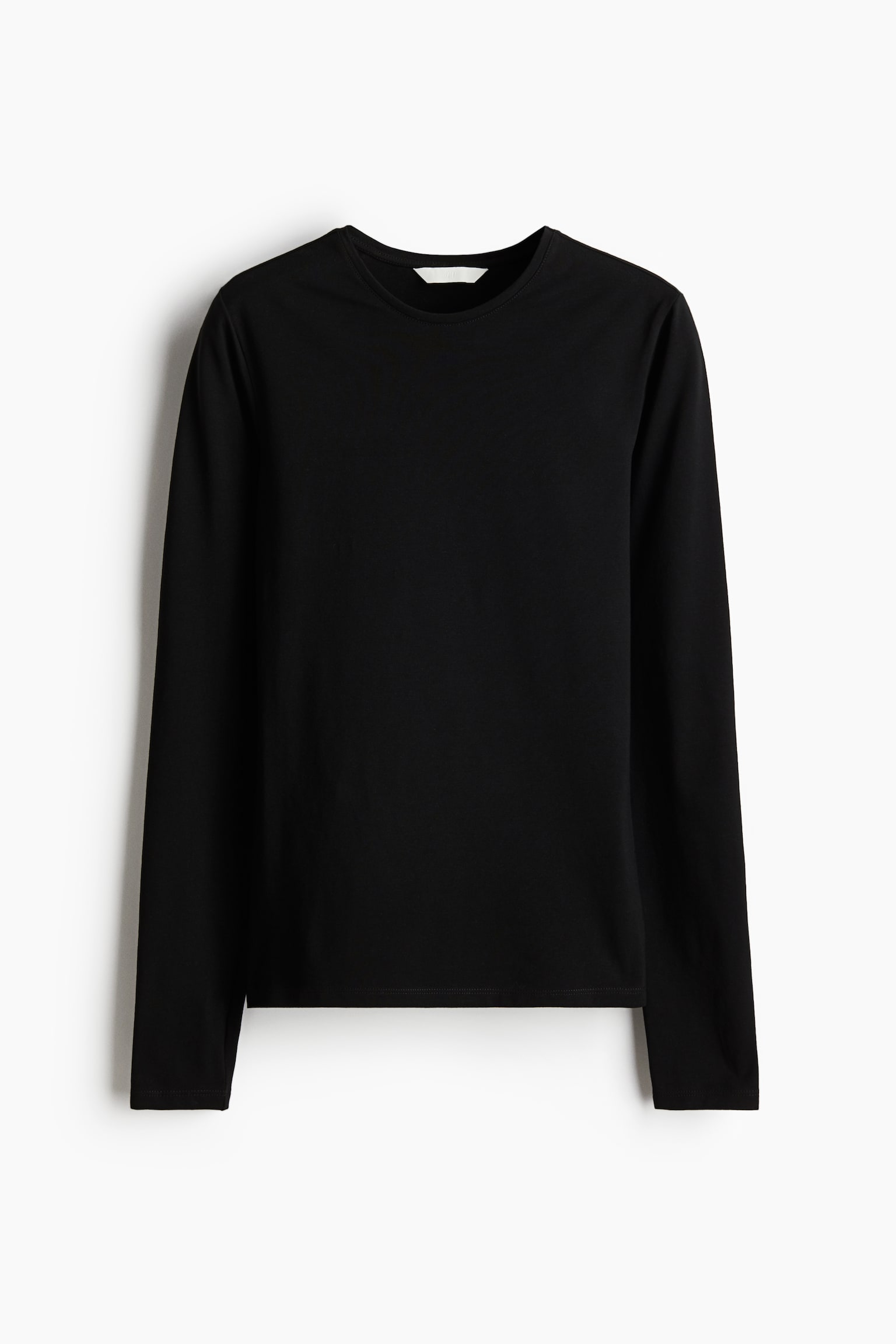
Fitted Cotton Top
Brand: H&M

High Rise Wide-cut Jeans
Brand: H&M
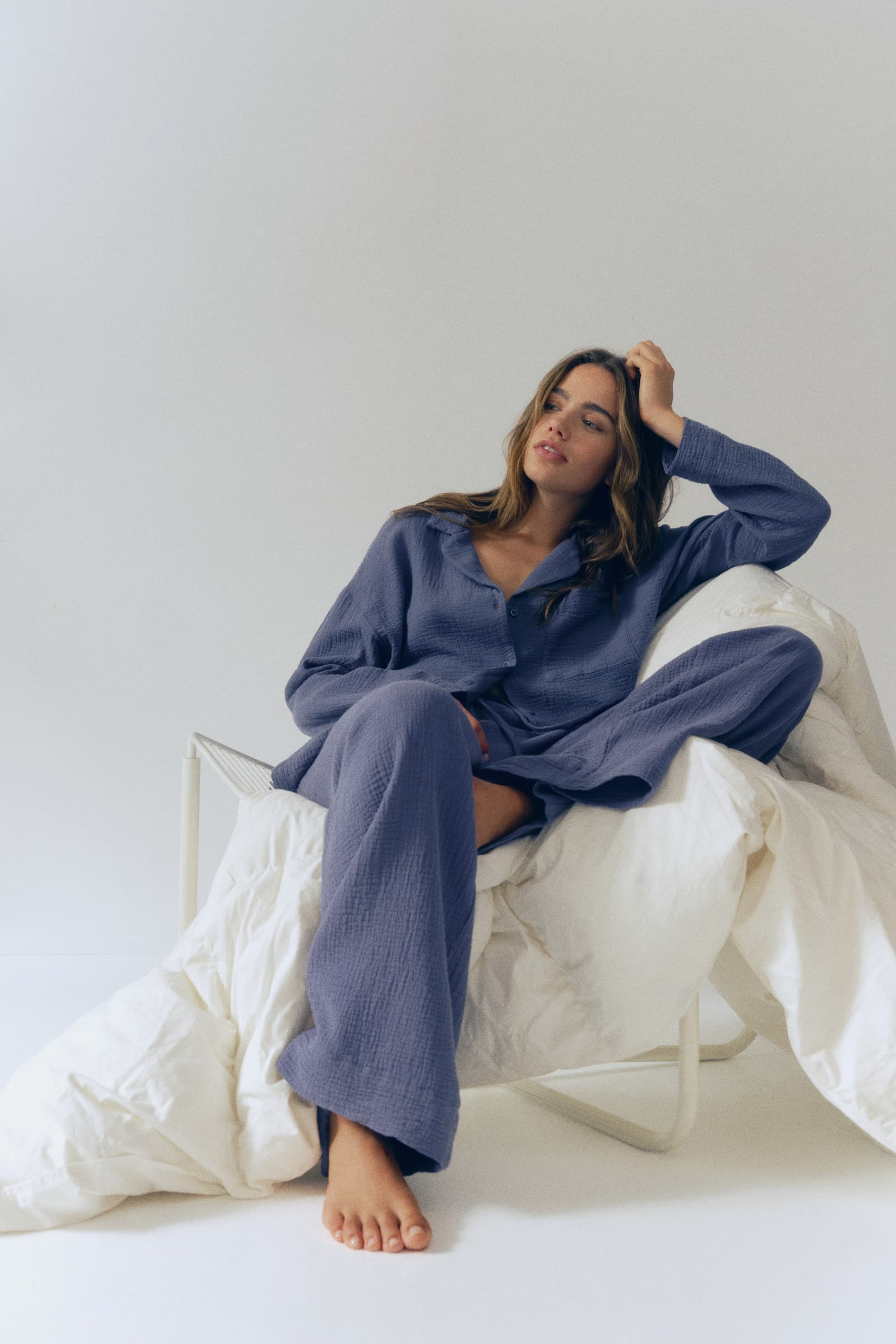
Pyjama en mousseline de coton
Brand: H&M
How these scores are produced
Product scores on this page are produced automatically. We read the composition and certification details a retailer discloses on the product page, match each material to our research database, and apply the published clothing-score process: every product starts at 100; five material factors — microplastics, PFAS, material half-life, production energy, and fiber shedding — apply penalties weighted by how much of the garment that material makes up; a sixth factor, azo dyes, applies to the garment as a whole; and a small adjustment reflects whether any certification was disclosed. GOTS, bluesign, OEKO-TEX Standard 100, and Cradle to Cradle can also mark a product azo-dye-free. We do not lab-test garments. The Analyzed Product Profile then summarizes those product scores. It is not a corporate sustainability score, and it is not the retired LLM brand assessment.
Are you this brand?
If a figure on this page is wrong, send a correction. We aim to respond within 24 hours. A review can temporarily hide a disputed claim; it is not an automatic permanent removal.