
Analyzed Product Profile
Harvest & Mill
This Analyzed Product Profile is based on 26 distinct analyzed products in the Greener Closet catalogue. Median, range, and material mix are computed from those products' disclosed composition. They are not a corporate sustainability score.
Sample and scores
Most common materials
Counted by distinct product, not fiber percentage. One product can appear in several rows.
| Material | Products |
|---|---|
| Organic Cotton | 24 |
| Elastane | 8 |
| Nylon | 7 |
| Cotton | 2 |
| Synthetic Sherpa Fleece | 1 |
Category mix
| Category | Products |
|---|---|
| Pants | 9 |
| Socks | 8 |
| Shirts | 4 |
| Sweatshirts | 4 |
| Shorts | 3 |
| Tanks | 1 |
Highest-scoring analyzed products

Men's Organic Crew Tee in Natural
Brand: Harvest & Mill

Women's Organic Heavyweight Fleece Sweatpants in Black
Brand: Harvest & Mill

Men's Organic Heavyweight Fleece Sweatpants in Natural
Brand: Harvest & Mill
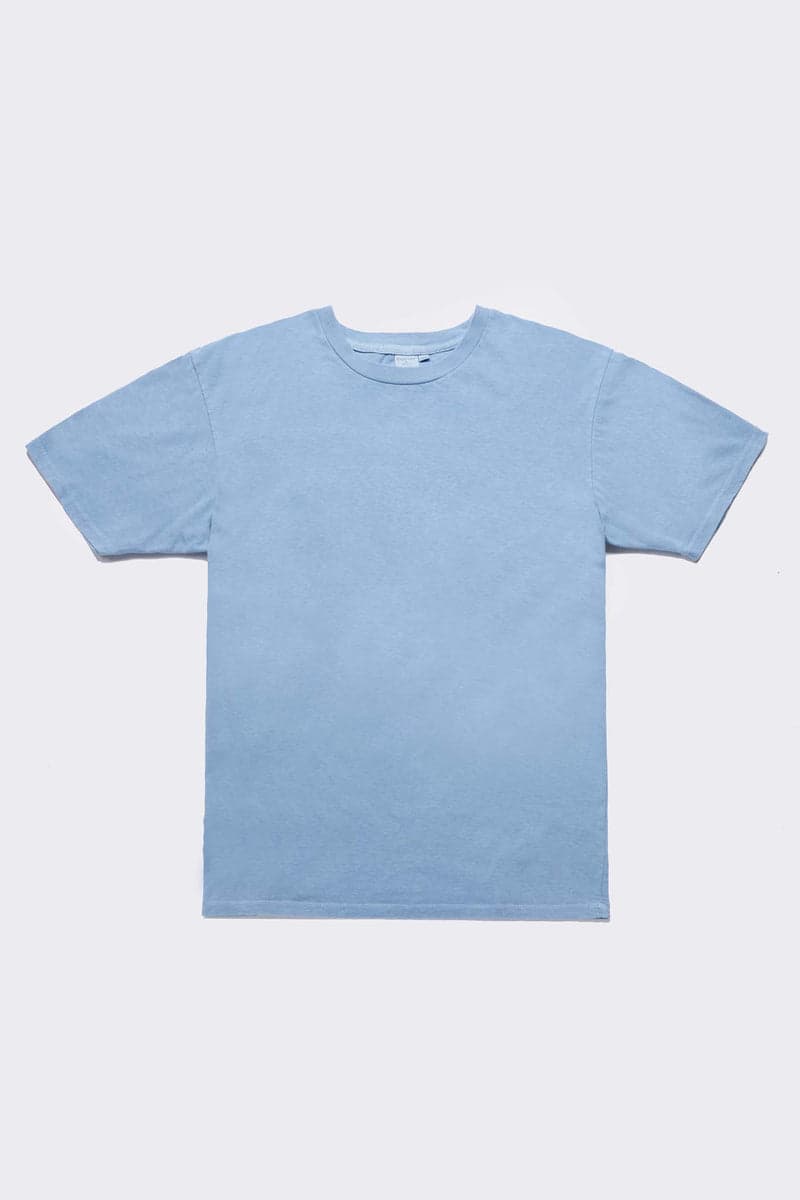
Indigo Dyed Light Blue Men's Organic Crew Tee
Brand: Harvest & Mill

Men's Organic Jogger Pants in Black
Brand: Harvest & Mill

Men's Organic Jogger Pants in Natural
Brand: Harvest & Mill

Men's Organic Tank Top in Black
Brand: Harvest & Mill

Men's Organic Heirloom Brown Jogger Pants
Brand: Harvest & Mill
How these scores are produced
Product scores on this page are produced automatically. We read the composition and certification details a retailer discloses on the product page, match each material to our research database, and apply the published clothing-score process: every product starts at 100; five material factors — microplastics, PFAS, material half-life, production energy, and fiber shedding — apply penalties weighted by how much of the garment that material makes up; a sixth factor, azo dyes, applies to the garment as a whole; and a small adjustment reflects whether any certification was disclosed. GOTS, bluesign, OEKO-TEX Standard 100, and Cradle to Cradle can also mark a product azo-dye-free. We do not lab-test garments. The Analyzed Product Profile then summarizes those product scores. It is not a corporate sustainability score, and it is not the retired LLM brand assessment.
Are you this brand?
If a figure on this page is wrong, send a correction. We aim to respond within 24 hours. A review can temporarily hide a disputed claim; it is not an automatic permanent removal.
Sourced corporate evidence
These are sourced claims, not a corporate score. Missing topics are not assessed, not scored as zero.
Harvest & Mill states that all of its organic cotton is grown in the United States, its yarn is spun and knit in the United States, and its clothing is sewn in Oakland, Berkeley, and San Francisco.
company_disclosure
Harvest & Mill states that it uses only U.S.-grown cotton that is USDA certified organic.
company_disclosure
Harvest & Mill states that its supply chain is traceable from U.S. organic cotton farms through American mills and California sewing factories, describing the process as occurring entirely in the United States from seed to stitch.
company_disclosure
Harvest & Mill states that its fabrics contain no PFAS, formaldehyde, flame retardants, or toxic chemical finishing treatments, and that most garments are dye-free and bleach-free.
company_disclosure
Harvest & Mill states that its packaging and shipping materials are plastic-free, recyclable, and compostable or reusable.
company_disclosure
Harvest & Mill states that it offsets 100% of its carbon footprint, including manufacturing, supply-chain transportation, its office, and shipped orders, using carbon offsets verified by registries it identifies as including Gold Standard, the UN Clean Development Mechanism, and the Climate Action Reserve.
company_disclosure
Harvest & Mill states that its entire product line is PETA-approved, vegan, and cruelty-free, and that it does not use animal-product trims or tags.
company_disclosure
- Not assessed — Independent verification of Harvest & Mill’s environmental, labor, carbon, and animal-welfare claims