
How to Choose the Best Used Clothing Sites for Health
Organization-authored. Editorial policy · Report an error
Shopping for used clothing is about more than finding a deal; it's a decision about what touches your skin. While buying secondhand helps sidestep some chemicals present in new clothes, not all resale sites offer the same level of safety or transparency. This guide analyzes the tradeoffs of different platforms, from peer-to-peer apps to luxury consignment, to help you make an informed decision about your pre-owned purchases.
What People Commonly Assume
It’s reasonable to think any secondhand purchase is an automatic win. Buying used feels like a direct way to avoid the factory chemicals and waste associated with new clothes. For many, finding a familiar brand at a good price feels like the job is done. However, just because a garment is pre-owned doesn’t mean it's free from potential concerns. The real story is woven into its fibers.
The Tradeoffs of Buying Used Clothing
Opting for used clothing means you're swapping one set of potential exposures for another. The key is to understand a garment's material history, as that's where health tradeoffs become less obvious.
- Material vs. History: A secondhand organic cotton t-shirt has likely shed most of its factory treatments after numerous washes. The potential concern here is residue from the previous owner's scented detergents or fabric softeners, which can be an issue for sensitive skin.
- Persistent Chemicals: A used waterproof jacket was designed to hold onto its chemical shield. Its water-repellent finish, likely made with PFAS (per- and polyfluoroalkyl substances), is built to last. These “forever chemicals” do not wash out, meaning long-term skin contact remains a potential exposure route. It's a sobering thought that your skin could absorb toxins from a stranger's old raincoat.
- Microplastics: Even when bought used, a cozy polyester fleece jacket sheds microplastics with every wash. These tiny plastic fibers can become airborne in your home and accumulate in laundry wastewater. Choosing natural fibers like cotton, linen, or wool is a direct way to mitigate this.
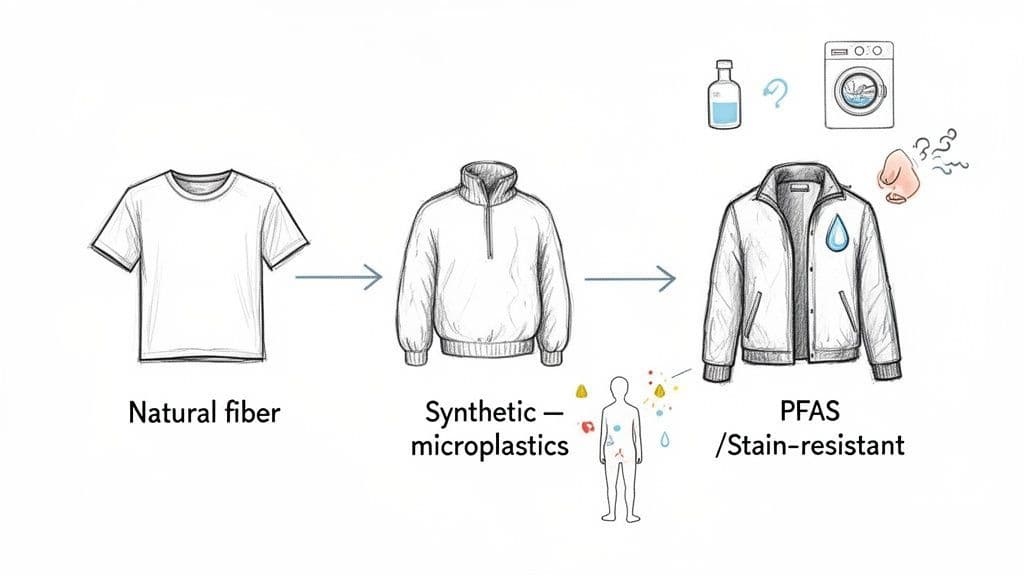
The analytical stance here is clear: a garment's material and original function—like a performance jacket worn for years—often matter more for your health than whether it is new or used.
Types of Used Clothing Sites
The online resale market is projected to reach $350 billion by 2028, according to recent resale market reports. Understanding how different platforms operate is crucial.
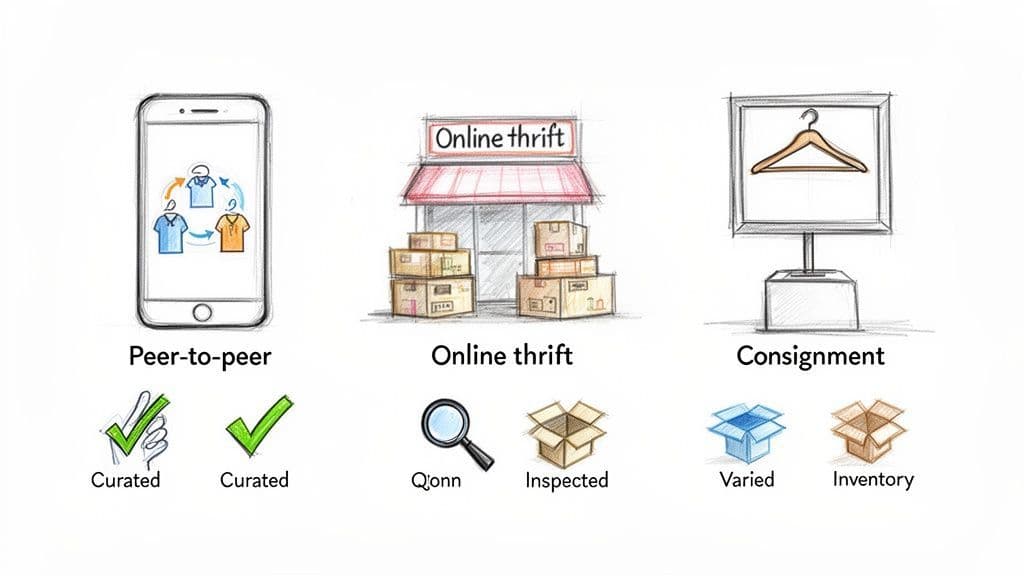
Peer-to-Peer Marketplaces
Sites like Poshmark, Depop, and Mercari are digital garage sales where you buy from individuals.
- How they work: Sellers list, photograph, and ship their own items.
- The health tradeoff: There is no standardized quality control. You are trusting the individual seller's disclosure about condition, odors, and potential allergens.
Managed Online Thrift Stores
Platforms like ThredUP operate like a traditional online store, processing items sent in by sellers.
- How they work: The company inspects, photographs, and ships all items.
- The health tradeoff: This model offers a layer of oversight. However, the high volume of clothing means inspections can be rushed, potentially missing small stains or lingering detergent scents.
Luxury Consignment Sites
Platforms like The RealReal and Vestiaire Collective specialize in designer goods.
- How they work: Experts authenticate and professionally photograph every item.
- The health tradeoff: Quality control is excellent, but the focus is on authenticity, not chemical safety. A dry-cleaned designer blazer might still carry residue from chemical solvents.
What to Look For on Product Pages
Finding healthier pieces on used clothing sites requires you to be an active evaluator. Use this as a framework before you buy.
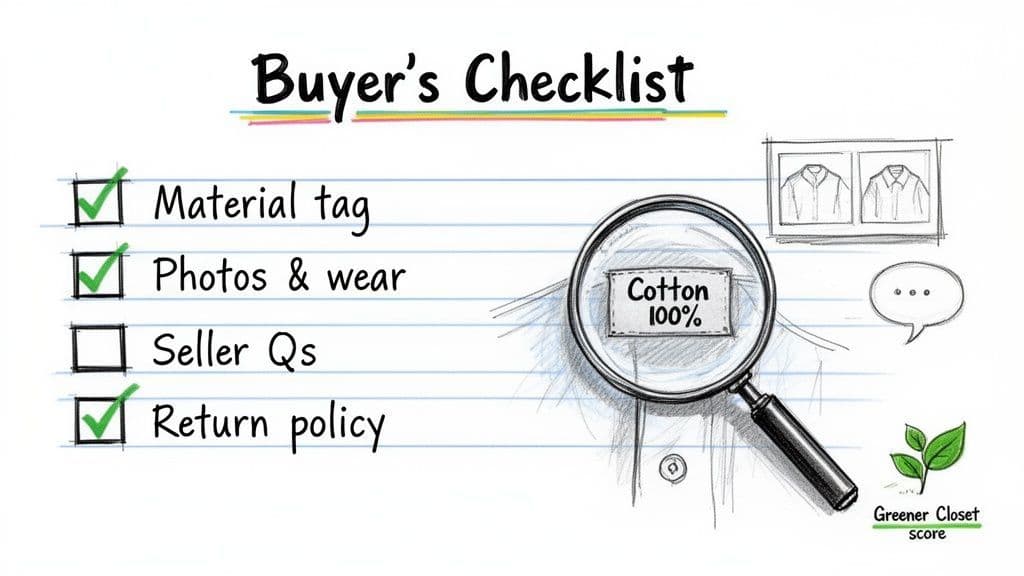
- Check Material Composition: Prioritize listings that specify the fabric. Is it a natural fiber like 100% cotton, or a synthetic blend? If the material isn't listed, that's a significant information gap. For a deeper look at materials, our guide to ethical and sustainable clothing can help.
- Examine Photos: Zoom in on high-stress areas like underarms, cuffs, and inner thighs to check for wear. High-quality listings provide clear photos from multiple angles.
- Ask Targeted Questions: On peer-to-peer sites, ask direct questions. A good starting point is: "Does this come from a smoke-free/pet-free home?" This can help you avoid stubborn odors and allergens.
- Understand Condition Keywords: Learn the terms. "New With Tags" (NWT) means unworn. "Excellent Used Condition" (EUC) implies minimal to no flaws. "Gently Used" suggests visible wear.
Key Takeaways
- Platform Determines Risk: Your exposure to potential issues is directly tied to the business model—peer-to-peer, managed thrift, or luxury consignment.
- Material Over Brand: A garment's fabric composition is a better indicator of potential health concerns like microplastic shedding than its brand label.
- Question the Seller: Use the direct line of communication on peer-to-peer sites to ask about an item’s history, such as home environment and any alterations.
- Wash Everything First: It is a reasonable precaution to wash all secondhand clothes with a non-toxic, fragrance-free detergent before wearing. This addresses surface contaminants and residues.
Limitations and Uncertainty
There are information gaps when buying secondhand. Sellers often do not know a garment's full history, including what detergents were used over its life or its precise manufacturing date.
Without lab testing, it is not possible to be certain about what chemicals may be present in the fabric. Research on the effects of low-level dermal exposure from clothing is still evolving, and individual sensitivity varies. This guide is designed to reduce potential risks, not eliminate them entirely.
At Greener Closet, we help you look past the listing and score any garment based on its material health risks. Get a clear picture before you buy.