
How to Avoid Microplastics
Organization-authored. Editorial policy · Report an error
I didn’t start thinking about microplastics because I wanted to go down a research rabbit hole. I started because plastic kept showing up in places it didn’t seem like it belonged, especially in the things we wear, eat from, and live with every day. Once you notice that pattern, it’s hard to ignore.
Microplastics are tiny plastic particles now found in our air, water, food, and homes. Complete avoidance isn’t realistic. The goal is not elimination. It’s informed reduction in the areas where personal choices actually matter.The Common Assumption
The Common Assumption
When people hear “microplastics,” they often think the solution has to be big and environmental. Beach cleanups. Plastic bans. Cutting plastic out entirely.
Those efforts can help. But they don’t address where most personal exposure actually comes from.
Many people assume bottled water is cleaner than tap water. Or that high-performance clothing has to be synthetic. Or that a “microwave-safe” label means harmless. When you look at this through a health-first lens, those assumptions don’t always hold up.
What Are Microplastics and Why Does Exposure Matter?
Microplastics are plastic particles smaller than 5 millimeters, often far smaller and invisible to the naked eye. They come from the breakdown of larger plastic items like packaging, food containers, water bottles, and synthetic clothing.
They enter the body mainly through ingestion and inhalation. We consume them in food and water and breathe them in through household dust.
There are two main reasons this matters. First, these particles are foreign materials that may contribute to irritation or inflammation. Second, plastics often contain chemical additives such as phthalates and bisphenols, some of which are known endocrine disruptors. Microplastics can also carry other environmental toxins into the body.
Researchers have now detected microplastics in human blood, lungs, placental tissue, reproductive fluids, and breast milk. The long-term health effects are still being studied, but exposure is clearly widespread.
A clear overview of this research appears in UCSF Magazine’s article “The Plastic Inside Us.” Rather than speculating, it focuses on what scientists are actually finding in human tissue and why this issue is being taken seriously now. The takeaway is not panic.
Rethinking Your Wardrobe: Textiles and Health
Clothing is one of the most overlooked sources of microplastic exposure, especially through inhalation.
Synthetic fabrics like polyester and nylon shed microfibers during wear and washing. These tiny plastic strands become airborne, settle into household dust, and are inhaled over time.
This means what you wear affects more than your skin. It affects the air inside your home.
This is why everyday basics matter more than people think. Items worn close to the skin create constant exposure..
Material Tradeoffs: Natural vs. Synthetic
This isn’t about banning synthetics. It’s about using the right materials in the right places.
Synthetic fibers are durable and useful for technical gear and outerwear, but they shed microplastics and are less breathable. Natural fibers like cotton, wool, linen, and hemp do not shed plastic microfibers and are generally better suited for items worn directly against the skin.
The biggest wins come from prioritizing natural fibers for underwear, sleepwear, bedding, and everyday basics.
What to Look For on Labels
Most of the work here happens at the label.
Look for 100 percent natural fibers such as organic cotton or merino wool. Be cautious with blends. Poly-cotton still contains plastic, and elastane or spandex is also a synthetic fiber.
Fabric construction matters too. Tightly woven fabrics shed less than loose or brushed ones. Fleece is one of the highest-shedding materials commonly sold.
If reading labels feels inconsistent or time-consuming or you are not familiar with the material(ie. regenerated cellulose fibers), that’s exactly the problem Greener Closet is designed to solve.
Key Takeaways
-
Synthetic clothing is a major source of microplastics in household dust
-
Natural fibers are best for items worn against the skin
-
Brushed synthetics like fleece shed the most
-
For high-performance needs, alternatives exist. Our guide to non-toxic activewear explores options like merino wool.
How to Manage Microfibers from Laundry
The laundry room is a major point where microplastics enter the environment. Washing synthetic fabrics releases thousands of plastic fibers that go down the drain. While washing less is effective, it’s not always practical. A more targeted approach is to adjust how you wash and capture the fibers that do shed.
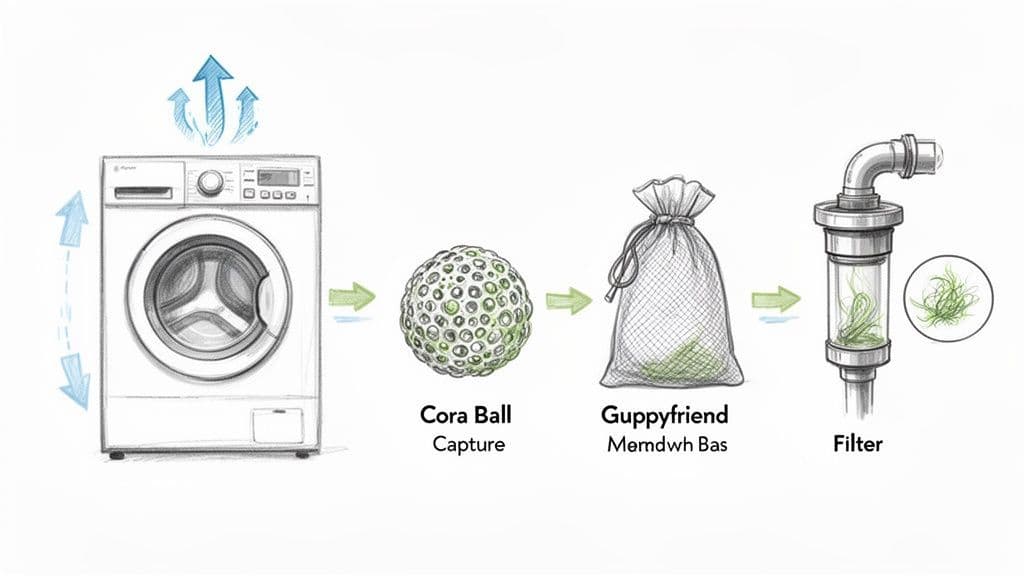
The friction and high water volume in a wash cycle are very effective at stripping fibers from clothes. This makes the process an important place to intervene.
Adjust Your Wash Routine
Simple changes can create a gentler environment for clothes, reducing shedding.
-
Wash Cold: Hot water can weaken fibers. Cold water is gentler and saves energy.
-
Use Shorter Cycles: Less time tumbling means less friction and mechanical stress.
-
Lower the Spin Speed: A fast spin cycle puts high strain on fabric. A lower speed is gentler.
-
Wash Full Loads: A full load reduces the space for garments to thrash around, cushioning them and reducing friction.
Use a Microfiber-Catching Tool
Several tools are designed to intercept fibers before they escape. Studies suggest they can capture between 25% and 85% of shed fibers, depending on the method.
-
Laundry Bags (Guppyfriend): You place synthetics inside these fine-mesh bags before washing. The bag contains shed fibers, which you can then collect and discard in the trash. The main limitation is capacity.
-
Laundry Balls (Cora Ball): This ball is tossed into the wash drum. Its design snags loose fibers as it tumbles with the clothes. It is convenient, though its capture rate can be less consistent.
-
External Filters (Filtrol): This is a more comprehensive solution. The filter is installed on the washer's discharge hose and screens all outgoing water. It requires installation and periodic cleaning but captures the highest percentage of fibers from every load.
Key Takeaways
-
Simple adjustments like washing cold, using shorter cycles, and running full loads can reduce microfiber shedding.
-
Dedicated tools can physically capture fibers. A laundry bag is a low-cost start; an external filter offers the most comprehensive capture.
-
Capturing fibers prevents them from entering waterways.
Your Kitchen: Reducing Ingested Microplastics
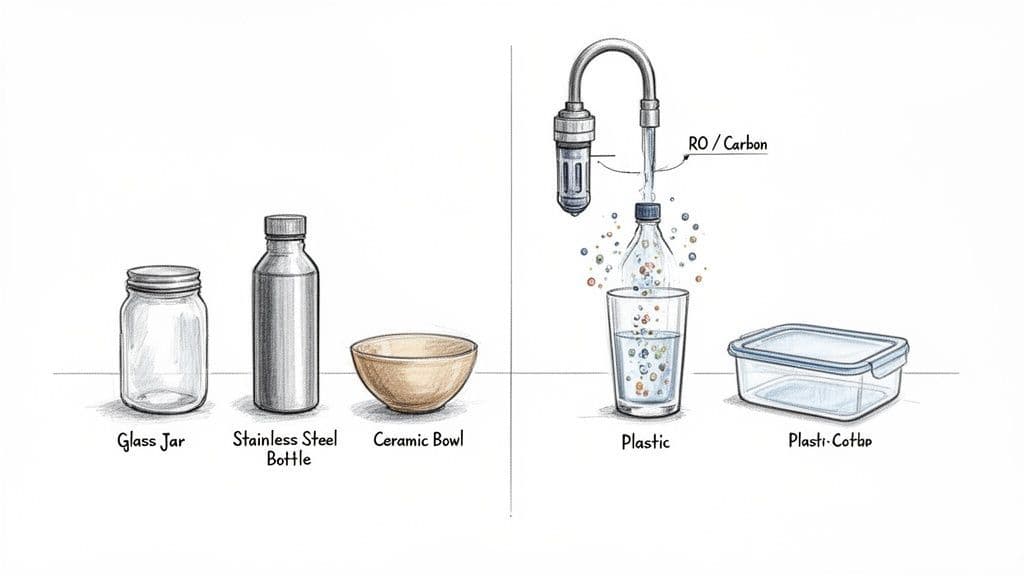
The kitchen is a central point for microplastic exposure through food and drink. Many assume bottled water is a "pure" option, but research often shows it contains significantly more microplastic particles than tap water, shed from the bottle and cap. The key factor is what touches your food and drink, especially when heated.
Material Tradeoffs for Food Storage and Prep
Plastic containers are lightweight and inexpensive, but that convenience has tradeoffs. Heating plastic can accelerate its breakdown, increasing the potential for microplastics and chemical additives to leach into your meal.
-
Plastic: Affordable and light, but it scratches and degrades. Scratches create sites for particle release. The risk is higher with hot foods or when microwaved.
-
Glass: Non-porous and inert, meaning it won’t transfer anything into food. The main tradeoff is that it's heavier and can break.
-
Stainless Steel: Durable, stable, and will not leach. An excellent choice for water bottles and storage, but it cannot be used in a microwave.
-
Ceramic: A stable option for bowls and dishes. Ensure any glazes are certified lead-free.
A "microwave-safe" label indicates the container will not melt—it is not a guarantee against chemical or particle leaching. Switching to glass or ceramic for reheating is a high-impact change.
What to Look For (and Avoid)
Making gradual swaps is a practical approach.
-
Replace plastic cooking utensils used in hot pans with wood, bamboo, or stainless steel to avoid scraping plastic particles into food.
-
Switch from plastic cutting boards, which shed micro-fragments as they get scored by knives, to wood or bamboo.
-
Filter your drinking water. A quality home filter can be more effective at reducing microplastics than relying on bottled water. Look for Reverse Osmosis (RO) systems or carbon block filters with a pore size rating of one micron or smaller.
-
Choose items in glass or paper over plastic packaging at the grocery store when possible.
Key Takeaways
-
Avoid heating food in plastic containers. Use glass, stainless steel, or ceramic instead, especially for hot items.
-
Use cooking utensils and cutting boards made from wood, bamboo, or metal.
-
Filter your drinking water with a system certified for particulate reduction, such as reverse osmosis or a sub-micron carbon block filter.
Other Sources: Dust, Air, and Personal Care
Exposure also occurs through less obvious sources, like household dust and personal care products. It’s a reasonable assumption that the ban on microbeads in rinse-off cosmetics solved the issue of plastics in personal care. However, plastics are still used as polymers for texture and are ubiquitous in packaging.
The Problem in Household Dust
Dust is a significant carrier of microfibers shed from synthetic items in our homes. These airborne particles can be inhaled or ingested.
-
Primary Sources: Synthetic carpets, rugs, upholstery, and curtains are major contributors. Friction from daily use releases fibers into the air.
-
What to Look For: When replacing home textiles, look for natural materials like wool, jute, or cotton. A vacuum with a HEPA filter is effective at trapping these tiny airborne particles rather than recirculating them.
What to Look For on Personal Care Labels
-
Check the ingredients list for common polymers like polyethylene (PE), polypropylene (PP), and nylon-12, which are used as fillers or film-formers.
-
Choose non-plastic packaging. Opt for products in glass or metal, or choose solid alternatives like shampoo bars and bar soaps. This logic also applies to items like a natural linen pillowcase, which reduces skin contact with synthetic materials during sleep.
Key Takeaways
-
Household dust is a primary source of inhaled microfibers, shed from synthetic carpets and furniture.
-
Regularly vacuuming with a HEPA filter can significantly reduce airborne microplastics.
-
In personal care, look for plastic polymers on ingredient lists and choose products in non-plastic packaging where possible.
Limitations
Avoiding microplastics entirely is not possible. Research is ongoing, product disclosures are imperfect, and individual sensitivity varies. This is not about fear or perfection. It’s about reducing unnecessary exposure where the tradeoffs are low.
Action Plan: Where to Focus First
A practical strategy focuses on the changes with the highest impact on personal exposure.
-
Choose Natural Fibers: Choose natural fibers for clothing and bedding that touch your skin daily. An example is choosing 100% plastic-free organic cotton boxers over synthetic blends.
-
Filter Your Water: Filter your drinking water instead of relying on bottled water.
-
Change Your Food Storage: Stop heating food in plastic containers
Those three changes do the most work for the least effort.
View all the products at Greener Closet that have already been scored to see how different materials measure up. Ready to check a specific item? Analyze a product URL now.