
Is Polyester Biodegradable? A Health-First Analysis
Organization-authored. Editorial policy · Report an error
Polyester is not biodegradable. As a synthetic plastic derived from petroleum, it was engineered to resist breaking down. Instead of decomposing like natural fibers, it persists for centuries, fragmenting into smaller and smaller plastic pieces that create potential concerns for human health.
What People Commonly Assume
It’s easy to see why people think polyester is just another fabric. It’s in our workout clothes, our cozy fleece jackets, and our office attire. We handle a polyester shirt just like a cotton one, so we naturally assume it behaves in a similar way. This everyday familiarity masks its true identity—a plastic with very different properties and health tradeoffs.
The Health Tradeoffs of Polyester
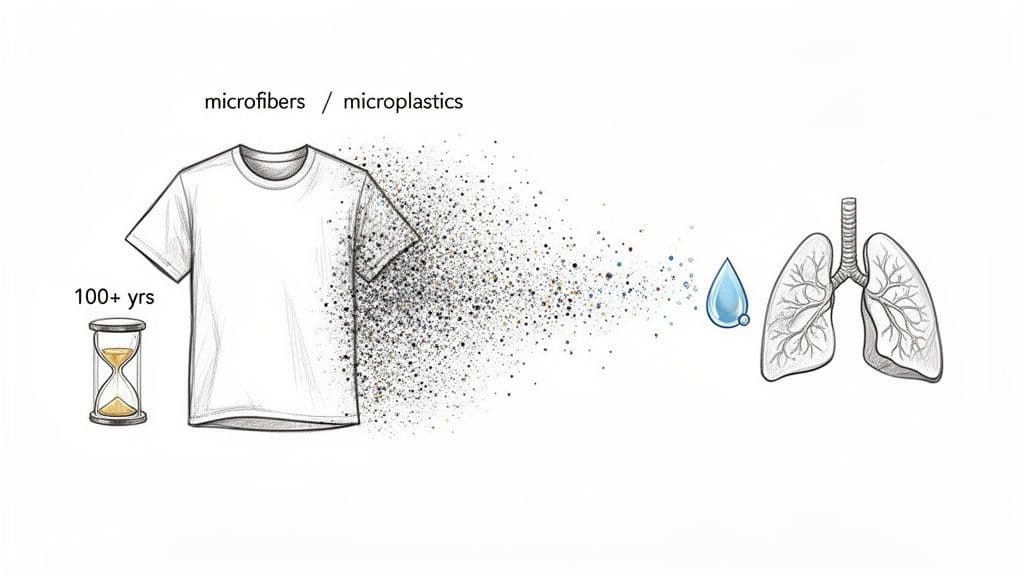
When choosing polyester, the tradeoffs extend beyond environmental impact and touch your personal health directly. The material's durability is directly linked to its persistence.
- Microplastic Exposure: Polyester constantly sheds microscopic plastic fibers. These fibers are a major component of household dust, which we inhale. They also wash out of our clothes, enter the water supply, and contaminate the food chain. Scientists have detected these particles lodged in human lungs, blood, and placental tissue.
- Chemical Leaching: Polyester is made using chemicals that may not stay locked within the fabric. One key substance is antimony, a heavy metal used as a catalyst during production. Research suggests it can leach from the fabric, particularly with heat and moisture. A fleece blanket your child snuggles with every night presents a different exposure scenario than a rain jacket worn occasionally.
- Production Contaminants: Manufacturing polyester is an energy-intensive process that relies on fossil fuels and can release volatile organic compounds (VOCs), contributing to air pollution that affects communities near production facilities. This is where the tradeoff becomes less obvious, connecting a simple fabric choice to broader public health.
The convenience of polyester—its wrinkle resistance and quick-drying nature—is a very effective disguise for the potential health costs associated with a material that never truly goes away. You can learn more about the specific additives used in our guide to the chemicals found in polyester.
What to Look For on Labels
Making an informed decision starts with reading the tag. The goal isn't to achieve a zero-polyester wardrobe, but to be selective about what touches your skin.
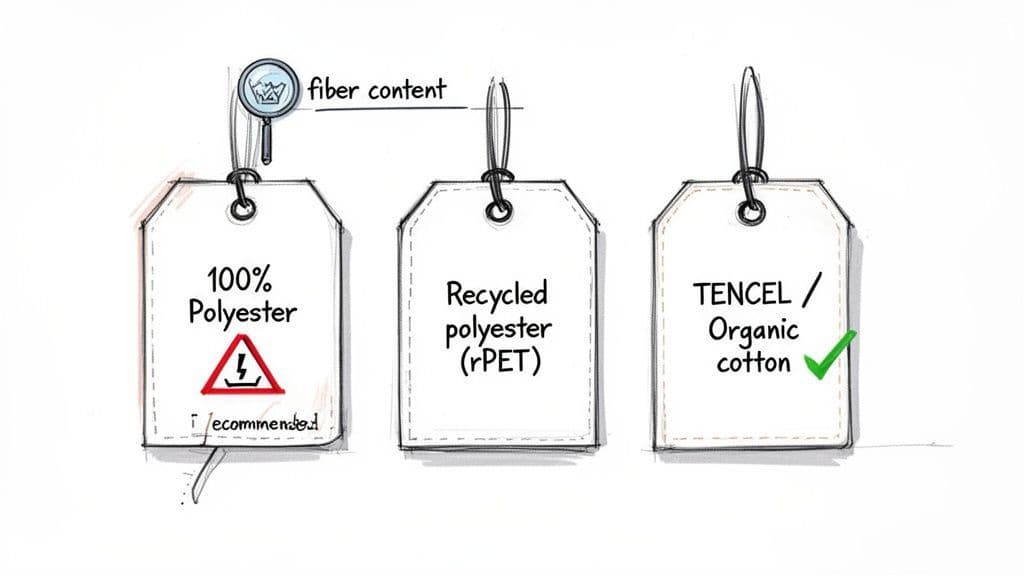
- Check the Percentage: "100% Polyester" is a clear signal of high microplastic shedding. A blend like "80% Cotton, 20% Polyester" is a lesser evil, but you are still introducing plastic.
- Recycled Polyester (rPET): This is not a health solution. While it reduces manufacturing energy and waste, rPET is chemically identical to virgin polyester. It sheds microplastics and is not biodegradable. The health concerns remain the same.
- Seek Out Alternatives: For items in frequent, close contact with your skin like underwear or bedding, prioritize lower-risk, biodegradable fibers. Look for organic cotton, merino wool, or TENCEL™ Lyocell.
Even for single-use items, context matters. You can now find eco-friendly high school gowns made from materials designed to biodegrade, a stark contrast to their polyester counterparts.
Key Takeaways
- Polyester is a plastic and does not biodegrade. It fragments into microplastics that persist for hundreds of years.
- The primary health concern is exposure to microplastics through inhalation and ingestion, and potential leaching of chemicals like antimony.
- What touches your skin is a key factor. Prioritize natural, biodegradable fibers for clothing that is in direct, prolonged contact with your body.
- Recycled polyester (rPET) is not biodegradable and sheds microplastics just like virgin polyester.
Limitations & Uncertainty
It is important to state clearly what remains uncertain. While we know microplastics accumulate in the human body, the full, long-term health implications are still under active investigation. Retailers rarely disclose all chemical treatments used on fabrics, creating a knowledge gap for consumers. This analysis is based on available research, not direct lab testing of products.