
Is Viscose Safe? A Look at the Health Tradeoffs
Organization-authored. Editorial policy · Report an error

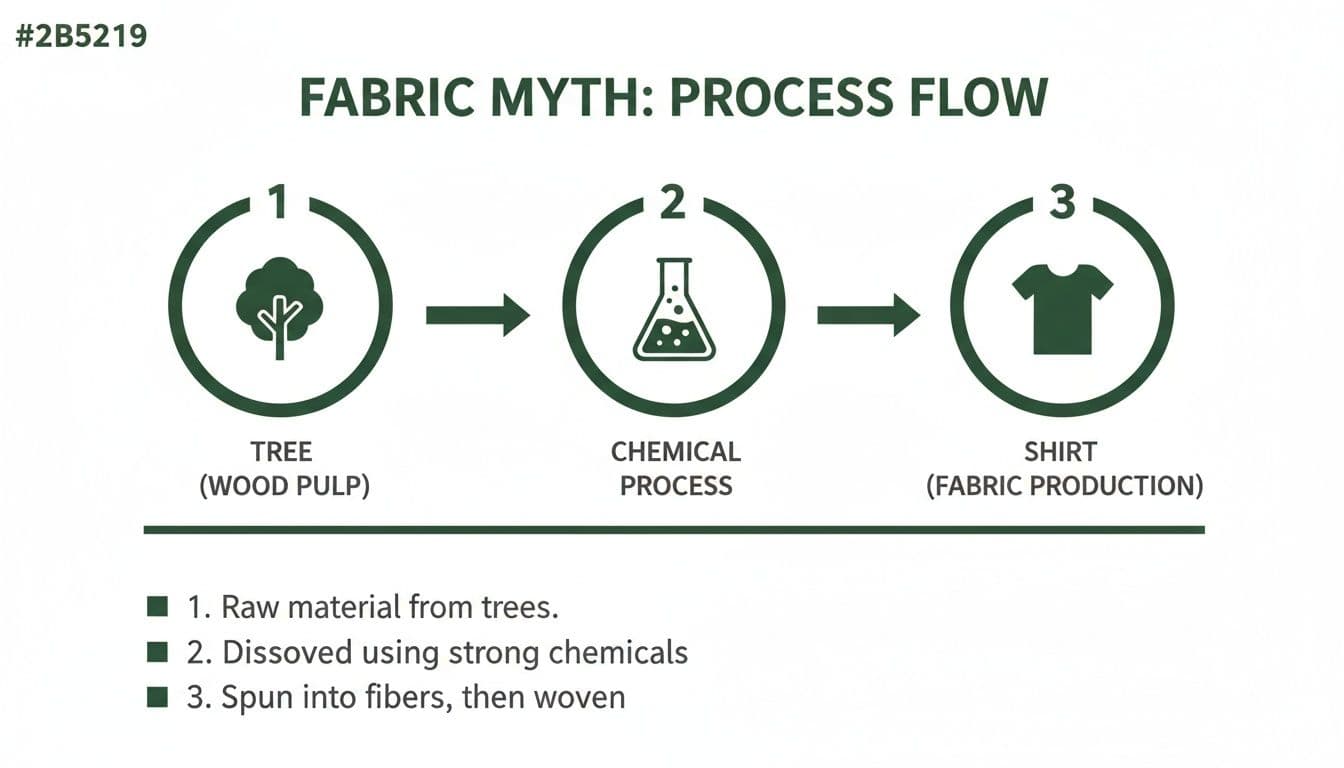
Viscose is a semi-synthetic fiber made from wood pulp. While it starts from a natural source, turning it into the soft fabric you find in stores requires an intense chemical process. The core of the issue isn't the final garment, which is generally safe to wear, but the potential health impacts on factory workers and the environment where it's made. The story of viscose is one of significant tradeoffs.
What People Commonly Assume
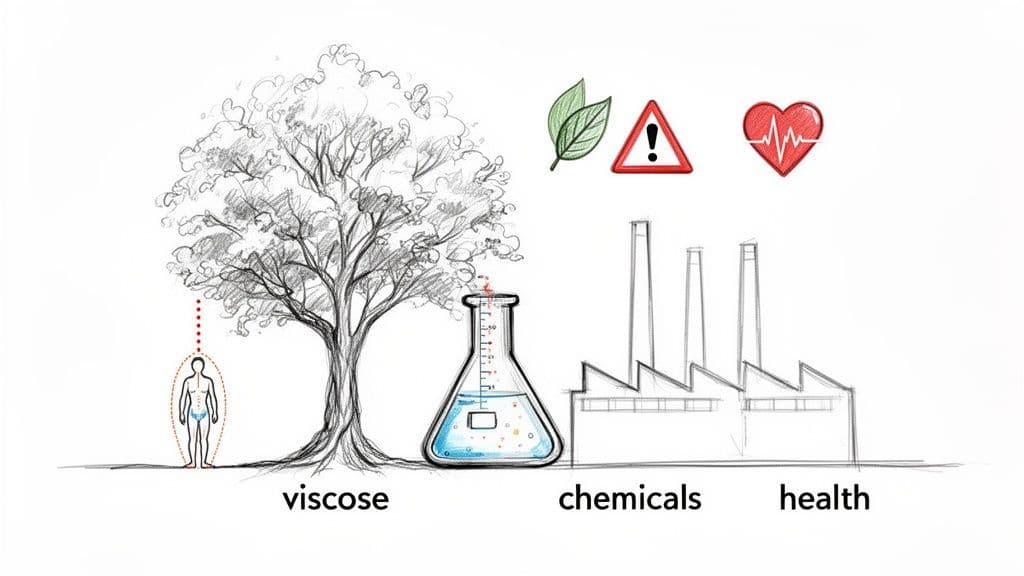
It's reasonable to see a label that says “made from trees” and think “natural and healthy.” The idea of a fabric coming from a forest feels much cleaner than one coming from an oil well. Marketing teams rely on this connection. However, what happens between the tree and the t-shirt is a chemical-heavy industrial process that complicates this "natural" image. This is where the tradeoff becomes less obvious.
The Tradeoffs of Viscose
The appeal of viscose is its silky feel and low cost, but these benefits come with potential concerns that are often invisible to the person wearing the clothes.
- Human Health in Production: The standard method for making viscose uses carbon disulfide, a highly toxic chemical. In facilities with poor safety standards, this known neurotoxin can cause devastating, permanent health damage to factory workers. This is the single most significant health concern associated with viscose.
- Environmental Contamination: In many older or poorly regulated factories, these toxic processing chemicals—including carbon disulfide and caustic soda—are not properly contained. They can be released directly into the air and water, poisoning local ecosystems and drinking water supplies for entire communities.
- Skin Contact & Chemical Residues: The finished fabric is washed of most processing chemicals, but what about the dyes and finishing agents? Some azo dyes, for instance, can break down into compounds that are potential carcinogens. For something like underwear worn all day, the cumulative exposure from any lingering residues is a factor, especially for those with sensitive skin. What touches your skin matters.
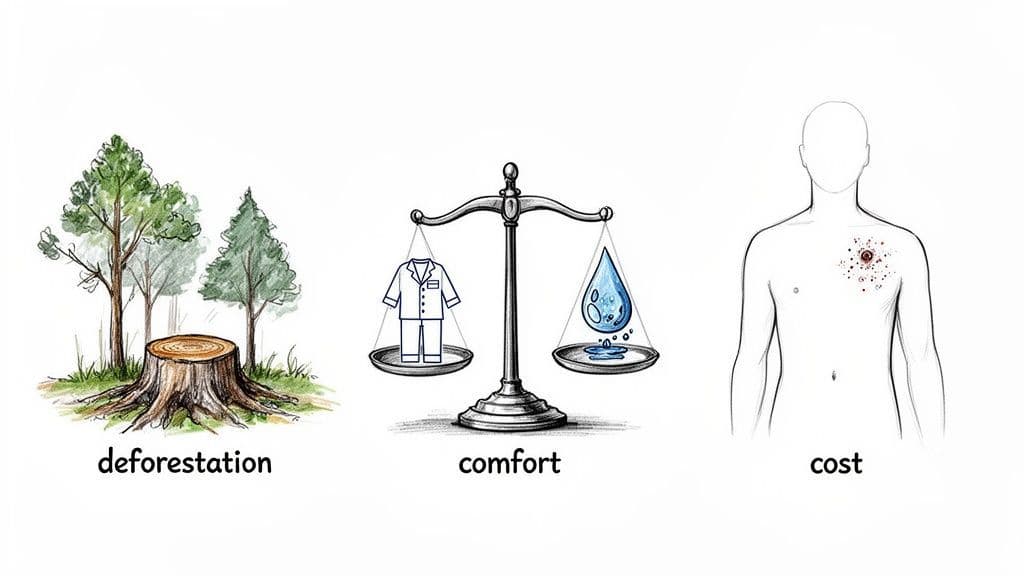
- Deforestation: The demand for wood pulp to make viscose is a driver of deforestation. A recent FashionUnited report notes that over 300 million trees are logged annually for these fabrics, often from ancient and endangered forests.
What to Look for on Labels
Making an informed decision requires looking past vague marketing terms like "plant-based." Specific certifications are a much more reliable indicator of a safer product.
- TENCEL™ Lyocell: This is a brand name for a type of regenerated cellulose fiber made in a closed-loop system. It uses a non-toxic solvent and recycles over 99% of it. This is widely considered the best-in-class alternative.
- FSC (Forest Stewardship Council) Certification: This logo tells you the wood pulp was sourced from responsibly managed forests, not from clear-cutting ancient ecosystems.
- OEKO-TEX STANDARD 100: This label certifies that the final fabric has been tested and found free from a list of over 100 substances known to be harmful to human health. While it doesn't guarantee clean production, it's a good final check for what's against your skin.
- "Viscose" or "Rayon" with no certification: This is a red flag. If a brand provides no extra information, you can assume the fabric was likely made using the conventional, polluting process with its associated health risks.
Key Takeaways
- The biggest health risk of viscose is not to the wearer, but to the factory workers exposed to toxic chemicals like carbon disulfide during production.
- Context matters. Not all viscose is made the same. Modern alternatives like TENCEL™ Lyocell use a much safer, closed-loop process.
- Certifications like OEKO-TEX, FSC, and brand names like TENCEL™ are your most reliable tools for identifying safer options. Vague "eco" claims are often meaningless.
- For items with prolonged skin contact, seeking out certified fabrics is a practical step to reduce potential exposure to residual chemicals.
Limitations and Uncertainty
This analysis is based on publicly available research, reports from organizations like Canopy, and data from certification bodies. We have not conducted our own lab testing on garments. Research into the long-term effects of low-level chemical residues on skin is still evolving, and individual sensitivity to these substances can vary significantly. Retailer disclosure about their supply chains is often incomplete, making a full assessment of every product difficult.