What Is Bamboo Viscose? Is "Bamboo" Fabric Actually Natural?
Organization-authored. Editorial policy · Report an error
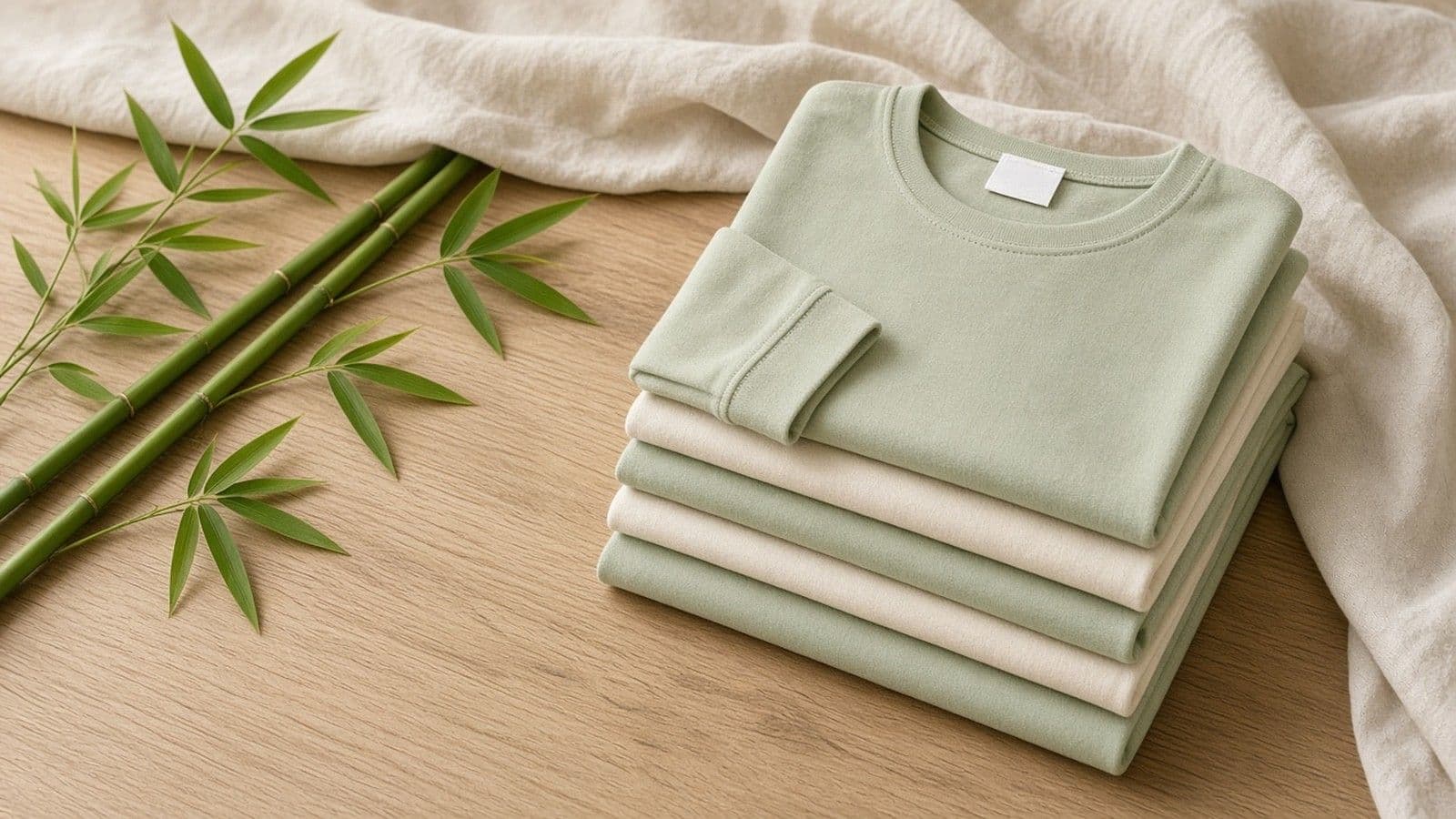
Bamboo viscose is rayon. The bamboo gets broken down into pulp, the cellulose in that pulp is dissolved with chemicals, and then it's pushed through tiny holes and set back into a fiber. So the plant is natural, but the fiber in your shirt is manufactured. In the US, the FTC says a product like that has to be labeled as rayon (or "rayon made from bamboo"), not just "bamboo."
If you're holding a pack of super soft "bamboo" pajamas and wondering whether you bought something natural or something closer to polyester, it's neither.
The worker history is real
Viscose has a long, well-documented history of making the people who produce it sick. Paul David Blanc's book Fake Silk covers it in detail. The point that's been going around online holds up: most "bamboo" fabric is viscose. What we want to add is the practical part. You're standing in a store or scrolling a listing. What does the label tell you, and what should you ask?
How bamboo becomes viscose
Bamboo is a plant, and like any plant it's full of cellulose. Viscose is a way of pulling that cellulose out and rebuilding it as a long, smooth fiber. The source doesn't change the process much. Wood pulp, bamboo pulp and other plant pulps all go through the same basic steps.
Lenzing, one of the big fiber makers, describes the viscose process like this:
- Pulp is soaked in sodium hydroxide (caustic soda) to make alkali cellulose.
- That reacts with carbon disulfide. The step is called xanthation.
- The result dissolves into a thick, orange, very viscous solution. That's where the name viscose comes from.
- The solution is pressed through tiny holes into an acid bath, where it sets into filaments.
- The filaments are stretched, cut, washed and finished.
By the end, the FTC's guidance for sellers puts it bluntly: there's "no trace of the original plant in the finished rayon product." It's regenerated cellulose. Chemically it's the same family as any other viscose, whether it started as bamboo, beech or eucalyptus.
That also answers a question we see a lot: is bamboo viscose plastic? No. It's made of cellulose, not petroleum, so it isn't a polyester or a nylon. It also isn't a natural fiber the way cotton or linen is. It sits in between, which is why you'll see it called semi-synthetic or "manmade cellulosic."
And it's not a small niche. Textile Exchange's 2026 Materials Market Report puts manmade cellulosic fibers (viscose, lyocell, modal, acetate and cupro) at 9.1 million tonnes in 2025, about 7% of all fiber produced worldwide.
Where the carbon disulfide concern actually is
Carbon disulfide is the chemical people get worried about. The real question is who it affects.
The documented harm is to the people who make the fiber. The CDC's ATSDR fact sheet on carbon disulfide says it's mostly used to produce rayon, and that long-term breathing of it has been linked in workers to changes in nerve function, tremors, cardiovascular disease, damage to the retina and impaired male sexual function. ATSDR also says most people are not likely to be exposed to harmful levels. The exposure risk is highest for people who work in those plants or live near them.
So the factory question and the "is this OK on my kid" question are two different questions. The worker data answers the first one. It doesn't tell you what's left on a finished pajama set after washing and finishing. If that's what you're worried about, the closest thing to an answer for the item itself is a product-level test certificate like OEKO-TEX STANDARD 100, which tests every part of a finished item, down to the thread and buttons, against a list of more than 1,000 substances and has a stricter class for baby items. Keep in mind what that certificate covers. It's a test of the product. It doesn't tell you anything about conditions at the fiber plant.
How much carbon disulfide gets captured instead of released depends on the factory. Lenzing says it recovers and reuses carbon disulfide in its viscose plants. Plenty of bamboo viscose doesn't come from Lenzing, and a lot of listings don't say where the fiber was made at all.
The FTC has been on this for over 15 years
This isn't a new argument. The FTC sent warning letters about bamboo labeling to 78 companies back in January 2010.
In 2013, Amazon, Macy's, Sears and Leon Max (Max Studio) paid $1.26 million in penalties for labeling rayon as bamboo. One of the products the FTC called out was a crib sheet Amazon sold as "100% Organic Bamboo."
In 2022, Kohl's and Walmart agreed to pay $5.5 million combined ($2.5 million and $3 million). The FTC said they sold rayon as bamboo and also made environmental claims about it, when the process of turning bamboo into rayon uses toxic chemicals and releases hazardous pollutants.
The rule underneath all of this is the Textile Act and the FTC's Textile Rules. Labels have to use the generic fiber name. Rayon is on that list, lyocell is listed under it, and "viscose" is allowed too because it's the international name for the most common kind of rayon. "Bamboo" is not a generic fiber name for something that's been dissolved and respun.
Is there real bamboo fabric?
Yes, but it's rare. The FTC says a product can only be called bamboo if it's made directly from bamboo fiber, often called "mechanically processed bamboo," and the seller needs real evidence, like test results, to back that up. Think of it more like linen, where the fibers come out of the plant without being dissolved first.
Watch out for "bamboo linen" in listings, though. A lot of the time that just means bedding (linens) made from bamboo viscose. The fiber line on the label tells you which one you're looking at.
Bamboo lyocell vs bamboo viscose
You'll also see "bamboo lyocell." Lyocell starts the same way, with cellulose pulp, but skips the carbon disulfide step. The pulp is dissolved directly in a solvent called NMMO and spun from that solution. In Lenzing's TENCEL lyocell process, about 99.8% of the solvent is recovered and reused in a closed loop.
Two caveats. That 99.8% is Lenzing's number for its own plants. A generic bamboo lyocell from another mill may or may not run that well, and you'd have to ask. And it's still a manufactured fiber. Lyocell made from bamboo isn't any more "natural" than viscose made from bamboo. It's a different process with a different chemical footprint.
How to read a "bamboo" label
Ignore the product title and go straight to the fiber content line. Here's what the common versions usually mean:
| What the label says | What it means |
|---|---|
| "Viscose from bamboo" / "rayon made from bamboo" | Viscose process, bamboo was the pulp source. This is the honest version and the most common one. |
| "Bamboo viscose" / "bamboo rayon" | Same thing. |
| "Lyocell from bamboo" | Bamboo pulp, solvent-spun lyocell process. Ask who made the fiber. |
| "100% bamboo" or "bamboo fiber" on soft knit clothing | Assume viscose unless the brand can show it's mechanically processed. Under FTC rules it shouldn't be labeled this way otherwise. |
| "Bamboo" plus spandex or polyester | A blend. The bamboo part is almost always viscose, and the rest is synthetic. |
The tag also has to show the country of origin. That's where the garment was made. It doesn't tell you where the fiber came from.
What to ask the brand
If a brand cares about this, these are easy for them to answer.
- Is the bamboo fiber viscose, lyocell or mechanically processed?
- Who manufactures the fiber, and in what country?
- Does the fiber mill recover carbon disulfide, and is there a third-party certification for the mill?
- Is this specific product OEKO-TEX STANDARD 100 certified, and what's the certificate number? (You can look it up on OEKO-TEX's Label Check.)
How we handle bamboo on Greener Closet
We score bamboo viscose as what it is, regenerated cellulose, not as raw bamboo. Our bamboo viscose fiber score is 82, the same as any other viscose. For comparison, modal is 84, lyocell is 86 and TENCEL lyocell is 87. Those numbers are for the fiber alone. A garment whose listing says nothing about its dyes or certifications scores 12 points lower, so a plain "100% bamboo viscose" label comes out at 70. We only score what the listing discloses. If a brand just says "bamboo," that's the information we have, and we treat it as viscose.
We're not telling anyone to throw out their kid's bamboo pajamas. They're soft, and plenty of parents like them for that. We just want people to know what they're buying, and we'd rather a brand say "viscose from bamboo, made by this mill" than call it natural. Next time you pick up something soft labeled "bamboo," skip the product name and read the fiber content line first.