
What Is Slow Fashion? An Analysis of Material Health
Organization-authored. Editorial policy · Report an error
Slow fashion is an approach to clothing that prioritizes quality, durability, and the health implications of the materials used. It involves a shift away from high-volume, trend-driven purchasing (known as fast fashion) toward selecting fewer, better-made garments. From a material health perspective, this means considering what touches your skin and the potential tradeoffs associated with different fibers, dyes, and chemical treatments.
The Common Assumption About Slow Fashion
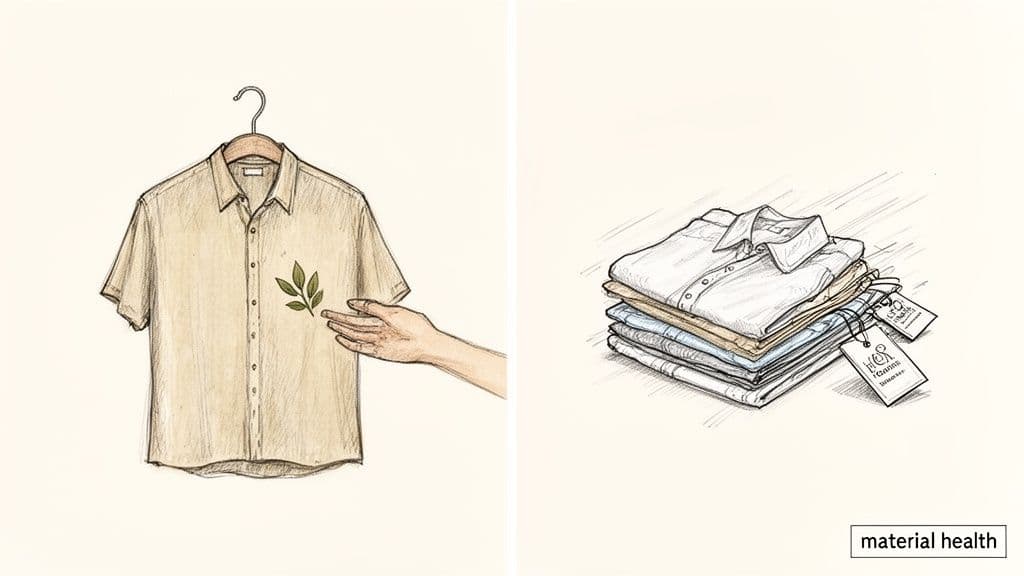
When people hear "slow fashion," it is often associated primarily with environmental benefits. That makes sense, as the movement advocates for reduced waste and a smaller manufacturing footprint.
However, this view can overlook a central component: the direct impact of clothing materials on human health. A core tenet of slow fashion is a deeper awareness of the substances you bring into close, prolonged contact with your body every day.
The concept moves beyond simply buying less. It encourages a structured analysis of a garment’s entire lifecycle—from the raw fibers and the chemicals used in production to its durability and eventual disposal. It is a mindset shift toward intentionality and long-term value.
Slow Fashion vs. Fast Fashion: A Comparison
The following table outlines the key operational differences between the two models. This comparison highlights the contrast between a system built for longevity and one designed for disposability.
| Characteristic | Slow Fashion | Fast Fashion |
|---|---|---|
| Pace of Production | A few collections per year, or seasonless | 52+ "micro-seasons" per year; new items weekly |
| Core Principle | Quality over quantity | Quantity over quality |
| Design Focus | Timeless, classic styles | Fleeting, of-the-moment trends |
| Material Choices | Often favors natural, durable fibers | Primarily inexpensive synthetics (polyester, nylon) |
| Durability | Made to last for years | Made to last a few wears or washes |
| Supply Chain | Tends toward more transparent sourcing | Often opaque, with complex global logistics |
| Consumer Mindset | Investment in personal style and health | Impulsive, trend-driven consumption |
| End of Life | Repair, repurpose, recycle | Often sent to landfill |
This framework clarifies the fundamental divergence. Slow fashion is built on intentionality, while fast fashion is optimized for speed and volume.
Why The Fast Fashion Model Is So Prevalent

It is reasonable to ask why fast fashion became the dominant model. The system is effective because it directly addresses several practical consumer needs with efficiency.
The primary driver is price. Low-cost garments make current trends accessible across a wide range of budgets. This accessibility is a powerful factor in purchasing decisions.
Convenience is also a significant component. Fast fashion retailers have a widespread physical and online presence, with a constant influx of new products. This provides immediate solutions for consumers needing specific items quickly.
Key Factors Driving Fast Fashion Purchases
The appeal is a multi-faceted system built around modern consumer expectations.
- Budget Constraints: For many households, managing expenses is a primary concern. The main objective is to clothe family members affordably, and fast fashion provides a direct solution.
- Access to Trends: Style can be a form of self-expression. Fast fashion allows for experimentation with new aesthetics without a significant financial commitment to items that may have a short stylistic lifespan.
- Constant Novelty: The business model is predicated on a high rate of product turnover. New items arriving weekly can create a sense of discovery that encourages repeat visits.
The decision to purchase a fast-fashion item is often a pragmatic response to an immediate need, based on the most accessible and affordable options available. This focus on upfront cost and convenience is understandable.
The challenge is that this can obscure the potential hidden tradeoffs. These tradeoffs include not just a garment's durability but also concerns related to the materials and chemical processes used to achieve such low costs and rapid production cycles.
Material Tradeoffs and Potential Health Concerns
A detailed analysis of clothing requires examining the materials themselves. Every textile choice involves a set of tradeoffs, some of which may have implications for personal health and the indoor environment.
Microplastics from Synthetic Textiles
Many common clothing materials—including polyester, nylon, and acrylic—are forms of plastic spun into fibers. Mechanical action, such as wearing and washing, can cause these fabrics to shed microscopic plastic fragments known as microplastics.
These fibers can become airborne and contribute to household dust. Research indicates that indoor environments can be a notable source of microplastic exposure, with inhalation being one potential pathway.
A single polyester garment may release thousands of fibers during a single wash cycle. While wastewater treatment plants capture some, many enter aquatic ecosystems, and a significant portion can remain within the home. This presents a tradeoff: synthetic fabrics offer durability and affordability, but their use is associated with the release of plastic microfibers into living spaces.
"Forever Chemicals" in Performance Apparel
Certain chemical treatments are used to impart desirable properties to clothing, such as water or stain resistance. A class of compounds often used for this purpose is per- and polyfluoroalkyl substances, or PFAS.
PFAS are a large group of synthetic chemicals characterized by strong chemical bonds that resist degradation in the environment, earning them the name "forever chemicals." They are effective at repelling oil and water, making them common in outerwear and performance apparel.
A growing body of scientific evidence has associated exposure to certain PFAS with a range of health concerns. While research is ongoing, the presence of these persistent chemicals on textiles that have prolonged skin contact is a factor to consider in an informed decision.
Textile Dyes and Skin Sensitivity
The vibrant colors in textiles are achieved with various dyes. Some synthetic dyes, particularly a class known as azo dyes, are a potential source of concern.
While most azo dyes are considered stable, some have the potential to break down and release substances called aromatic amines, a few of which have been classified as potentially carcinogenic and are regulated in some regions. For many individuals, a more immediate issue can be skin sensitivity.
- Contact Dermatitis: Some individuals may experience allergic reactions to specific dyes or finishing chemicals, resulting in skin irritation, redness, or rashes. This is particularly relevant for clothing worn tight against the skin.
- Chemical Residues: The dyeing and finishing process for textiles can be chemically intensive. If garments are not rinsed thoroughly during manufacturing, residual chemicals may remain on the final product.
Context matters. Natural dyes exist but may not offer the same color vibrancy or permanence as certain synthetic alternatives. The tradeoff is between a wide, inexpensive color palette and potential exposure to chemical byproducts or skin irritants.
Slow fashion provides a direct alternative to the rapid growth of the fast fashion industry, which grew from $91.23 billion in 2021 and is projected to reach $291.1 billion by 2032. This speed contributes to a model where the average garment is worn just 7 to 10 times. By focusing on durability, slow fashion pushes back against a system where the global fashion industry is responsible for an estimated 2-8% of greenhouse gas emissions. You can find more details in these fast fashion statistics at uniformmarket.com.
See how different materials stack up by exploring products already evaluated and scored at Greener Closet.
What to Look For: A Checklist for Evaluating Clothing
Applying the principles of slow fashion involves a practical assessment of garments at the point of purchase. This requires looking beyond marketing claims to evaluate tangible indicators of quality, durability, and material safety.
1. Check the Material Composition Label
The most critical information is the material content, typically found on the tag or in the product details online. This discloses what the garment is made of.
- Natural Fibers: Materials like organic cotton, linen, hemp, and wool are common in slow fashion. They do not shed plastic microfibers.
- Recycled Synthetics: "Recycled polyester" is prevalent. While this diverts plastic from landfills, the resulting fabric is still a synthetic that can shed microplastics. The context of its use (e.g., a durable coat washed infrequently) is an important consideration.
- Blends: Garments blending natural and synthetic fibers (e.g., cotton/polyester) can be difficult to recycle and do not biodegrade, complicating their end-of-life stage.
2. Look for Third-Party Certifications
Independent certifications provide verifiable evidence that a product meets specific standards, offering a shortcut to assess claims about material safety.
- GOTS (Global Organic Textile Standard): This standard verifies that a textile contains at least 70% certified organic natural fibers and restricts the use of chemicals, including dyes and processing agents, throughout the supply chain.
- OEKO-TEX STANDARD 100: This certification indicates that every component of an item, from fabric to thread, has been tested for a list of regulated and non-regulated harmful substances. It focuses on the chemical safety of the final product.
This flowchart shows some of the key tradeoffs associated with textile choices.
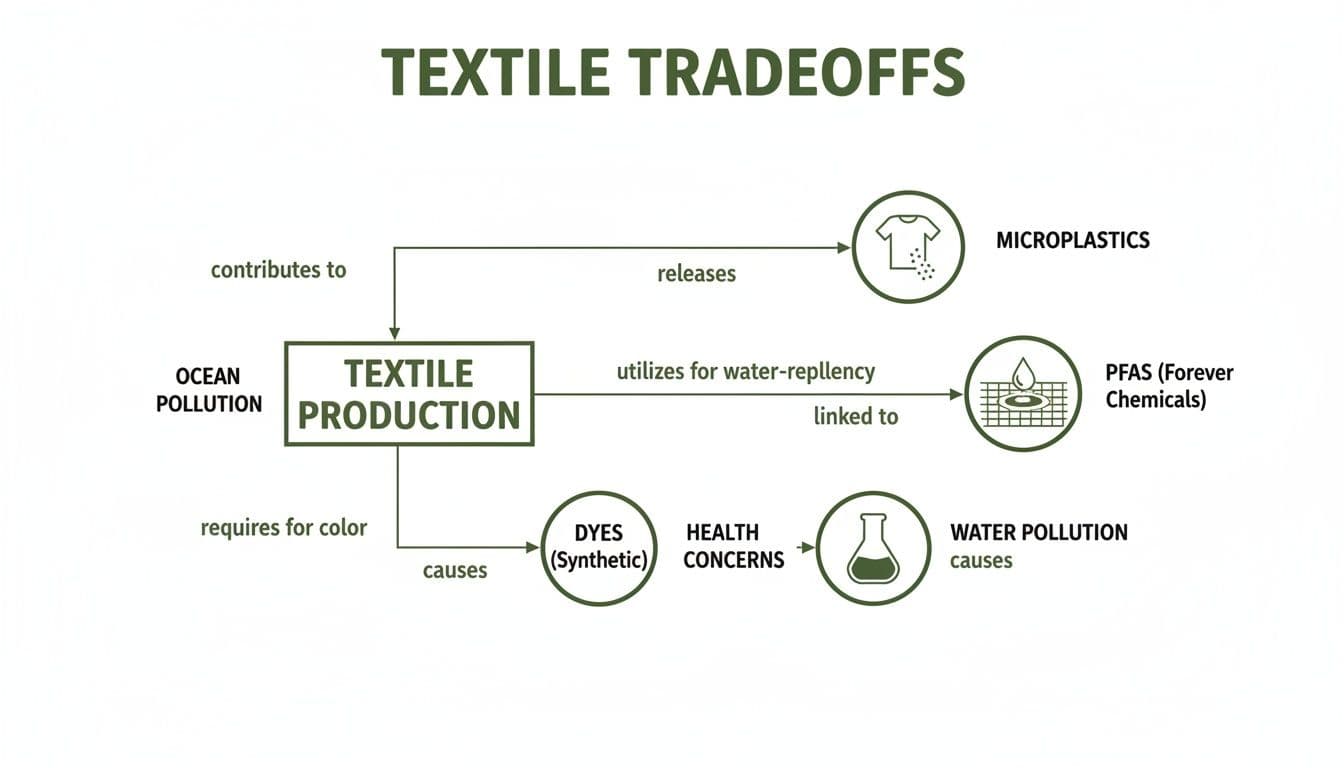
Choices made early in the production process influence both environmental outcomes and potential personal health exposures.
3. Examine the Construction Quality
A core principle of slow fashion is durability. A well-constructed garment is designed to last, which reduces the need for replacement and lowers its cost-per-wear.
Assess these details:
- Stitching Density: Look for small, tight, and even stitches at the seams. A higher stitch count per inch results in a stronger seam that is less likely to fail.
- Reinforced Seams: Check high-stress areas like armholes and pockets for reinforcements. Techniques like French or flat-felled seams protect raw fabric edges from fraying and add durability.
- Quality Finishes: Inspect components like buttons and zippers. They should feel secure and operate smoothly. These are often areas where costs are cut in lower-quality manufacturing.
Learning to identify these markers of quality can help you make more informed choices, whether for everyday items or specialized apparel like non-toxic activewear.
Key Takeaways
Adopting a slow fashion mindset is about making incremental, informed choices that prioritize material health and long-term value.
- Material Health Is the First Filter. The most direct impact comes from what touches your skin. Prioritize analyzing the fibers, dyes, and any chemical finishes used in a garment.
- Focus on Longevity Over Trends. When purchasing new items, evaluate construction quality. A durable, timeless garment has a lower cost-per-wear and reduces your exposure to the resource cycle of new production.
- Understand That All Choices Involve Tradeoffs. No material or product is perfect. Recycled polyester reduces waste but can shed microplastics; natural dyes may be less vibrant than some synthetic alternatives. Acknowledging tradeoffs allows for decisions aligned with your personal priorities. Our Patagonia brand analysis shows how transparency helps in weighing these factors.
Limitations and Uncertainty
Making a fully informed decision can be challenging due to a lack of transparency in the fashion industry.
- Limited Disclosures: Brands often do not disclose the complete list of chemicals used in their dyeing and finishing processes. Analysis must rely on the information that is made available.
- Evolving Science: The scientific understanding of the long-term health effects of low-level chemical exposure from textiles is still developing. While some substances like PFAS and certain azo dyes have been flagged as potential concerns, the full picture is not yet complete. What is known, what is suspected, and what is unknown are all part of the current landscape.
- Individual Sensitivity: Personal biological factors, such as skin sensitivity and allergies, vary. A material that causes irritation in one person may not affect another.
There is no universal "best" choice. The goal is to provide a framework for weighing the available information and making decisions based on your own health context.
View all the products at Greener Closet that have already been scored.