
What Is Modal Fabric? A Health-First Guide
Organization-authored. Editorial policy · Report an error
Modal fabric is a semi-synthetic textile made from the cellulose of beech trees. While it originates from a natural source, it requires an intensive chemical process to transform wood pulp into the soft, silky fiber used in clothing. This dual nature—natural origin, chemical transformation—is the key to understanding its tradeoffs for your health and wardrobe.
What People Commonly Assume
When a clothing tag says "made from beech trees," it's reasonable to assume the material is entirely natural and eco-friendly. This perception is a major reason why modal is popular. It feels like a clean, plant-based alternative to fully synthetic fabrics like polyester.
However, the journey from tree to textile is not a simple one. Modal is a regenerated cellulosic fiber, meaning the wood's structure is completely broken down by chemicals and then reformed into a new fiber. Understanding this chemical transformation is critical for making an informed decision about what touches your skin.
The Tradeoffs of Modal Fabric
The conversation about modal's health impact centers on how it's produced. The material itself is not inherently risky, but the manufacturing process introduces variables that matter.
- Potential for Chemical Residue: The primary health concern is the potential for leftover processing chemicals. Solvents like sodium hydroxide are used to dissolve wood pulp. In a poorly managed "open-loop" system, these chemicals may not be fully rinsed out, leaving trace residues on the final garment. When you wear modal underwear all day, this becomes a relevant exposure to consider.
- Superior Performance: Modal offers significant comfort advantages. It is exceptionally soft, breathable, and wicks moisture 50% more effectively than cotton. This keeps skin dry and reduces the risk of irritation, making it an excellent choice for items worn in direct contact with the body.
- Dye and Irritants: Modal’s porous structure allows it to absorb and lock in dyes very effectively. This reduces the chance of dye bleeding onto your skin. The tradeoff is that if a manufacturer uses low-quality or banned dyes (like certain azo dyes), the fabric will hold onto those harmful substances just as efficiently. Certification is the only way to verify the safety of the dyes used.
What to Look for on Product Labels
Because production context is everything, the information on a product's label is your most important tool for assessing risk.
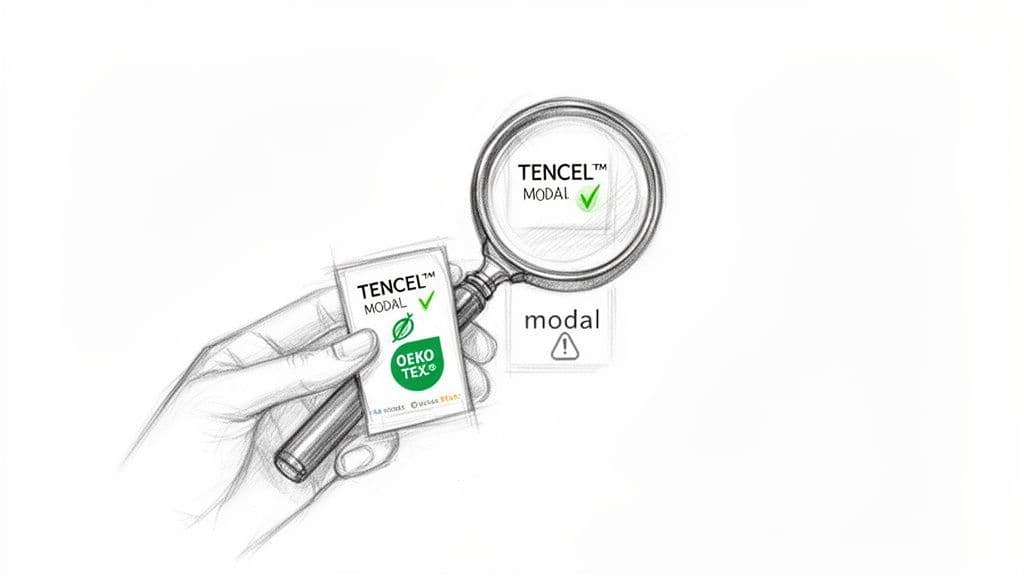
- TENCEL™ Modal: This is the brand name for modal produced by the Austrian company Lenzing. It guarantees the fiber comes from sustainably managed forests and was made in a closed-loop system where over 99% of chemicals are recovered and reused. This is where the tradeoff becomes less obvious, as responsible production minimizes chemical risks.
- Generic "Modal": A label that simply states "modal" offers no transparency. The origin and production standards are unknown, which means the risk of chemical residue from an open-loop process is higher.
- OEKO-TEX® STANDARD 100: This third-party certification is your best assurance that the final product—including fabric, dyes, and threads—has been tested and found free from a long list of harmful substances. One poorly managed batch could mean you’re wearing residual processing chemicals right against your skin.
Key Takeaways
- Modal is a semi-synthetic fabric derived from beech tree pulp but created through a chemical-intensive process.
- The primary health concern is not the fiber itself but the potential for chemical residues left from manufacturing.
- Certified TENCEL™ Modal is produced in a closed-loop system, which significantly reduces chemical waste and potential exposure.
- An OEKO-TEX® certification ensures the final garment has been tested for harmful substances, including unsafe dyes.
- Modal offers superior softness and moisture-wicking compared to cotton, but context matters—the brand and certifications determine its health profile.
Limitations and Uncertainty
This analysis is based on public information from manufacturers and certifying bodies. We have not conducted our own lab testing on specific garments. Retailer disclosures are often incomplete, making it difficult to assess uncertified products. Research into the long-term effects of low-level dermal exposure to textile chemicals is still evolving, and individual sensitivity varies.
At Greener Closet, we believe understanding the full story behind your clothes is the first step toward building a healthier wardrobe. Our tools are designed to cut through the marketing claims and give you the data you need.