
Alternatives to Shein: A Health-First Guide to Safer Clothing
Organization-authored. Editorial policy · Report an error
When searching for alternatives to Shein, the focus often shifts from just price to the materials touching your skin. This guide provides a calm, credible analysis of that switch, focusing on moving from mass-produced synthetic fabrics treated with unknown chemicals to brands transparent about their materials. This is about making an informed decision for your health.
What People Commonly Assume About Cheap Clothing
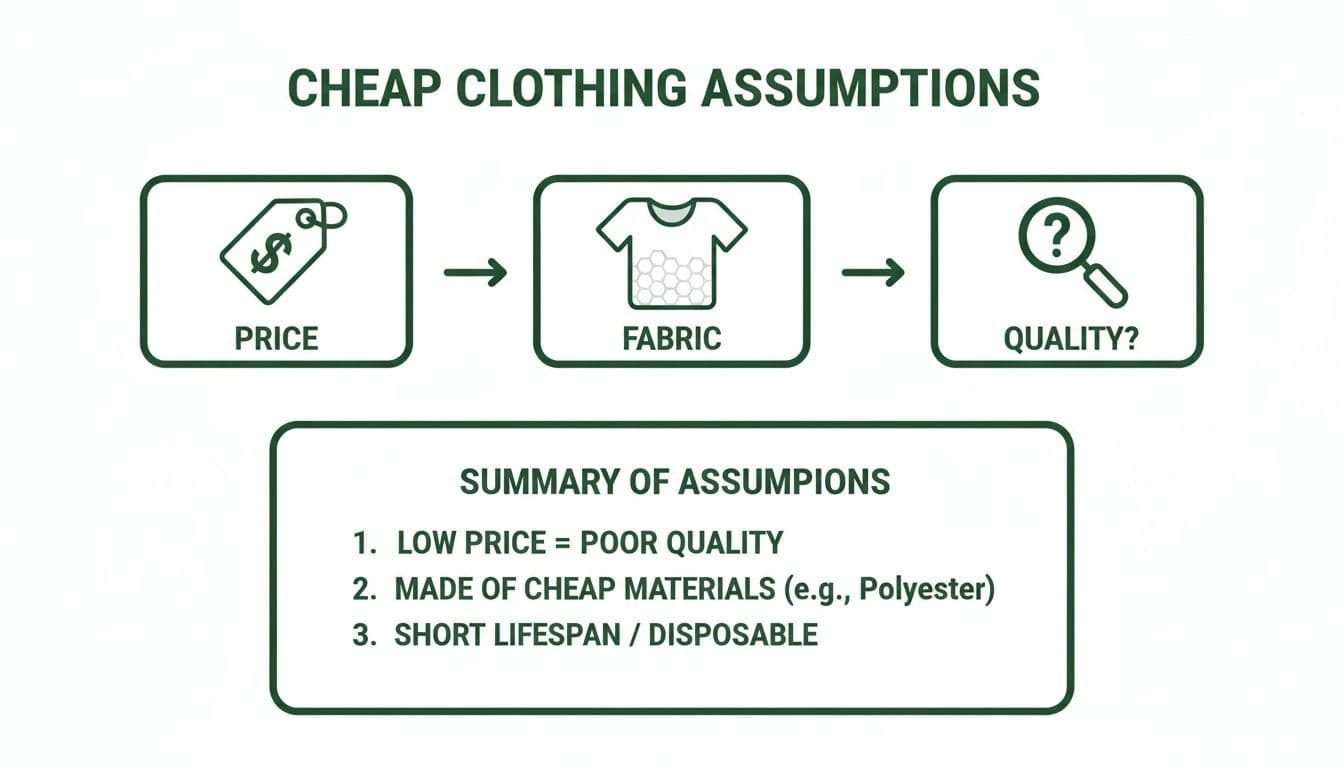
It's easy to see why people think this: if a t-shirt costs less than a latte, corners must have been cut. The logical assumption is that those corners are material quality and chemical safety. We often figure it's made from cheap polyester and just hope any chemical residues are minor or will wash out. This is a reasonable starting point, but it's where the health tradeoffs begin.
The Health Tradeoffs: What Touches Your Skin
When comparing ultra-fast fashion to other brands, the decision involves a set of tradeoffs that can impact health. Context matters, and it’s important to weigh the potential concerns for yourself.
-
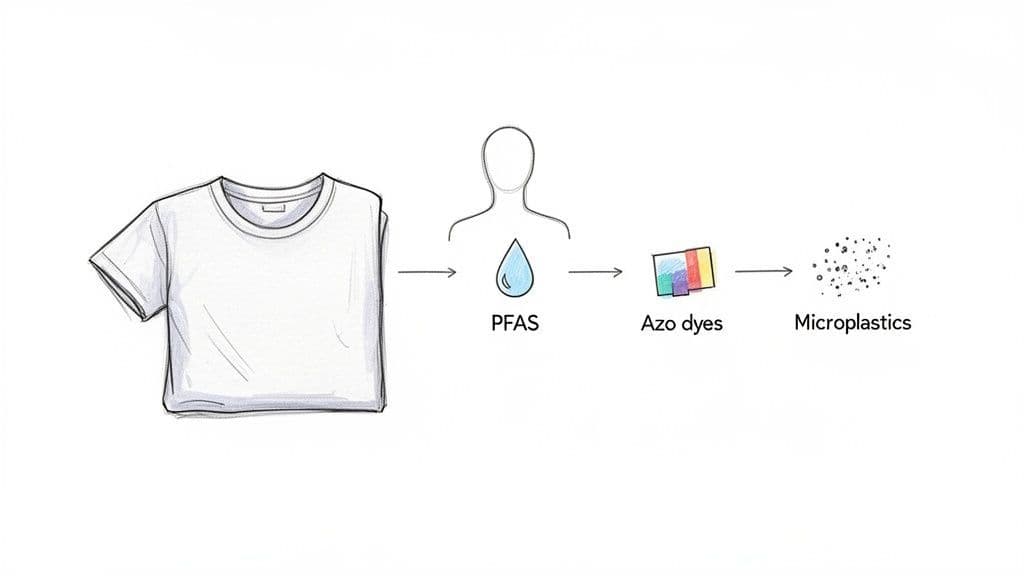
Material and Microplastics: A significant portion of ultra-fast fashion is made from synthetics like polyester, nylon, and acrylic. These are essentially plastics. A primary health concern is microplastic shedding. Every wash releases thousands of microscopic plastic fibers, which can become airborne and contribute to indoor air pollution. The long-term effects of inhaling or ingesting these particles are an area of active research.
-
Chemical Finishes and Dyes: Mass-market clothing often uses chemical finishes for features like wrinkle resistance or vibrant color. Two categories raise potential concerns. PFAS (Per- and Polyfluoroalkyl Substances) are used for stain and water resistance. Known as "forever chemicals," they are very persistent and can accumulate in the body over time. What is suspected is that cumulative low-dose exposure from multiple sources may pose health risks.
-
Azo Dyes: This is a large class of synthetic dyes. A specific subset can break down to release compounds called aromatic amines, some of which are linked to health risks. While regulated in many regions, what remains uncertain is their presence in clothing from brands with opaque supply chains.
An Everyday Context
Consider a brightly colored, "spill-resistant" polyester t-shirt for a child. This is a concrete, everyday example of a hidden tradeoff. A child wears this shirt directly against their skin, often for hours. Perspiration can create a scenario for direct dermal exposure to whatever dyes and chemical finishes were used to achieve that color and performance. While the risk from one shirt is likely low, it’s the cumulative effect from many sources that health researchers are studying.
What to Look For on Labels
You can make more informed choices by looking past marketing and into the tangible details of a garment.
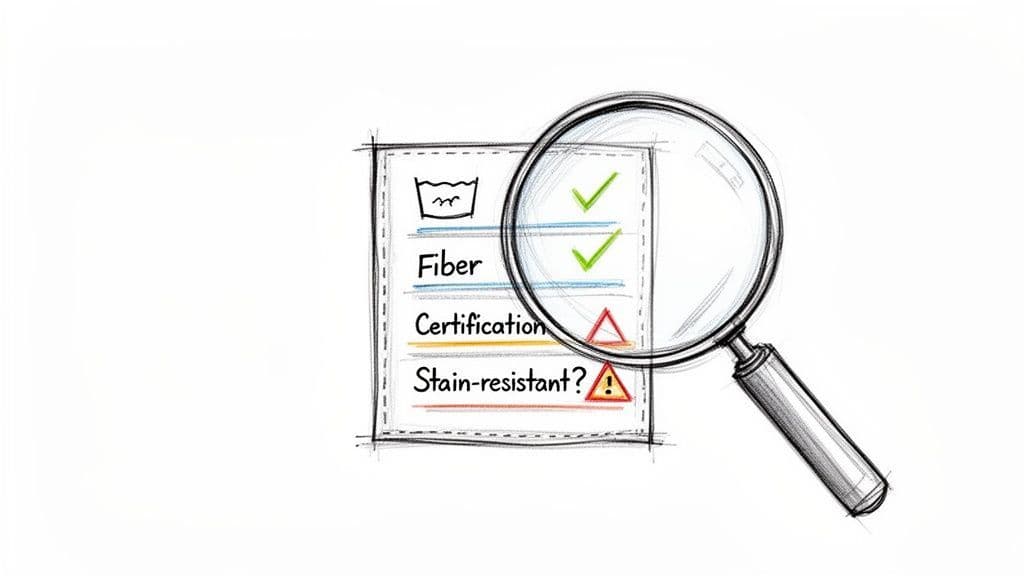
- Prioritize Natural Fibers: When possible, choose materials like organic cotton, linen, hemp, or TENCEL™ Lyocell. They generally have a lower initial chemical footprint and do not shed plastic microfibers.
- Look for Credible Certifications: Third-party certifications are your most reliable tool. OEKO-TEX STANDARD 100 certifies that the final product has been tested for a long list of harmful substances. GOTS (Global Organic Textile Standard) verifies that the material is at least 95% certified organic and restricts hazardous chemicals during production.
- Scrutinize "Performance" Claims: Be cautious with terms like "stain-resistant" or "water-repellent." This is where the tradeoff becomes less obvious—these features are often achieved with PFAS unless a brand explicitly states it uses a PFAS-free alternative.
- Explore Thoughtful Brands: Some brands are more transparent by default. For everyday basics, companies like Pact (GOTS-certified organic cotton) and Quince (organic cotton and linen) offer accessible options. For activewear, brands such as Girlfriend Collective and Wolven use OEKO-TEX certified recycled materials. For kids, Hanna Andersson and Colored Organics focus on certified organic fabrics. The goal is to find alternatives to Shein that align with your health priorities. We also have guides on topics like what slow fashion is and toxic chemicals in clothing for further reading.
Key Takeaways
- The search for alternatives to Shein is fundamentally a health-focused decision about the materials that touch your skin.
- The primary health tradeoffs involve synthetic materials that shed microplastics and undisclosed chemical finishes like PFAS and certain azo dyes.
- Look for third-party certifications like OEKO-TEX and GOTS, which act as independent verification of a product's chemical safety.
- Our analytical stance is this: while price and convenience are valid factors, the potential for long-term, low-dose chemical exposure from clothing is a health variable that deserves consideration.
- Focus first on high-contact items like underwear, pajamas, and activewear, where material composition has the most direct impact. You don't need to replace your whole wardrobe at once.
Limitations and Uncertainty
To be credible, we must be clear about what we don't know.
- Retailer Disclosure Gaps: Our analysis relies on publicly available information. If a brand is not transparent, our evaluation has blind spots.
- No Lab Testing Performed: We have not conducted our own lab tests on these garments to verify their chemical composition.
- Research Is Evolving: Scientific understanding of how textile chemicals affect human health is constantly developing.
- Individual Sensitivity Varies: A material that is fine for one person may cause irritation for another. Your own body is the final judge.
Greener Closet helps you instantly analyze how any piece of clothing impacts your health and the environment. Use our transparent scoring system to see what’s really in your clothes and discover healthier, top-rated alternatives.