Best Bamboo Clothing Brands: How to Compare Fabrics and Claims
Organization-authored. Editorial policy · Report an error
Most soft clothing marketed as bamboo is regenerated cellulose such as bamboo viscose or rayon. Compare the exact fiber label, blends, finishes, and product-specific certification evidence—not the word “bamboo” by itself.
Bamboo fabric is marketed as soft, natural, and eco-friendly. However, what touches your skin is rarely the plant itself but a semi-synthetic material created through an intensive chemical process. Understanding the tradeoffs between how this fabric is made and its potential health impact is key to making an informed decision for you and your family.
What people commonly assume about bamboo fabric
It’s easy to see why we think of bamboo clothing as "natural." The marketing relies on images of fast-growing bamboo forests, and the silky-soft feel of the final product reinforces this plant-based connection. When a label simply says "100% bamboo," the reasonable assumption is that the fabric is a pure plant fiber, like cotton or linen. This is where the story gets complicated. The raw material is natural, but the end product is a manufactured textile, and its health profile depends entirely on that manufacturing process.
The tradeoffs of bamboo clothing
The primary health concern with bamboo clothing stems from how it's made. The vast majority is bamboo viscose, a type of rayon produced by dissolving bamboo pulp with powerful chemical solvents. The specific chemicals used, and how they are handled, determine what might end up next to your skin.
The common viscose method uses carbon disulfide, a solvent with documented occupational hazards for factory workers. That workplace evidence does not, by itself, establish a wearer-residue or medical outcome for a finished garment. FTC bamboo-fabric guidance.
-
Everyday Exposure Context: The risk is not abstract. Consider bamboo underwear, which sits against some of the most absorbent skin on your body for hours. For a baby, whose skin is thinner and more permeable, any potential chemical residue from their sleepwear becomes a more significant factor.
-
Finishes and Dyes: Beyond the base fabric, brands may add chemical treatments for wrinkle-resistance or stain-proofing. These can involve per- and polyfluoroalkyl substances (PFAS), a class of "forever chemicals." Similarly, certain Azo dyes can release problematic compounds. These additives introduce another layer of potential exposure.
-
A Cleaner Alternative: A mechanically processed fabric, often called bamboo linen, exists. It avoids harsh chemical solvents but is rare, more expensive, and has a coarser texture unlike the silky feel people expect.
What to look for on labels and product pages
To make a smart choice, you must learn to analyze product details beyond the marketing claims. Here is what to look for.
- Identify the Specific Fabric Type: A trustworthy brand will be clear. Look for terms like "bamboo viscose" or "bamboo lyocell." If a label just says "100% bamboo," assume it is viscose. Brands using cleaner processes like lyocell (TENCEL™) or mechanical linen will advertise it.
OEKO-TEX STANDARD 100 tests certified articles against the standard's current harmful-substance criteria and product-class limits. It is not an unlimited chemical-free or medical-safety claim. Verify the certificate and product class.
- Examine Dye and Finish Claims: Look for phrases like "azo-free dyes" or disclosures about a "closed-loop" manufacturing system, which recycles water and solvents. Be cautious of performance features like "stain-proof" or "wrinkle-free," as they often rely on chemical treatments.
Key takeaways
- The health impact of bamboo clothing has little to do with the bamboo plant and everything to do with its manufacturing process. Most of it is bamboo viscose, a chemically-produced rayon.
OEKO-TEX STANDARD 100 is a scoped test of certified articles against current limit values. It does not make viscose equivalent to mechanically processed plant fiber, and it does not diagnose wearer risk.
-
The signature softness of bamboo viscose is the result of a chemical-intensive process. This is the central tradeoff. Mechanically processed bamboo linen exists, is uncommon, and feels more like linen than viscose. It avoids viscose solvents; it is not automatically free of dyes or finishes.
-
Be wary of vague marketing terms like "eco-friendly." Look for specific, verifiable details about fabric type, production processes (like "closed-loop"), and third-party certifications.
Limitations and uncertainty
This analysis is based on publicly available information from brands, including their certifications and material disclosures. We have not performed our own lab testing for chemical residues. Retailer disclosure gaps are common, which means a complete picture of every supply chain is not always possible. Furthermore, research into the long-term health effects of low-level chemical exposure from textiles is still evolving.
Comparative Analysis of Top Bamboo Clothing Brands
This table scores leading bamboo brands on key health and environmental metrics. Scores are based on material type, certifications, and brand transparency. A lower score indicates fewer potential health concerns.
| Brand | Primary Fabric Type (Viscose/Lyocell/Linen) | Oeko-Tex Certified | PFAS Treatment Risk | Azo Dye Risk | Transparency Score (1-5) | Greener Closet Overall Score |
|---|---|---|---|---|---|---|
| Kyte Baby | Bamboo Viscose (97%) | Yes | Low | Low | 4 | 2.5 |
| Cozy Earth | Bamboo Viscose (100%) | Yes | Low | Low | 4 | 2.5 |
| Boody | Bamboo Viscose (80%) | Yes | Low | Low | 5 | 2.0 |
| Free Fly | Bamboo Viscose Blend | Some Products | Moderate | Moderate | 3 | 4.0 |
| Posh Peanut | Bamboo Viscose (95%) | Yes | Low | Low | 3 | 3.0 |
| Little Sleepies | Bamboo Viscose (95%) | Yes | Low | Low | 3 | 3.0 |
This table isn't a "best to worst" list. It’s a tool for contextual decision-making. A brand like Boody scores well due to high transparency and certifications, making it a strong choice for those prioritizing verified safety in basics.
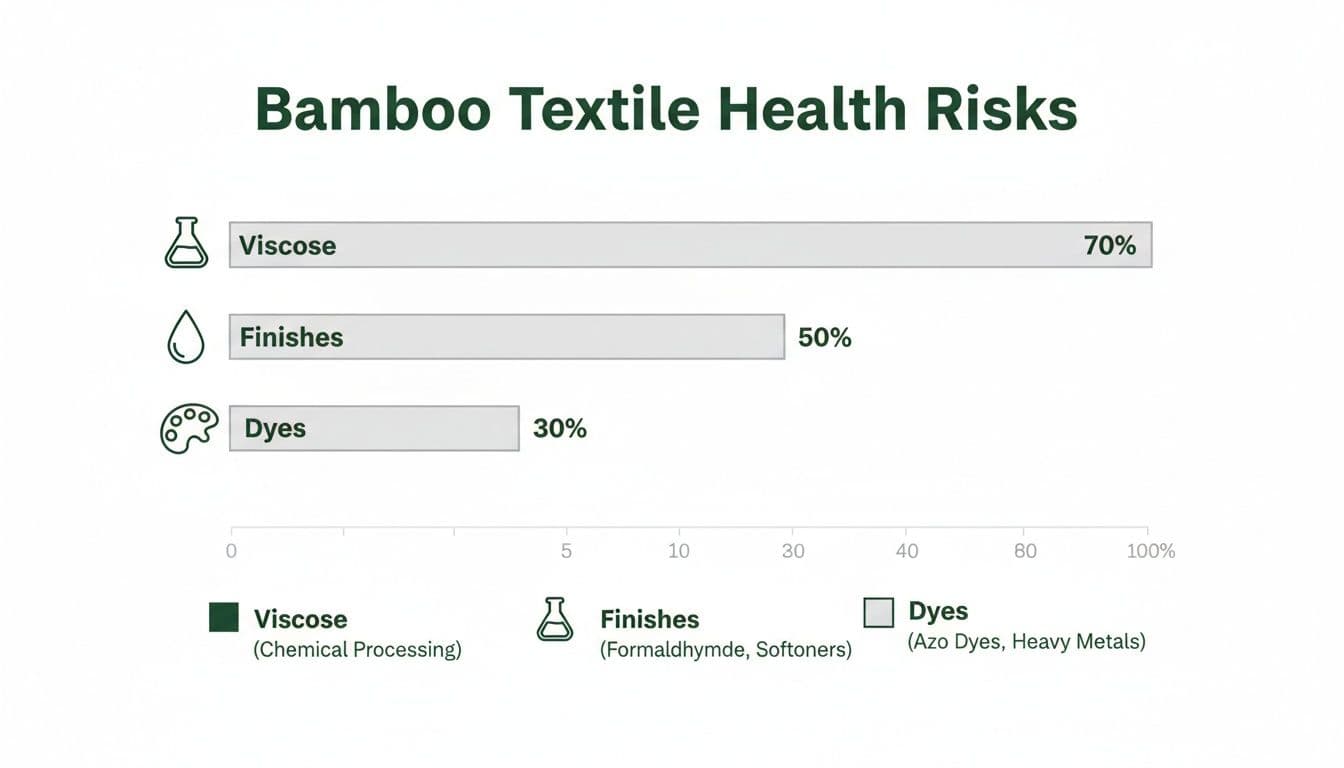
The initial viscose processing stage carries the most significant potential for chemical exposure, with finishing treatments and dyes also being key areas of concern. This is our analytical stance: while bamboo as a raw material is renewable, the health and safety of the final clothing item hinges entirely on verified manufacturing practices. For anyone concerned about what they put on their skin, the only logical approach is to prioritize brands that prove their product's safety with Oeko-Tex certification and supply chain transparency.
A Closer Look at the Brands
Kyte Baby: Known for its soft baby clothing, Kyte Baby uses Oeko-Tex certified bamboo viscose. This certification is the key piece of reassurance for a product intended for sensitive skin, even though the fabric is chemically-derived viscose.
Cozy Earth: This brand focuses on soft bedding and loungewear. They use Oeko-Tex certified viscose and state that they use a closed-loop system, which is a significant improvement over standard viscose production.
Boody: Boody is a standout for transparency, providing impressive detail on its supply chain and holding multiple certifications, including Oeko-Tex. They focus on everyday essentials, making them a reliable choice for items worn directly against the skin. You can find more brands with this level of commitment in our guide to the best sustainable clothing brands.
The demand for these garments is growing rapidly. You can read the full research on bamboo clothing market trends for a deeper market analysis. Context on industry pressures can be found by understanding how to launch a fashion brand. Other resources explain the science of what is vegetable cellulose or how brands use visuals like baby product photos to build trust.
Frequently Asked Questions
Is Bamboo Clothing Better Than Cotton For Your Health?
This depends entirely on the specific cotton and bamboo. Mechanically-processed organic cotton or linen are superior, as they avoid both pesticides and harsh processing solvents. However, a closed-loop, Oeko-Tex certified bamboo viscose may carry a lower chemical load than conventional cotton, which is often grown with heavy pesticides and processed with its own set of chemicals.
Can I Trust A Brand That Just Says "Eco Friendly"?
No. This term is unregulated and functions as marketing language. A brand must provide specific, verifiable proof, such as an "Oeko-Tex Standard 100" certification or a clear explanation of its "closed-loop" manufacturing process.
Does Washing Bamboo Clothes Remove Harmful Chemicals?
Washing new clothes is a good practice and can help remove some water-soluble residues like formaldehyde. However, it will not remove chemicals designed to be durable, such as PFAS-based finishes or many fabric dyes. Occupational viscose-processing hazards are a different question from residue on a finished garment. Greener Closet has not lab-tested bamboo viscose clothing, so occupational evidence cannot establish exposure from wearing it. FTC guidance on bamboo fabrics.
We analyze clothing based on materials, certifications, and manufacturing transparency so you can make an informed decision. Use our tools to find healthier options.