
What Is Vegetable Cellulose in Clothing and Fabrics?
Organization-authored. Editorial policy · Report an error
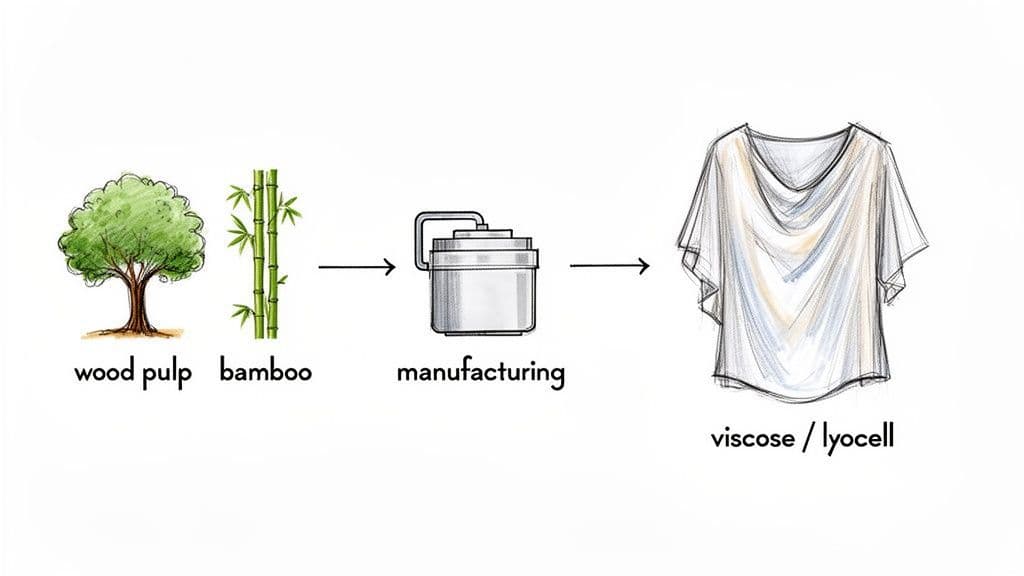
Vegetable cellulose is the fundamental building block of all plants, creating the rigid structure of their cell walls. In the world of clothing, this same material—sourced from wood pulp or bamboo—is transformed into soft, silky fabrics like viscose, modal, and lyocell. These are known as regenerated cellulose fibers, and understanding how they are made is key to assessing their impact on your health.
What People Commonly Assume
It’s easy to see why people think a "plant-based" fabric is an inherently better choice than a synthetic one like polyester. The logic is simple: the raw material comes from a renewable source, like a tree, not a barrel of oil. But the journey from a rigid plant to a soft garment is a chemically intensive one. This is where the simple “natural is better” narrative starts to get complicated. The conversation has to shift from just the plant source to how that plant was transformed into a piece of clothing.
The Health Tradeoffs of Cellulose Fabrics
When we shift the conversation from a fabric’s environmental footprint to what’s actually touching your skin, the tradeoffs become much more personal. The main issue isn't the cellulose fiber itself—at its core, it's just purified plant matter. The potential concerns lie with the chemical residues that might linger after production and the dyes used to give the fabric its color.
-
Chemical Residues: Traditional viscose production uses potent chemicals, like carbon disulfide. While most of it is washed away, it is not impossible for trace amounts to remain. For people with sensitive skin, this can be a potential trigger for irritation.
-
Dye Fixation: Cellulose fibers are incredibly absorbent, which allows for rich, vibrant colors. The downside is that some dyes, like certain azo dyes, can release potentially harmful substances. We dive deeper into these risks in our guide to toxic chemicals in clothing.
-
Fiber Inhalation: These fibers biodegrade, which is positive, but they also shed. Those tiny fibers become part of household dust and can be inhaled. The health effects of breathing in processed cellulose fibers—which might carry residual chemicals or dyes—are an area where research is still evolving.
An Everyday Context for Exposure
Think about a favorite viscose dress you might wear all day on a warm afternoon. That fabric is in direct, prolonged contact with your skin. When you perspire, you increase the chances of anything on the fiber transferring to your body. This is the practical reason why understanding what touches your skin is so important.
A Closer Look at Cellulose Fiber Types
Not all regenerated cellulose fabrics are created equal. The leap from the original viscose process to modern lyocell production represents a significant move toward safer, more sustainable textile manufacturing. The specific chemicals and methods used to dissolve and regenerate the cellulose are what separate one fabric from another.
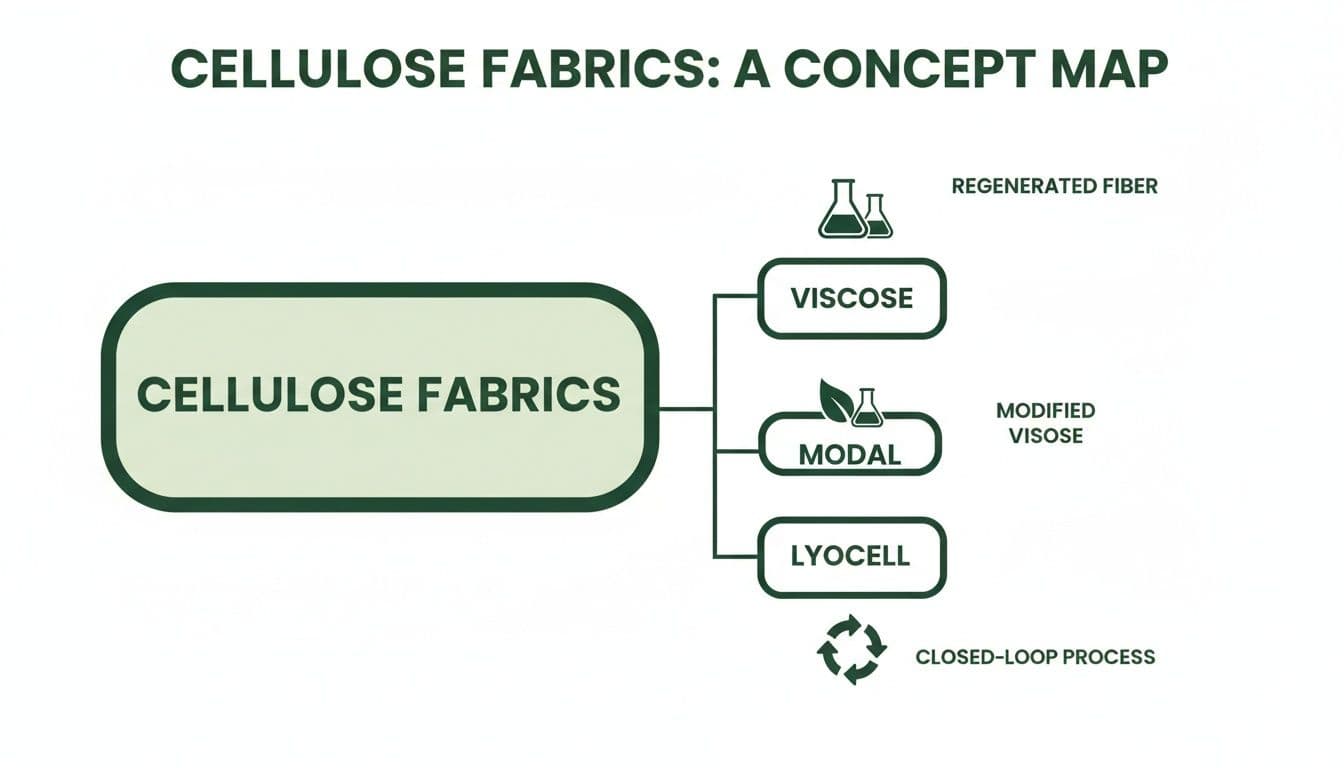
Here's how they differ:
-
Viscose (or Rayon): This older method often uses carbon disulfide, a harsh solvent known for its risks to factory workers and the surrounding environment if not handled in a tightly controlled system.
-
Modal: This is a refined version of the viscose process that creates a stronger fiber. While often an improvement, it still operates within the same general chemical framework as traditional rayon.
-
Lyocell (like TENCEL™): A much more modern approach. It uses a non-toxic solvent (amine oxide) in a closed-loop system that recycles and reuses over 99% of the chemicals and water.
The core tradeoff is this: regenerated cellulose fibers help you avoid the known issues of petroleum-based synthetics, but they ask you to trust in a complex chemical supply chain. That trust depends on the specific fiber—viscose, modal, or lyocell—and the manufacturer behind it.
You can explore our other guides on fabric science or our complete guide on regenerated cellulose fibers for a deeper analysis.
What to Look For on Labels
Decoding a garment's tag is how you make an informed decision. You need to look past vague marketing terms like “plant-based” and zero in on verifiable details.
-
Specify the Fiber Type: A label that says "100% Lyocell" is far more informative than a generic "rayon." When a brand calls out lyocell, it’s a conscious choice to highlight a more modern process.
-
Look for Branded Fibers: Seeing a trademarked name like TENCEL™ is an excellent sign. TENCEL™ is a brand of lyocell and modal fibers made by a company known for its high environmental standards.
-
Check for Key Certifications: Third-party certifications offer an independent layer of trust. The STANDARD 100 by OEKO-TEX® confirms the fabric has been tested for over 100 harmful substances. An FSC® label guarantees the wood pulp came from a responsibly managed forest.
Key Takeaways
-
Process Matters Most: Lyocell, produced in a closed-loop system, has a much lower chemical health risk profile than traditional viscose, which can involve harsh solvents.
-
Biodegradability Isn’t Everything: That these fibers break down naturally is a huge plus. But you still have to consider what chemical residues might be left from production or what dyes were used, because that's what ends up against your skin.
-
Read the Fine Print: Look for specific fiber names like "Lyocell" and certifications like OEKO-TEX®, which tests the finished garment for a wide range of harmful substances.
Limitations and Uncertainty
Context matters, and a complete picture is not always available. Retailers often provide incomplete information about their supply chains. This analysis is based on publicly available data and does not involve our own lab testing of materials. Furthermore, individual sensitivity to fabrics and chemicals can vary significantly.
We're seeing a push for this kind of material transparency in other industries, too. The food-grade cellulose market, for instance, is growing as consumers demand cleaner ingredient lists, and was valued at over US$ 402.3 million in 2024 (Fact.MR). The same scrutiny we apply to a food label can be applied to fabrics. The broader cellulose fiber market reached an estimated USD 48.78 billion in 2024 (this detailed industry report) as demand grows for alternatives to synthetics like polyester.
Knowing the difference between these materials allows for a more informed choice.