
A Health-First Guide to Vegan Leather Alternatives
Organization-authored. Editorial policy · Report an error
"Vegan leather" isn't one material but a broad category, covering everything from petroleum-based plastics to newer plant-derived fabrics. This distinction is the starting point for understanding potential health tradeoffs, because the chemicals involved in each are fundamentally different. What touches your skin matters.
What People Commonly Assume
It’s a reasonable assumption: if a product is labeled “vegan,” it must be a healthier, more natural choice than animal leather. Many people choose these alternatives to avoid the heavy chemical processing, like chromium tanning, used in conventional leather production.
This makes sense. The term “vegan” promises an animal-free product. However, it makes no promise about what the product is made of. A plastic jacket and a mushroom-based handbag can both carry a vegan label, yet they present entirely different considerations for your health.
The Tradeoffs in Vegan Leather Materials
The central health question is what base material is used. This determines the types of chemicals you may be exposed to through skin contact. A vegan leather belt worn daily creates a different exposure scenario than an occasional-use handbag.
-
Polyvinyl Chloride (PVC): This common plastic requires chemical additives called plasticizers, like certain phthalates, to make it soft and flexible. What is known is that some phthalates are endocrine disruptors, meaning they can interfere with the body's hormone systems. What remains uncertain is the exact amount that transfers to skin from clothing or accessories and the cumulative health impact of that specific exposure. Because of this, PVC is often seen as a material with less obvious benefits from a health perspective.
-
Polyurethane (PU): Generally considered a step away from PVC because it doesn't require the same plasticizers. The potential concern here shifts to residual solvents, like dimethylformamide (DMF), used during manufacturing. While the goal is to remove these, trace amounts can remain. Like all plastics, PU also sheds microplastic particles as it ages.
-
Plant-Based Composites (Cactus, Pineapple, Mushroom): These materials significantly reduce the total amount of plastic used. However, they are rarely 100% plant-derived. Most are composites, blending natural fibers (like cactus pulp or pineapple leaf fiber) with a synthetic binder, which is often PU. The health tradeoff is a large reduction in plastic, but not a complete elimination of the synthetic chemicals used in the binders and coatings.
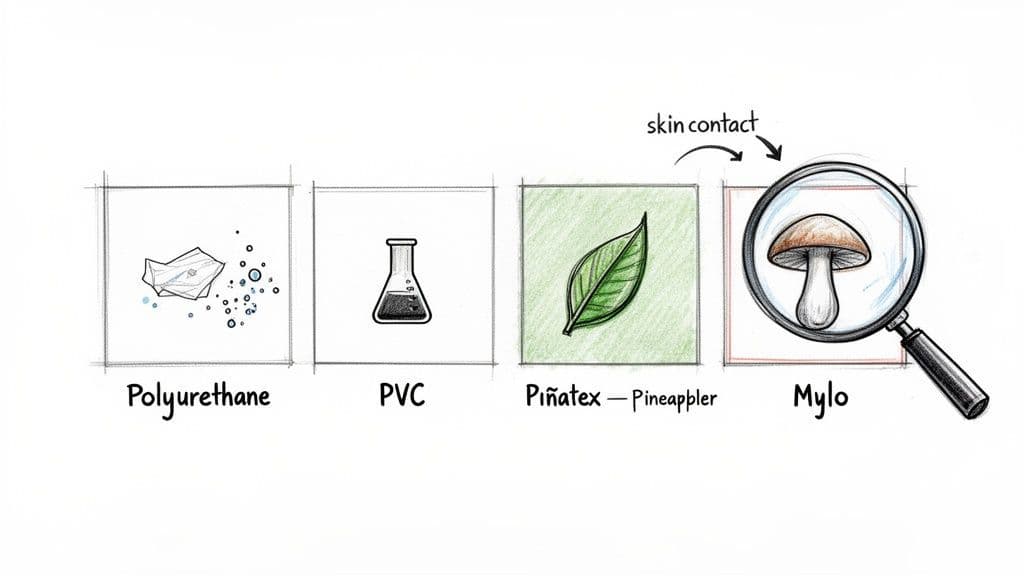
This is where the tradeoff becomes less obvious. Moving from a fully petroleum-based material to a plant-based composite is a significant change, but the synthetic components still need to be considered. The market for these materials is growing rapidly. You can read more on this market growth at GlobeNewswire. It's also helpful to understand the difference between cruelty-free vs. vegan claims, which are not interchangeable.
Breaking Down the "Vegan" Label
The term "vegan" simply confirms a product is animal-free. The next step is to understand if it is petroleum-based or bio-based.
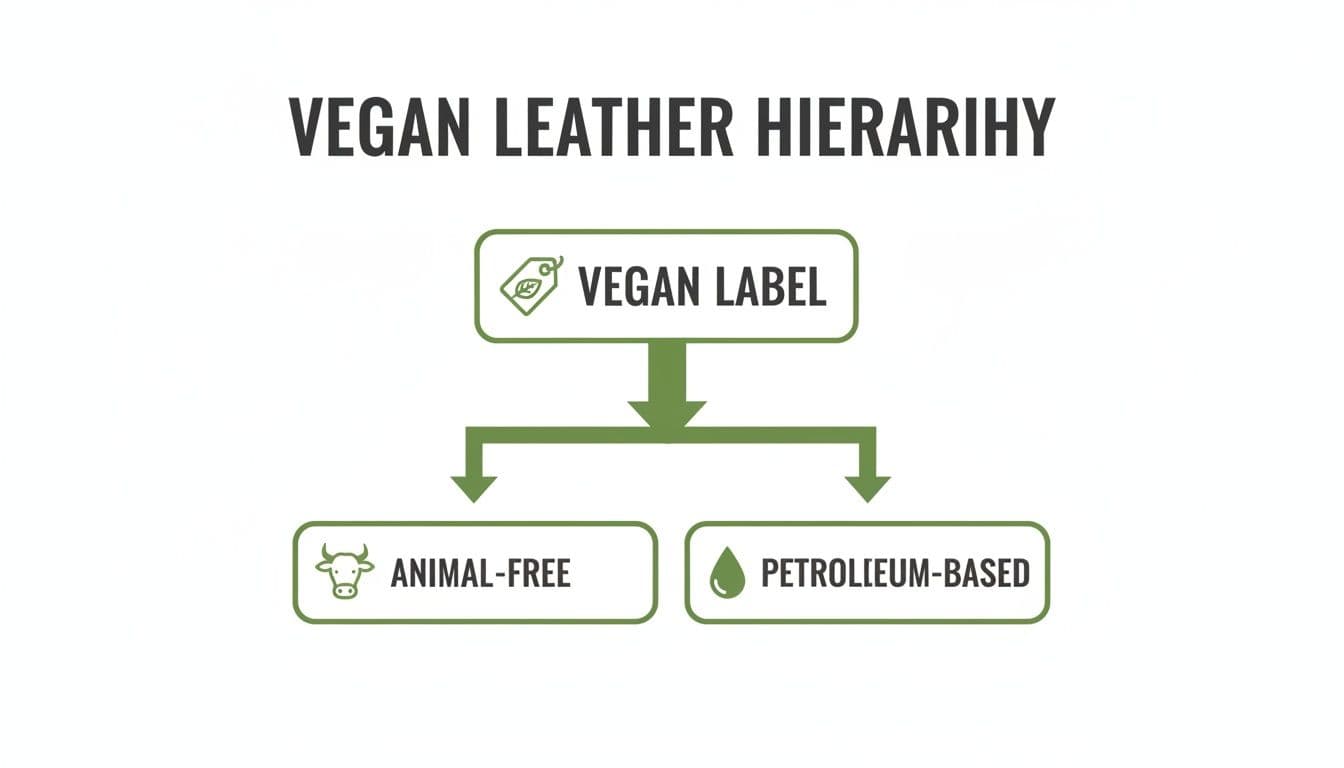
While all are animal-free, the starting point—petroleum versus plants—creates very different health and environmental profiles. As materials degrade, they can release microplastics. Learn more about microplastics in our article. The growth in bio-based leather is significant. You can discover more insights on this trend from Precedence Research. This signals a broader shift, though understanding the nuances of these new materials is key. For more on how raw materials are transformed, see our guide on regenerated cellulose fibers like Tencel and Modal.
What to Look For on Labels
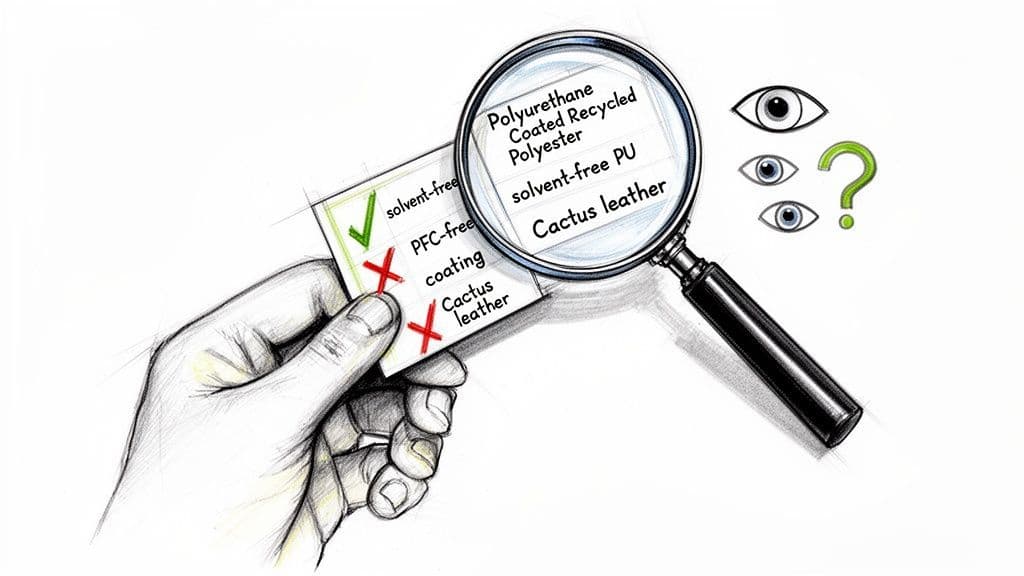
Transparent brands provide specific details, not just marketing terms. The skill of learning how to effectively read product labels is as useful for your closet as it is for your pantry.
-
Look for full composition: A good label moves beyond "Cactus Leather" to something specific like, "60% Nopal cactus pulp, 40% polyurethane binder on a recycled cotton backing." This detail allows for an informed decision.
-
Scan for chemical specifics: Phrases like "solvent-free PU," "PFC-free coating," or "water-based adhesives" are indicators that a company is addressing known chemical concerns.
-
Question vague terms: "Eco-leather" or "conscious material" are red flags without specific, verifiable definitions to back them up.
A deeper dive into chemicals in clothing can be found in our guide on toxic chemicals in clothing.
Key Takeaways
-
"Vegan leather" is not a single material. It ranges from 100% plastic (PVC, PU) to plant-based composites. Each type has different health considerations.
-
Petroleum-based vegan leathers like PVC may contain plasticizers (e.g., phthalates), some of which are known endocrine disruptors.
-
Plant-based alternatives (from cactus, pineapple, etc.) greatly reduce plastic content but are typically composites that still use synthetic binders like PU.
-
Brand transparency is your best tool. Look for a full material breakdown, including percentages and specifics on binders and coatings.
Limitations and Uncertainty
Retailer disclosure is often incomplete, making a full analysis difficult without direct access to supply chain data. The research on long-term durability and the breakdown of newer bio-composite materials is still evolving. This analysis is based on publicly available material information and does not include independent lab testing.