
What Is Acrylic Fabric? What It's Made Of, Acrylic vs Wool and Polyester
Organization-authored. Editorial policy · Report an error
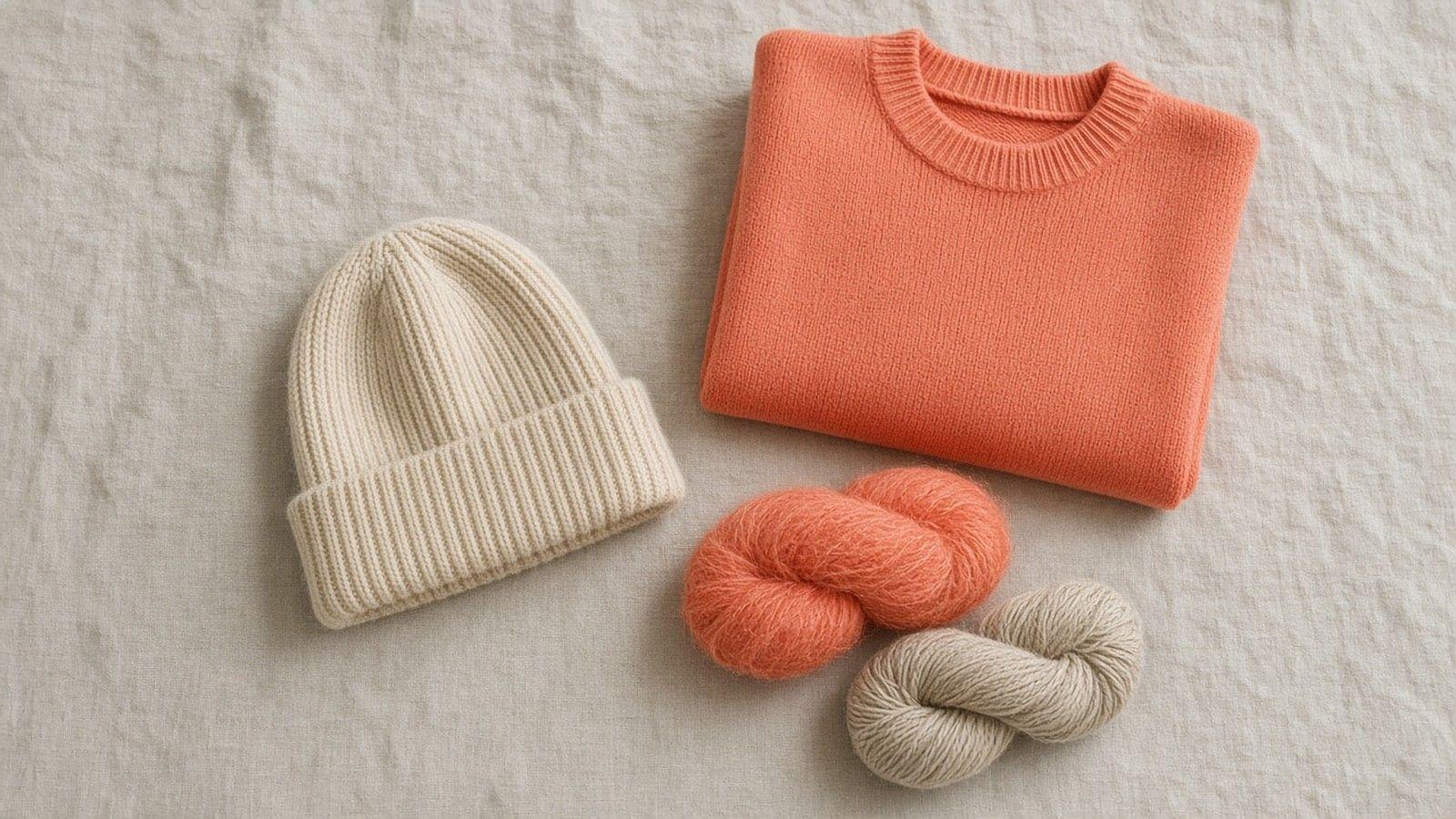
In 2024, the world made more acrylic fiber than clean sheep's wool. Textile Exchange puts acrylic at just under 1.6 million tonnes that year, and its chart of the global fiber market puts sheep's wool, counted as clean fiber, at about 1.1 million tonnes (Textile Exchange Materials Market Report 2025).
That's a lot of fiber for something whose first plant opened in 1950, when its short-fiber form was described as having the most wool-like feel of any synthetic. If a sweater or beanie feels woolly and the tag doesn't say wool, acrylic is one of the names you may find there instead, and it helps to know what that name does and doesn't tell you.
What is acrylic fabric?
Acrylic fabric is made from a manufactured fiber, which is a synthetic polymer spun into yarn. In the US, the FTC's textile rule defines acrylic as "a manufactured fiber in which the fiber-forming substance is any long chain synthetic polymer composed of at least 85 percent by weight of acrylonitrile units" (16 CFR 303.7).
So acrylic is a manufactured fiber built mostly from a chemical called acrylonitrile, and it doesn't come from a plant or an animal.
The same rule has a close cousin called modacrylic, which is a fiber with less than 85 percent but at least 35 percent acrylonitrile units by weight. If a label says modacrylic, that's a related fiber with its own name, and the label isn't calling it acrylic.
What is acrylic made of?
Acrylic is made mostly of acrylonitrile linked into long chains, and the FTC definition above leaves room for up to 15 percent of other units. The polymer made from acrylonitrile alone is called polyacrylonitrile. The International Agency for Research on Cancer (IARC) lists polyacrylonitrile among the polymers acrylonitrile is used to make, and says those polymers go into synthetic fibers for clothing, carpets and other textiles (IARC Q&A).
IARC describes acrylonitrile as a high-production-volume chemical "mostly used as a monomer to prepare polymers for the manufacture of fibres for textiles (acrylic fibres) used in clothing and carpets," along with other textiles, resins, synthetic rubber and plastics (IARC Monographs Volume 136).
Very little of it is recycled. Textile Exchange estimates recycled acrylic at about 0.8 percent of acrylic fiber in 2024. It also groups acrylic with polypropylene and elastane and counts about 99 percent of that group as fossil-based, which in its report means the fiber is neither recycled nor biobased (Textile Exchange).
Where acrylic came from
DuPont scientists started working on it in 1941 under the name "Fiber A." Because it resisted moths and mildew, it was first tested in window curtains, and the scientists started looking at clothing shortly after that. DuPont renamed it and trademarked the name Orlon in August 1948 (Hagley Museum).
The first plant for the commercial production of Orlon was dedicated in Camden, South Carolina, in October 1950. A South Carolina newspaper report from that week traced the fiber back to DuPont's discovery that polyacrylonitrile dissolves in certain organic solvents, which gave a concentrated solution that could be spun on ordinary yarn-spinning equipment. The same report said Orlon was described as having "the most wool-like feel" of any of the synthetics when it was made as staple, and it noted that the plant's first output was heavy yarn for industrial uses like filter fabrics and marine cordage (Kershaw County History).
Acrylic vs wool: what's the difference?
They can look and feel alike on a shelf. The differences we can point to a source for are these:
- Origin. Wool is an animal fiber, and Textile Exchange calls sheep's wool the most widely used one. Acrylic is a synthetic polymer made from acrylonitrile.
- How it's labeled. In the US, a fiber that makes up less than 5 percent of a product can generally be listed as "other fiber" without being named. Wool is an exception, because it has to be named with its percentage even when it's under 5 percent (FTC). So a small amount of acrylic in a blend may not be named on the tag, while a small amount of wool will be.
- Recycled content. About 7 percent of wool was recycled wool in 2024, and for acrylic it was about 0.8 percent (Textile Exchange).
- Washing. That 1950 report on the Camden plant described Orlon as quick-drying and easy to launder. That's how the fiber was presented at its launch, and it isn't a test of any sweater you can buy today, so follow the care label on the garment.
Is acrylic warm?
Acrylic's short-fiber form was described in 1950 as having the most wool-like feel of any synthetic, but feel isn't a warmth measurement, and we didn't find a source we could read that compares how warm acrylic and wool garments are. So we won't rank them here.
The tag won't settle it either. A fiber label names the fiber and its percentage, and it doesn't say how thick the knit is. We'd read "acrylic" on a tag as telling you what the yarn is made of, and judge warmth by the garment in your hands.
Acrylic vs polyester
Both are manufactured fibers, and the FTC rule that defines acrylic defines polyester a few lines later. Here's how they compare in Textile Exchange's 2024 numbers (Textile Exchange):
- How common they are. Polyester was about 59 percent of all fiber produced, and acrylic was about 1.2 percent.
- Where they're headed. Polyester production reached about 77.7 million tonnes. The report says acrylic volumes have been declining over the years.
- Recycled content. About 12 percent of polyester was recycled, nearly all of it from plastic bottles. Recycled acrylic was about 0.8 percent of acrylic fiber.
We compared polyester with cotton garment by garment in polyester vs cotton.
Does acrylic shed microfibers?
It did in a 2016 lab study. Researchers at Plymouth University laundered polyester, polyester-cotton blend and acrylic fabrics under different conditions of temperature, detergent and conditioner, and estimated that an average 6 kg wash load of acrylic fabric could release over 700,000 fibers. The polyester-cotton blend consistently shed significantly fewer fibers than either the polyester or the acrylic (Napper and Thompson, Marine Pollution Bulletin, 2016).
That was three fabrics in a lab, and the amount released changed with the wash settings, so it doesn't rank every acrylic sweater you might buy.
Is acrylic fabric safe to wear?
Here's what the sources we read say, and where they stop.
In 2024, IARC classified acrylonitrile, the chemical acrylic is made from, as "carcinogenic to humans" (Group 1). The strongest evidence came from a large study of workers in industries that make or use acrylonitrile, where workers with higher exposure had a higher rate of death from lung cancer than workers with lower exposure (IARC Q&A). IARC says exposure at work happens mainly in production industries, by breathing it in or through the skin, and that the general population can be exposed through cigarette smoking, air pollution and "contact with contaminated consumer products" (IARC).
That's a classification of the raw chemical. It isn't a finding about wearing a finished acrylic sweater, and we didn't find a primary source measuring how much leftover acrylonitrile is in typical acrylic clothing. So we're not going to guess. If that question matters to you, it's fair to ask a brand whether the finished product was tested for residual substances and by whom. Our acrylic guide covers how the fiber scores with us.
How to tell if something is acrylic
Read the fiber content tag or the "materials" section of the product page. US labels have to list fibers by their generic names with percentages by weight, in order from the biggest share down (FTC), so a tag for a blend would read something like "50% acrylic, 30% wool, 20% nylon." The one gap is the 5 percent rule from earlier, since a fiber under 5 percent can show up as "other fiber."
If you're shopping online and the brand doesn't list the fibers, nobody can tell you for sure what it's made of. That's the part we built Greener Closet for: it scores clothes while you shop based on what the listing discloses. If the listing is missing the fibers, we can't invent them either.