
Polyester vs Cotton: Which Is Better, Garment by Garment
Organization-authored. Editorial policy · Report an error
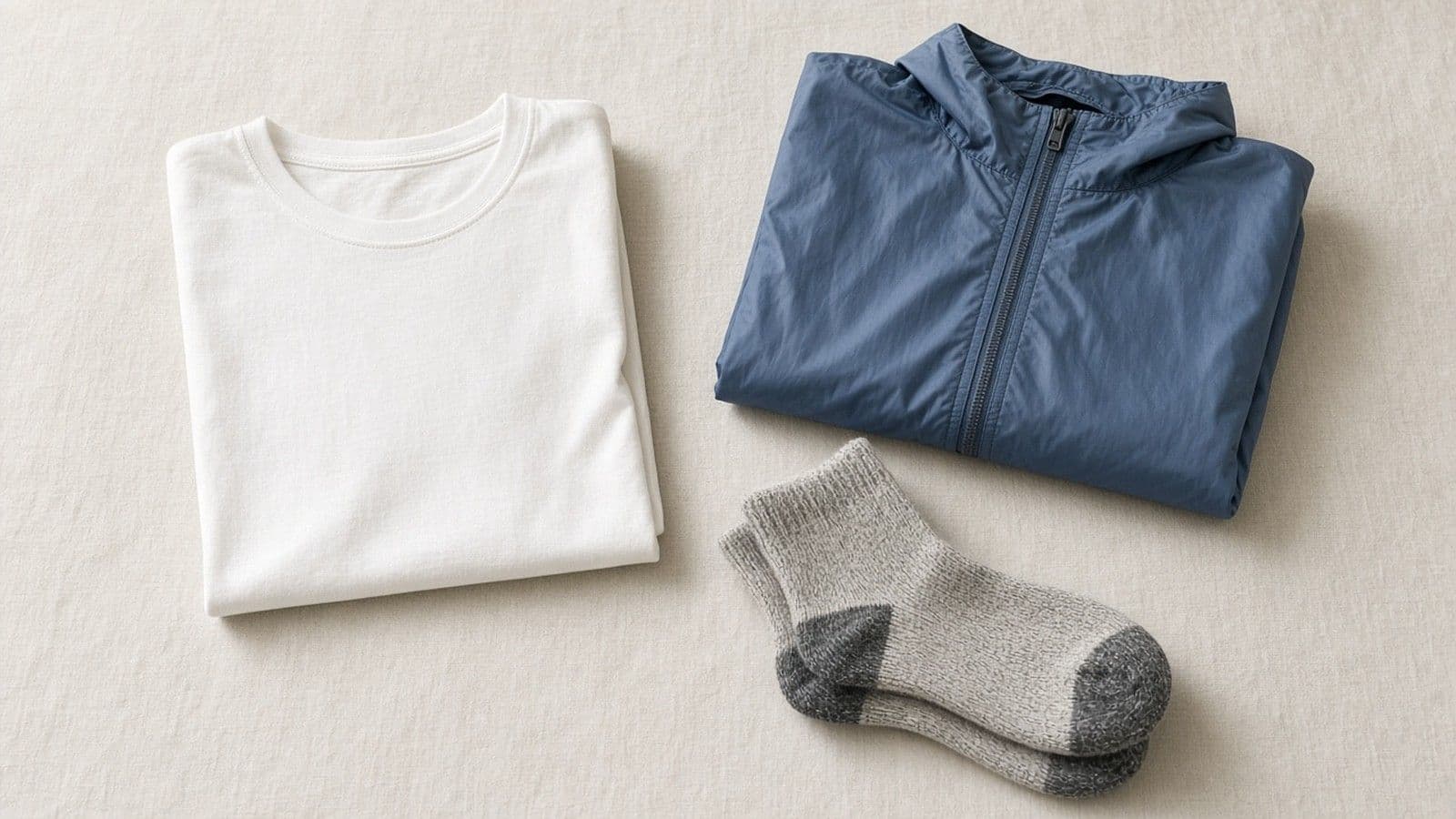
Put 26 people through an hour of spin class, seal their shirts in bags for 28 hours, then have a trained odor panel smell them. A 2014 study in Applied and Environmental Microbiology did that, and the 100% polyester shirts smelled significantly less pleasant and more intense than the 100% cotton ones. That's most of the polyester vs cotton answer for everyday clothes.
It's a small study. Ten people wore cotton, ten wore polyester and six wore blends, so nobody wore both. But it matches older odor research we get into below.
So cotton is the better pick for anything you sweat in all day. Polyester and nylon earn their place where you need a fabric that doesn't soak up water, like a rain shell, or one that gets rubbed hard, like the heel of a sock.
The rest depends on the garment, so we went through them one at a time.
What's the real difference between polyester and cotton?
The biggest difference is water. Textile people measure how much moisture a fiber holds with a number called moisture regain. The American Chemical Society's student magazine lists these values:
- Wool: 16%
- Cotton: 8.5%
- Nylon: 4%
- Polyester: 0.4%
Cotton pulls sweat into the fiber, while polyester barely takes any in. Most of this post comes back to that gap, from how a shirt feels when you sweat to how it smells.
Is polyester breathable?
It can be, but probably not in the way people mean.
If breathable means air moving through the fabric, the knit can matter more than the fiber. A study of cotton/polyester knits changed the polyester content from 52% to 65% and found no statistically significant effect on air permeability. Looser knits and thinner yarns let more air through. That's a narrow range, and the fabrics were thick double-layer knits, so it doesn't prove fiber never matters.
What people usually mean is whether it feels clammy, and that's where polyester has a problem. It doesn't absorb sweat, so the sweat has to get moved somewhere or it sits on your skin. The same ACS article explains that moisture-wicking polyester works because it's engineered for it, with oddly shaped fibers that make tiny channels or a finish that makes the surface less water-repellent. A polyester blouse or dress shirt that isn't sold as wicking may not have any of that. So a polyester gym shirt can feel dry, and a cheap polyester work top can feel like wearing a plastic bag.
Why does polyester smell?
Polyester holds onto body odor more than cotton or wool, and researchers have been measuring that for a while.
A 2007 study in Textile Research Journal had people wear cotton, wool and polyester fabrics under their arms, then rated the odor. Polyester rated high, and cotton and wool rated mid to low. Bacteria counts after one day were similar on all the fabrics, so more bacteria wasn't the reason polyester smelled worse.
The lead researcher's thesis adds a few things. Wool came out lowest for odor, below cotton. Odor intensity went down as the fiber's ability to absorb moisture went up, which is the moisture regain list showing up again. And odor compounds built up above the polyester fabrics after 7 days, which didn't happen with the cotton or wool.
Both are from 2007.
The 2014 spin class study found another piece. A type of bacteria called micrococci showed up almost only on the synthetic shirts, and the researchers think they may help explain the worse smell.
That's likely why a polyester shirt can look fine after a workout and still smell off.
Which lasts longer, polyester or cotton?
We didn't find a study that wore out cotton tees and polyester tees side by side, so there's no clean answer. What we did find is about pilling, and it cuts against polyester's main advantage.
Polyester is the stronger fiber. A 1981 study of pilling in polyester/cotton fabrics says "the high strength and flex life of polyester fibres prevent easy wear off of pills." Under the microscope, pills on high-polyester blends were held on by unbroken polyester fibers, with broken cotton fibers caught around them. Less polyester meant fewer pills. A 25/75 polyester/cotton fabric had about a fifth of the pills of a 67/33 one.
So the strength that helps a blend hold together is also what keeps those little balls stuck to the surface. The study is old and it tested woven suiting fabric, not tees, so it explains why blends pill more than it predicts what your shirt will do.
Why does stretch fabric get baggy?
If a blend stretches, that's the elastane (also called spandex or Lycra), and two things work against it.
- Repeated stretching. Stretch denim researchers call the result "bagging." A 2023 study in Heliyon describes it as leftover deformation when fabric gets stretched over and over and doesn't fully recover. It shows up at knees, elbows, hips and pockets.
- Heat and chlorine. A 2024 study of swimwear fabrics notes that elastane is more sensitive to heat than the other fibers it's blended with. Chlorine is enough of a problem that the testing lab SATRA has a dedicated test for how much elastane breaks down in chlorinated water.
So if you want the stretch to last, keep it out of a hot dryer.
Polyester vs cotton: which is better for each garment?
| Garment | Our pick | Why |
|---|---|---|
| Everyday tees and tops | Cotton | Absorbs sweat, holds less odor |
| Underwear | Cotton | Worn against sweaty skin all day |
| Pajamas | Cotton | Same reasons as underwear |
| Socks | Wool, with a little nylon | Feet sweat a lot, and heels wear through |
| Workout shirts | Wool blend, or wicking polyester | Wool holds less odor, wicking polyester dries faster |
| Rain shells | Polyester or nylon | Cotton soaks up water |
| Outerwear shells | Polyester or nylon | Doesn't absorb water, resists abrasion |
Should everyday tops and underwear be cotton?
Yes. This is where cotton wins clearly. You wear these all day against skin that sweats, and the odor research and the moisture numbers point the same way.
One thing to know about cotton underwear: the waistband may not be cotton. US labeling rules let a brand leave waistbands, elastic and thread out of the fiber percentage, and GOTS counts elastic and sewing thread as accessories that sit outside its fiber percentages. We explain how that works in our post on what "exclusive of trim" means.
What about workout clothes?
This is the one real tradeoff. Cotton soaks up sweat and holds it. Polyester built for wicking moves sweat off your skin and dries faster, but it'll smell sooner.
Wool is worth a look here. A 2018 study found that fabrics with 20% wool had substantially less odor than 100% polyester, and a wear trial backed that up. At heavier odor levels, 100% wool soaked up more odor than the blends. If you'd rather avoid synthetics where you can, our guide to sustainable activewear goes further.
What about rain shells and outerwear?
Here polyester and nylon do the job cotton can't, because cotton soaks up water. The swimwear study sums up why polyester and nylon get used so much: they stay dimensionally stable in water, have excellent abrasion resistance and dry quickly. A rain shell is an outer layer worn over your clothes, not against your skin, so the odor problem matters less.
If you're wondering about the water-repellent finishes on rain gear, that's a separate chemicals question. Our guide to avoiding PFAS in clothing covers it.
Cotton vs polyester socks: which is better?
Feet sweat a lot. The soles of your feet and your palms have the most sweat glands on the body, about 250 to 550 per square centimeter, according to a 2019 review of sweat gland physiology. Skin on the face, trunk and limbs has two to five times fewer.
Are polyester socks bad?
For sweat and smell, they pretty much suck. You're putting the fiber that absorbs the least, and held the most odor in shirt studies, on the sweatiest part of your body, then putting a shoe over it.
Cotton isn't perfect either. It absorbs sweat, which means the sweat is now sitting in your sock.
Wool usually handles both better. It absorbs the most moisture of the three, and wool fabrics came out lowest for odor in the 2007 thesis.
Why do wool socks have nylon in them?
Pure wool socks don't last as long. In wearer trials published in 1971, 80/20 wool/nylon socks lasted about three times as long as similar pure wool socks. That's an old study of men's socks, so don't hang too much on the exact number.
A sock abrasion study found something similar for cotton. In a lab rubbing test, 100% cotton socks broke through within the first 5,000 rubs, and adding nylon or polyester raised abrasion resistance. It tested seven kinds of socks bought in Egypt, so it's small too.
So a little nylon in a wool sock is a reasonable trade. We'd look for mostly wool, with nylon as the smaller part. We go into materials and certifications in our guide to eco friendly socks.
Is polyester bad?
For wearing, there's no blanket answer. It's a poor pick for socks and everyday tops, and a good one for a rain shell.
The other questions people mean by "is polyester bad" are separate ones, and each has its own post:
- What's in the fabric: the chemicals in polyester clothing
- What it sheds in the wash: how to avoid microplastics in clothing
- What happens when you throw it out: is polyester biodegradable
What can the label tell you?
The fiber content tells you how something will handle sweat and smell. It won't tell you much about how long it'll last.
For sweat and smell, the moisture numbers above are a decent guide. More cotton or wool means more sweat absorbed and less odor. More polyester means it dries faster and holds odor longer. If there's elastane, keep it away from high heat.
For how long it'll last, look at the garment itself:
- Stitching. Look for loose threads, broken yarns and uneven stitches. The sock abrasion study gives the same advice for socks.
- Yarn thickness. In the same study, socks made with coarser yarns took more rubs to wear a hole.
- Where the blend is. Some listings break the fiber content out by section, like "Body" and "Rib." That tells you whether the polyester or spandex is in the whole thing or just the cuffs.
Greener Closet scores clothing from the fiber content and certifications the listing discloses, so you can see the blend before you buy. We can't see how a garment is sewn, so the stitching check is still yours.
A note on sources: for the 2007 odor study and its thesis, the 2018 wool study and the 1971 sock study, we worked from the published summaries, because the full papers aren't openly available.