
Is Polyester Bad for You? What's Known About Wearing It
Organization-authored. Editorial policy · Report an error
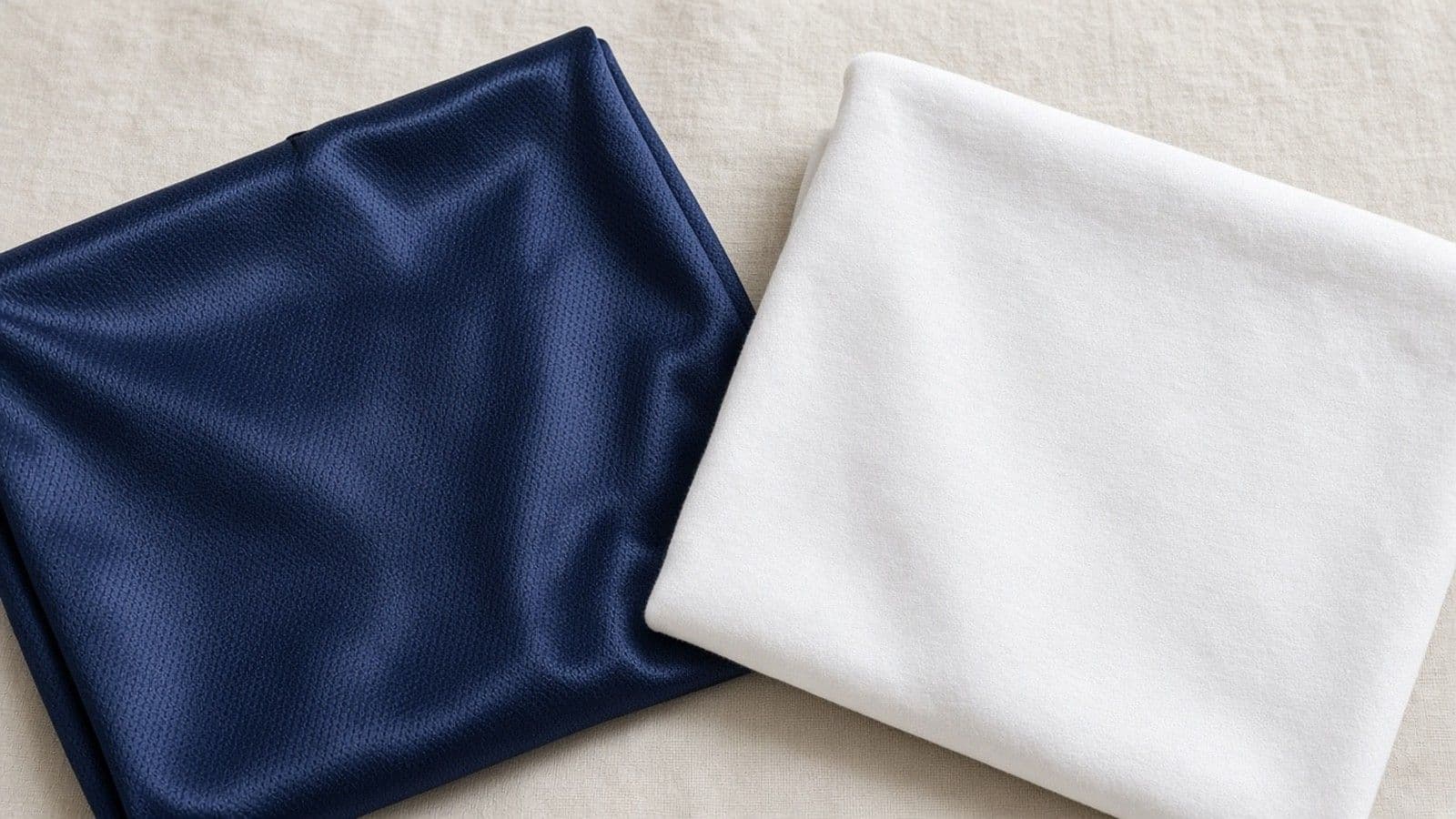
Is polyester bad for you? For most people, wearing it isn't known to hurt you. The fiber is polyethylene terephthalate, or PET, the same plastic as a soda bottle, and it's stable. What can actually reach your skin is the stuff that comes along with it, like antimony left over from making it and the dyes that color it, plus any finish that got put on top.
Some of that is well studied and some of it isn't. So the useful answer depends mostly on the piece and how long it sits against your skin.
What's actually in polyester besides plastic?
Three things show up in the research.
- Antimony. It's used as a catalyst to make PET, and some of it stays in the fiber. A 2021 study puts it plainly: polyester fibers are "usually contaminated by antimony because of its use as a catalyst."
- Disperse dyes. Polyester doesn't take ordinary dyes well, so it gets a class of dyes called disperse dyes, and a few of them are known skin allergens.
- Finishes. Water-repellent, stain-resistant and wrinkle-resistant finishes get added after the fabric is made. Those aren't polyester-specific, but polyester outerwear and activewear get them a lot.
A fiber label won't list any of these. A tag that says "100% polyester" is telling you the fiber, which US law requires under the FTC's Textile Fiber Rule. Nothing requires the dye or the catalyst to be on it.
Does antimony come out of polyester clothes?
A little does, and most of it comes out the first time the fabric gets wet.
That 2021 study soaked polyester fabrics made for skin contact in artificial sweat for 24 hours at body temperature. The fabrics had about 125 to 470 milligrams of antimony per kilogram, and between 0.05% and 2% of it moved into the sweat. Cooler temperatures, shorter contact and less acidic sweat all lowered that. The first soak released the most, which is why the authors say washing new clothes before you wear them cuts exposure.
What the study didn't measure is how much gets through your skin, and it didn't compare the amounts to a safety limit. So it shows antimony can leave the fabric, and it gives you an easy thing to do about it.
Can polyester give you a rash?
It can. When it's an allergy, the dye is the usual suspect. Heat and sweat trapped against the skin can cause a rash too.
A 2000 study from one contact dermatitis clinic gave 271 patients a textile dye patch test, and 40 reacted to at least one dye. Thirty-three of them reacted to Disperse Blue 106 and 32 to Disperse Blue 124. Ten of the 11 who were tested against their own clothes reacted to it, and 9 of those reacted to blue or black linings made of 100% acetate or 100% polyester.
These were people who came to the clinic with stubborn rashes, and it's one clinic 25 years ago, so it shows these dyes can cause this, not how common it is today. But it gives you a pattern to look for: a rash where a dark synthetic lining, waistband or pair of leggings sits, especially if you've been sweating. A dermatologist can patch test for these dyes, and our guide to the best fabrics for sensitive skin covers what to wear instead.
Why was BPA found in some polyester socks?
The Center for Environmental Health, a California advocacy group, tested socks and reported BPA in ones made mostly of polyester with spandex, and none in socks made mostly of cotton. It sent legal notices under California's Proposition 65 to 42 companies in September 2021.
That's one group's testing of one kind of product, and it doesn't mean every polyester garment has BPA. If you want to play it safe, socks are an easy place to choose cotton. Our guide to eco friendly socks goes through materials and certifications.
Does polyester have PFAS?
Not because it's polyester. PFAS get added as a water- or stain-repellent finish, and that finish can be applied to finished textiles, including clothing. The EPA's work on textile mills describes that use. California's AB 1817 has restricted PFAS in clothing sold in California since January 1, 2025. Heavy rain gear made for severe wet conditions is exempt until 2028, as long as it's labeled "Made with PFAS chemicals."
A plain polyester tee and a water-repellent polyester rain jacket are different questions. If something beads water, ask what the finish is. Our guide to avoiding PFAS in clothing goes through what to ask and what the answers mean.
What about microplastics?
Polyester sheds plastic fibers, mostly in the wash. A 2016 washing machine study found polyester shed significantly more fibers than a polyester-cotton blend. In one of its wash conditions, it estimated about 496,000 fibers from a 6 kg load of polyester and about 138,000 from the same load of polyester-cotton.
Most of what's known here is about what ends up in water, and research on what household fibers mean for people is still early. We cover the wash side in how to avoid microplastics in clothing, and what happens when polyester gets thrown out in is polyester biodegradable.
So is polyester bad for you?
Not for most people in most clothes. It matters most for things worn against your skin for hours, especially when you sweat. That's underwear, socks, sleepwear, leggings and kids' basics. Polyester also tends to hold onto odor more than cotton or wool does. Our post on polyester vs cotton goes through it garment by garment.
It matters least for an outer layer you wear over other clothes, like a rain shell or a puffer. There, polyester does a job cotton can't, and the finish is the bigger question.
Is polyester safe to wear?
Nothing here means you need to throw out your polyester. A few habits cover the open questions.
- Wash new polyester before you wear it. It's the one step the antimony study backs directly, and it doesn't cost anything.
- Pick cotton, wool or linen for the things that sit on your skin all day, if you'd rather not have polyester there. Those still get dyed and finished, so they aren't automatically cleaner, but they take antimony and disperse dyes out of it. Lyocell and modal are made from wood pulp and are another option.
- Pay attention to rashes under dark synthetics, and bring that up with a dermatologist instead of guessing.
- Ask about the finish on anything water- or stain-repellent.
- Use OEKO-TEX Standard 100 as a check on the finished item. OEKO-TEX tests certified articles against its list of limited substances. Make sure the certificate covers the product you're buying, not just the brand.
How Greener Closet scores polyester
Greener Closet scores clothes from the fibers and certifications the listing discloses. Polyester scores low because it's a plastic that sheds and lasts a long time once it's out in the world, and because water-repellent synthetics are where PFAS finishes tend to show up. In our catalog, the 143 products that are entirely polyester have a median score of 18 out of 100, and the 1,968 with no polyester have a median of 81.
That score isn't a lab test of a garment, and it can't tell you whether a specific shirt has a PFAS finish, a particular dye or any antimony. What it does is show you how much of a piece is polyester before you buy it, which a lot of listings bury.
If you've got a specific piece in mind, paste its link or type the label from the tag into the checker at the top of this post.