
What Is Flannel? What Flannel Is Made Of, Cotton Flannel, and Flannel vs Fleece
Flannel is a soft woven fabric, not a fiber or a plaid, so here's what it can be made of, how it differs from fleece, and the flame rules on kids' flannel pajamas.
Organization-authored. Editorial policy · Report an error
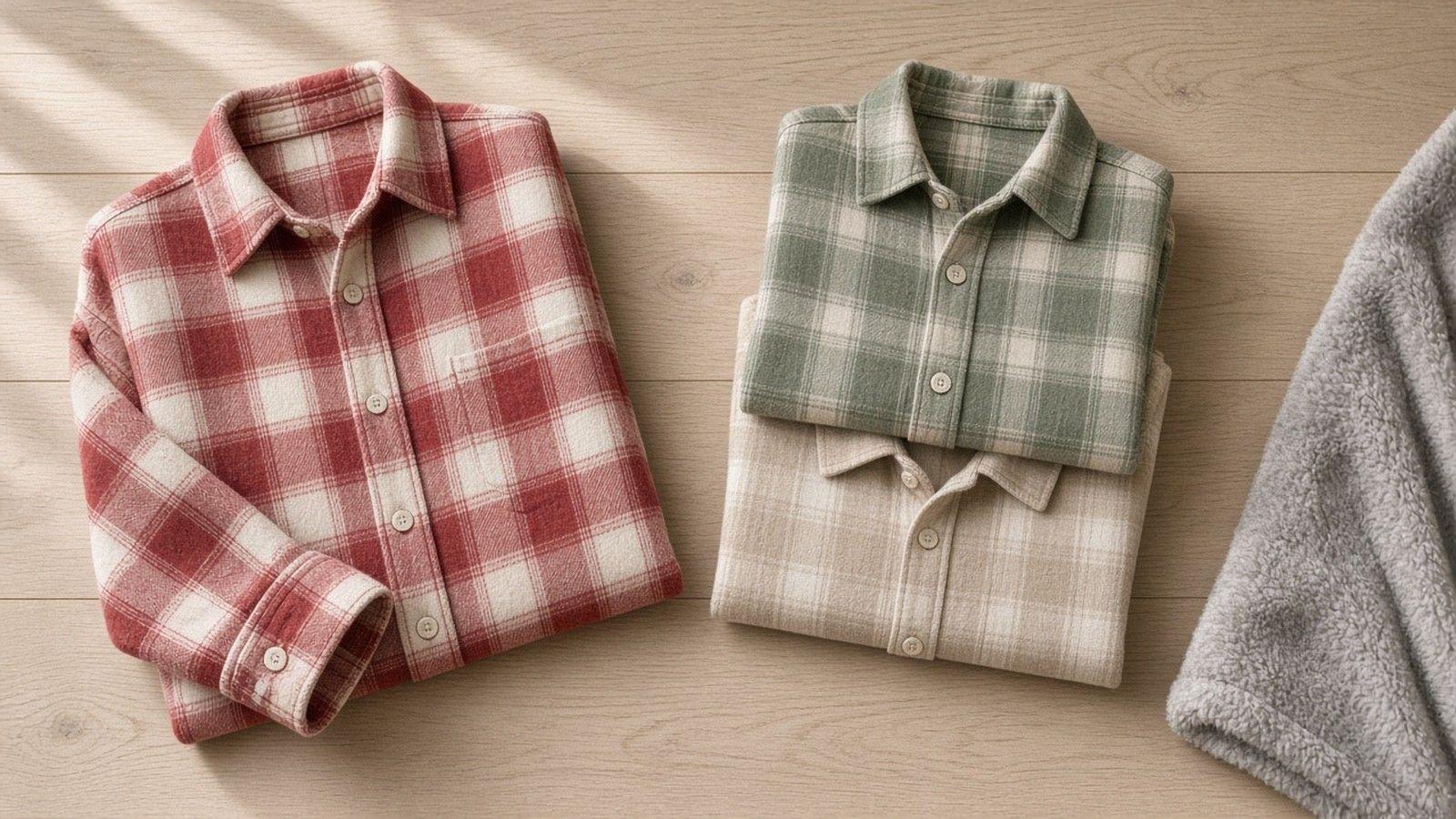
The 1911 Encyclopaedia Britannica's entry on flannelette, the cotton cloth made to imitate flannel, quoted the Daily News of 1887 calling it "a poverty-stricken article" and noted that "the flimsier kinds have been a frequent source of accident by fire" (1911 Britannica, via Wikisource). More than a century later, fire is still the reason kids' pajamas, flannel ones included, come with federal rules attached.
What is flannel?
Flannel is a soft woven fabric, and Wikipedia's flannel entry says it can be woven in either a plain weave or a twill weave. Flannel may be brushed, which is what gives it that fuzzy surface. Brushing means a fine metal brush rubs the fabric and pulls fibers up from the loosely spun yarns into a nap on one or both sides, and the same entry describes napping once after weaving, then again after the fabric is bleached, dyed or otherwise treated. Some flannel isn't brushed at all and gets its softness from the loosely spun yarn.
One thing flannel is not: a pattern. Plenty of people call any plaid shirt a flannel, but not all flannel shirts are plaid and not all plaid shirts are flannel. Flannel is the fabric, and plaid is a pattern.
What is flannel made of?
It depends, because flannel describes the fabric, not which fiber it's made from.
Flannel was first made from carded wool or worsted yarn, and a fabric similar to flannel was well known in Wales as early as the 16th century. Today flannel is often made from wool, cotton or synthetic fiber, so you'll find:
- Wool. The original, though by the 20th century mixtures of silk and cotton had become common too.
- Cotton. Cotton flannel, flannelette and diaper flannel are all cotton (more on those below). In flannelette, the crosswise yarn is usually coarser than the lengthwise yarn, and the nap is raised from that crosswise yarn.
- Synthetics. Synthetic flannel exists too, and the word "flannel" on its own won't tell you whether it's polyester.
So "flannel shirt" or "flannel sheets" on a product page tells you about the fabric, but not whether you're getting cotton, wool or polyester.
What is cotton flannel?
Cotton flannel is a cotton fabric napped on one or both sides, and you'll run into a few names for it:
- Flannelette: a napped cotton made to imitate the texture of flannel, with a long or short nap on one or both sides.
- Canton flannel: another name for cotton flannel.
- Diaper flannel: a sturdy cotton napped on both sides, used for cloth diapers.
If a label says "100% cotton" and the fabric is woven and napped, you're most likely holding cotton flannel, whatever the product name calls it.
Flannel vs fleece: what's the difference?
They can feel similar, but flannel is woven, in a plain or twill weave, while fleece is knit: Polartec, the fleece maker, describes its fleece as "a knitted material" that finishing turns into a soft, furry pile (Polartec).
The fiber can differ too. Fleece can be all cotton, a cotton and polyester blend, or all synthetic, as we covered in what is fleece fabric, and Polartec says most of its own fleece is made of recycled polyester from water bottles.
If you're trying to avoid synthetic fiber, neither word settles it, so check the fiber line.
Flannel pajamas for kids: the flame resistance rules
This is where that 1911 line about fire comes back around: in the US, the Consumer Product Safety Commission has flammability standards for children's sleepwear, 16 CFR parts 1615 (sizes 0 through 6X) and 1616 (sizes 7 through 14). The fabric and finished garments have to pass flammability tests, unless the garment meets the CPSC's definition of an infant garment (sized 9 months or smaller, with length and labeling limits) or of a tight-fitting garment.
In a 2000 news release, the CPSC said loose-fitting T-shirts and other loose-fitting clothing made of cotton or cotton blends "should not be used for children's sleepwear" because they can catch fire easily and burn rapidly, and that they were associated with nearly 300 emergency-room-treated burn injuries to children each year. It also explained that flame-resistant garments are either made from inherently flame-resistant fabrics or treated with flame retardants.
So what does that mean for a loose pair of cotton flannel kids' pajamas? In a 2021 CPSC podcast on sleepwear requirements, agency staff say that while not all children's sleepwear made from cotton or other cellulosic fibers fails the tests, "most need to be treated with FR finishes." FR means flame retardant. The same podcast says the agency looks at whether a garment is likely to be used for sleeping, not just what it's called, so items marketed as "loungewear" can still fall under the rules.
That leaves two common routes for cotton kids' pajamas:
- Snug-fitting. These are excepted from the children's sleepwear flame test because they fit close to the body, though they still have to meet the general clothing flammability standard. The CPSC says they must carry a yellow hangtag and a label reading "WEAR SNUG-FITTING, NOT FLAME RESISTANT" on the front of the sizing label at the center back of the garment.
- Loose-fitting and flame resistant. For cotton, the CPSC podcast says that usually means an FR finish.
The snug-fitting label tells you the garment didn't have to pass the sleepwear flame test because of how it fits. For a loose flannel set, the fair question to ask the brand is how it meets the sleepwear standard: is it the fabric itself or a treatment, and which one?
How to tell what flannel you're buying
In the US, FTC rules say the label has to name every fiber that makes up 5 percent or more of the product's total fiber weight, using its generic name, like cotton or nylon (16 CFR 303.6). "Flannel" isn't a fiber, so it won't show up there. What shows up is cotton, wool, polyester, and so on.
When we look at a flannel listing, this is what we check:
- The fiber content line. "Cozy flannel shirt" tells you nothing about the fiber, while "100% cotton" or "100% wool" does.
- Blends. Some flannel is a mix of fibers. If the listing doesn't give the percentages, ask.
- Kids' sleepwear tags. Look for the snug-fitting label or a flame resistant claim.
- Trim. Some labels list fiber "exclusive of trim," which leaves out parts like waistbands, cuffs, collars and some elastic. We explain that in our guide to "exclusive of trim".
Greener Closet scores what a listing discloses. If a brand only says "flannel" and never says what it's made of, we treat the fiber as unknown rather than guess, so that's the moment to email the brand before you buy.