
What Is Fleece Fabric? What It's Made Of, Polar Fleece vs Cotton Fleece
Organization-authored. Editorial policy · Report an error
The first fleece sweater prototype was sewn from a roll of polyester meant for toilet seat covers. According to Patagonia's own history of fleece, Yvon Chouinard had found an acrylic pile fabric in Canada, so Malinda Chouinard went looking in the Los Angeles fashion district for something similar and came back with a polyester one "intended for toilet seat covers." It sat on a shelf until Yvon pulled it out and had a sweater sewn from it, and the outer fabric started to pill after its first wash. But it held less than 1 percent of its weight in water and dried quickly, so Patagonia partnered with Massachusetts fabric maker Malden Mills, now Polartec, to create "the first light, strong pile fabric out of polyester" for the first fleece sweaters.
So when you're standing in a store holding a fleece jacket or a fleece blanket for your kid's bed, what are you actually holding? It could be polyester, cotton or a blend of the two, and the word fleece on its own won't tell you.
What is fleece fabric?
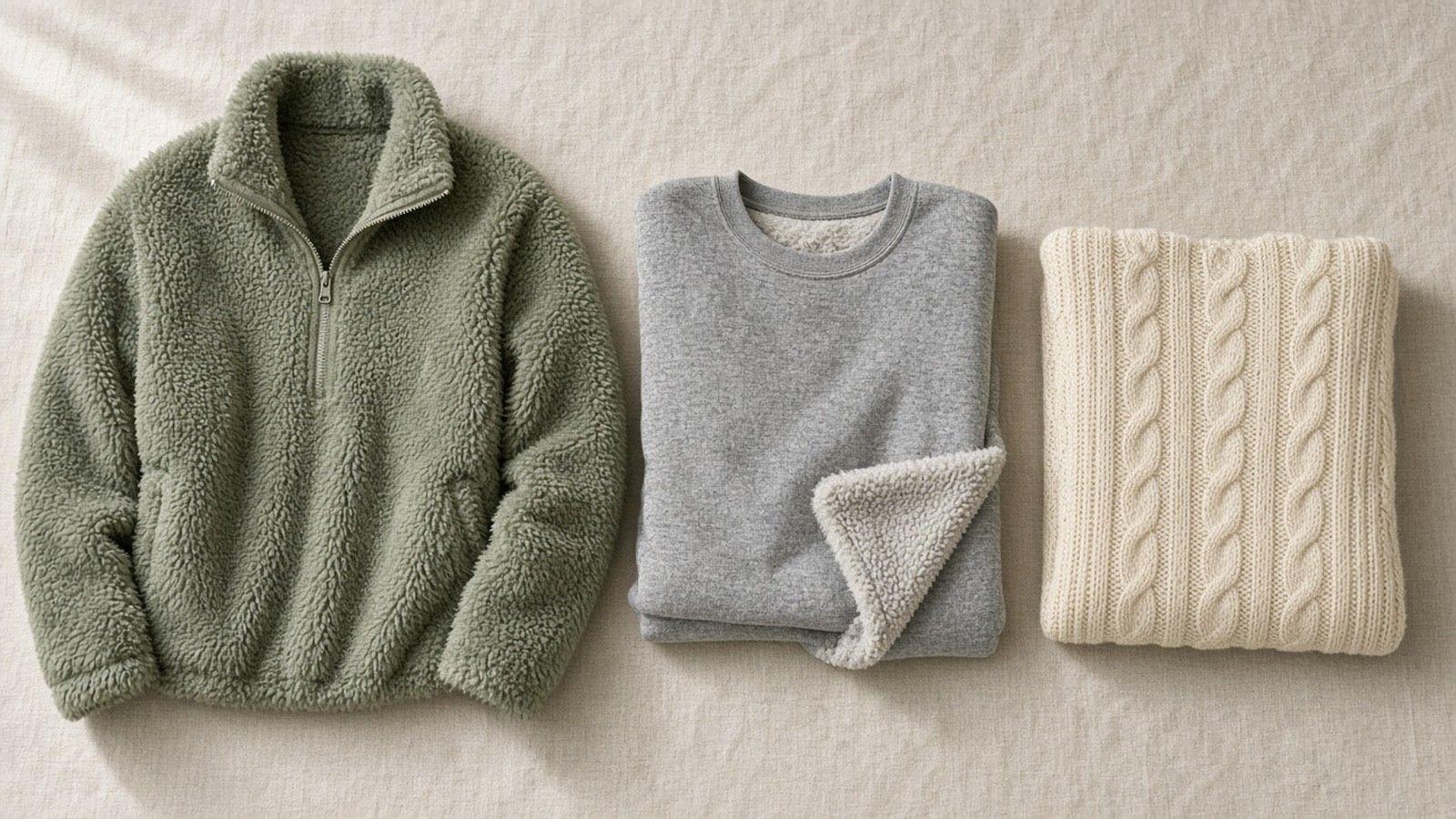
Fleece is a knit fabric that has been brushed so the fibers stand up into a soft, fuzzy pile. The name describes how the fabric is built and finished, not what fiber it's made from, so "fleece" on a tag can mean two pretty different things:
- Polar fleece is the fuzzy jacket and blanket fabric, and the original was polyester.
- Sweatshirt fleece has a smooth knit face and a brushed, fuzzy back.
Cotton Incorporated's CottonWorks guide to single and double knits puts it plainly: "Fleece can come in all cotton, cotton/poly blends, or all synthetic fibers." So the word fleece doesn't tell you the fiber, but the fiber content line on the label does.
What is fleece made of?
Is fleece polyester?
Polar fleece started out as polyester, and Polartec says most of its fleece is made of post-consumer recycled polyester from recycled water bottles. Patagonia says it started making fleece from recycled bottles in 1993, and that the first batch was the color of the bottles it came from: "soda-bottle green."
Recycled or not, it's still polyester, because recycling changes where the plastic came from and not what the fiber is once it's in the jacket.
Cotton fleece
Sweatshirt fleece can be cotton, but check the tag, since the same knit can be all cotton, a cotton and polyester blend, or all synthetic. If a listing just says "fleece" and doesn't give percentages, you don't really know what you're buying.
How is fleece made?
CottonWorks describes the classic two-yarn fleece in two steps:
- Knitting. A finer yarn is knit as a smooth jersey face. A second yarn sits on the back as loops, or floats, and CottonWorks says those back yarns "tend to be coarser and contain less twist" so they nap more easily.
- Brushing (napping). The back loops are napped into a fuzzy pile. CottonWorks says the brushing is what separates fleece from French terry, which has the same knit structure and is "technically an un-napped fleece."
Polartec describes its version as "a knitted material, which is transformed into soft, furry pile" through finishing, and says the raised pile traps body warmth in its air spaces.
The brushing is also tied to shedding. The Gothenburg study below found that loose constructions shed more and that tightly twisted yarns shed less, and the yarns that get brushed into fleece are the low-twist ones. The researchers even suggested mills vacuum loose fibers off fabric after brushing and similar finishing steps.
Does fleece shed microplastics?
Yes, and in the lab study below it shed far more than the other knits it was tested against.
In a 2017 study from the University of Gothenburg and the Swedish School of Textiles, researchers washed swatches of polyester, nylon and acrylic knits plus three polyester fleeces. Every fabric shed fibers, but the fleeces shed far more: about 900 to 1,200 fibers per 10 cm by 10 cm swatch per wash, against an average of 9 for the other knits. Scaled up to about a square meter of fabric, the size of an adult garment, they estimated one fleece garment could release around 110,000 fibers in a wash. Fabric they had sanded to mimic wear shed more than new fabric, and washing with detergent increased shedding for three of the four fabrics they compared.
A 2016 study from UC Santa Barbara washed five jackets and sweaters, four of them polyester fleece, in ordinary home machines without detergent and measured how much fiber came off. Across all their washes, a garment released anywhere from about 0 to 2 grams of fiber. Top-loading machines released roughly 7 times more than front-loaders, and garments that had been aged with 24 hours of continuous washing released more than new ones.
What these studies measured is fiber in the wash water. They didn't test what fleece does to the person wearing it. If you want the bigger picture on synthetic fibers and shedding, we wrote about how to avoid microplastics in clothing and whether polyester is bad for you.
Can fleece shed less?
Some mills say yes. Polartec says its Micro fleece and some styles of its 200 fleece are finished with what it calls "Shed Less Technology," which it says cuts fiber shedding "up to 85% on average during home laundering" compared with its baseline fabric under the AATCC 212-2021 test. That's the company's own claim, and it covers specific fabrics, not fleece in general.
At home, the studies above point to two things you control:
- A front-loading machine released much less fiber than a top-loader in the UCSB study.
- Washing fleece less often helps. The Gothenburg team suggested airing outerwear in the sun after you wear it, so it needs fewer washes.
Polartec's own care advice is cold water, mild detergent, no fabric softener, and tumble dry low or hang dry.
Is fleece warm? Is it breathable?
Polartec says its fleece is warm for its weight because the raised pile holds body warmth in its air spaces. It calls the fabric "highly breathable" and says it's designed to be layered, working with both base layers and outer shells, and it describes its lightweight 100 fleece as a breathable mid-layer.
Fleece vs wool
Fleece was invented to stand in for wool. Patagonia says Yvon Chouinard's favorite wool sweater was warm but "became heavy when wet, was slow to dry and difficult to clean," and polyester fleece fixed those problems.
The trade-off is the fiber. Wool is an animal fiber, while polyester fleece is the same plastic as the bottles Polartec recycles, and it sheds polyester fibers in the wash. Patagonia has also started blending recycled wool into some of its fleece.
If you're choosing between the two, ask what you need it for. For a soaked hike where drying fast matters, polyester fleece does the job it was designed for. For everyday warmth, a kid's sweater or a throw that gets washed a lot, a wool or cotton option keeps that synthetic fiber out of the wash. We compare the two main fibers garment by garment in polyester vs cotton.
How to tell what a fleece is made of
Read the fiber content, not the product name, because "fleece" describes how a fabric is knit and brushed, not what it's made of. A tag that says "100% polyester" means polyester fleece, however soft or cottony it feels. A hoodie that says "80% cotton, 20% polyester" is mostly cotton with some polyester. If an online listing doesn't give the fiber percentages at all, that's worth noticing.
That's the part Greener Closet does for you: we score clothing based on the fibers a listing actually discloses, so you can see what a fleece is made of before it ends up in your cart. If the brand doesn't list the fibers, we can't invent them.