
What Is Merino Wool? Merino vs Regular Wool, and Is Merino Itchy?
Organization-authored. Editorial policy · Report an error
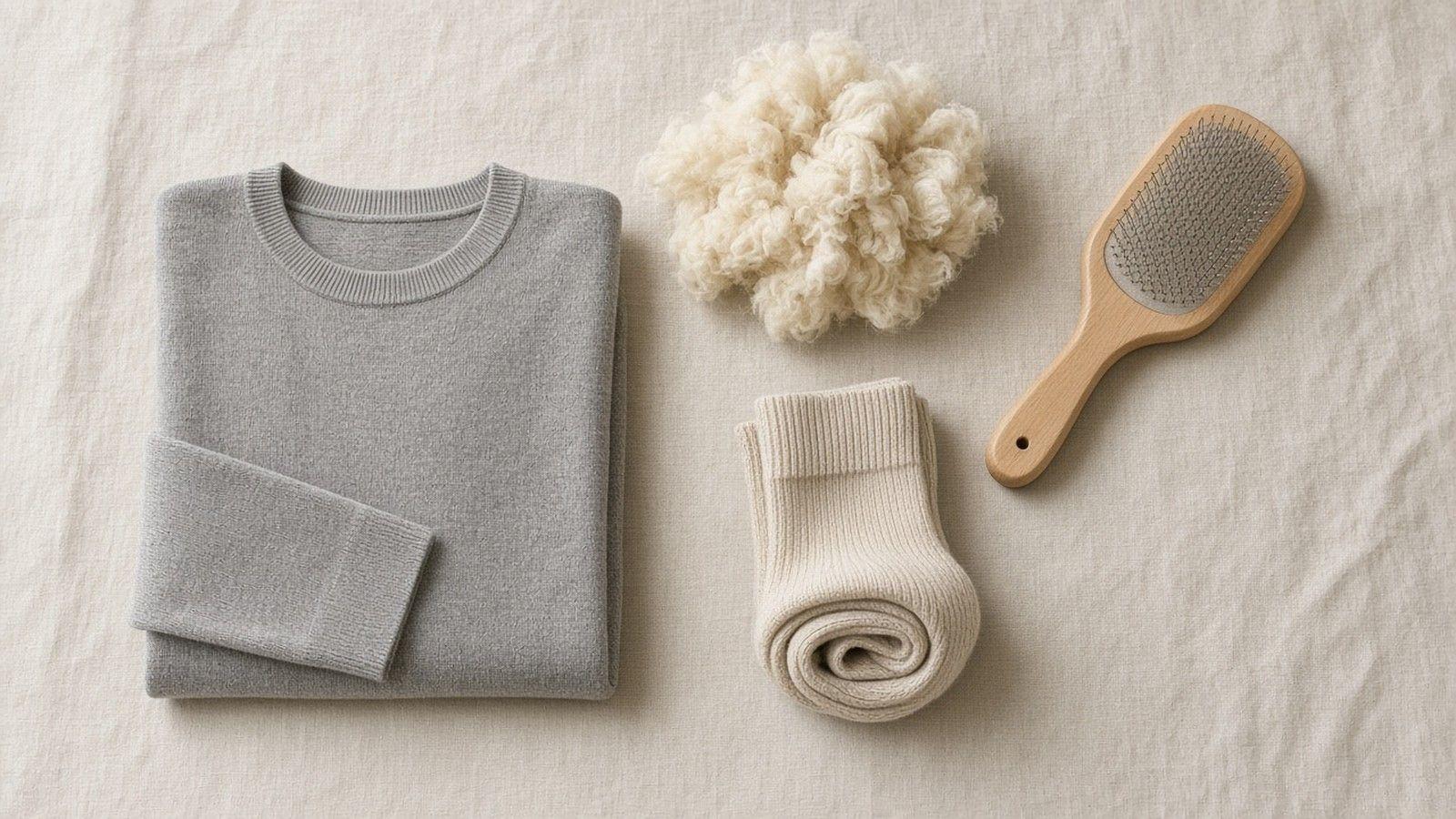
Wool's itch is mostly mechanical. Research from Australia's national science agency, CSIRO, found that once a fiber end sticking out of the fabric is thicker than about 30 microns, it stops bending and pushes on your skin like a tiny stiff rod, hard enough to set off the pain sensors near the surface. That's from an SGS technical bulletin summarizing the CSIRO work. Woolmark says the merino prized for base layers is generally under about 19.5 microns.
That gap goes a long way toward explaining why some "merino" still prickles and why a merino tee can feel nothing like your grandfather's sweater.
What is merino wool?
Merino wool is wool from Merino sheep, a breed selected for centuries for one trait above all, which is fine fleece. The fiber is made of keratin, a protein that's also in your hair, according to Woolmark's guide to the wool fibre.
The breed comes from Spain. A 2022 genomics paper on Spanish Merino lines describes Roman evidence for its ancestors and centuries of breeding for finer wool in Spain, which cut fiber diameter by roughly 25 percent. The breed was guarded closely. According to the paper, a council founded by King Alfonso X banned the export of ewes in the 13th century, and the ban wasn't lifted until the early 18th century.
Merino is still only a sliver of what we wear. Woolmark says merino makes up just 1% of the world's fiber for apparel.
How fine is merino wool?
Wool fineness is measured in microns, and one micron is a millionth of a meter. Woolmark puts human hair at 50 to 100 microns and says merino is generally under 22.
Here's how Woolmark lays out merino diameters and typical uses:
| Fiber diameter | Typical use |
|---|---|
| Under 19.5 microns | Base layers, underwear, fine knitwear |
| 19.5 to 22 microns | Apparel, knitwear |
| 22 to 24 microns | Outerwear |
| Over 24 microns | Carpets and interiors |
You'll also see words like "superfine" and "ultrafine" on tags. In a Woolmark workwear toolkit, ultrafine is 14.6 to 16.5 microns, superfine is 16.6 to 18.5, fine is 18.6 to 20.5 and medium is 20.6 to 22.5. That's one Woolmark document's breakdown, so treat the words as a rough guide and look for the actual micron number if the brand lists one.
One certification does put a hard number on it. Woolmark's Australian Merino Wool specification requires a mean fiber diameter of 19.5 microns or less, measured on fiber taken from the finished product (with a 0.25 micron allowance for measurement error), plus a documented chain of evidence linking the product back to Australian Merino wool.
Merino wool vs wool: what's the difference?
Merino is wool, and "wool" on its own covers everything from fine merino to the coarse stuff in carpets.
The practical difference is diameter. Woolmark sorts wool into fine, medium and broad. The finest wool comes from Merino sheep, while medium wool can come from a type of Merino or from crossbreeds. Broad wool comes from many breeds, often ones farmed as much for meat as for wool, and Woolmark says it's useful for carpets.
So a sweater labeled "100% wool" could be merino or could be something much coarser. A tag that says "merino wool" tells you the breed, and a micron number tells you how fine it actually is. If neither is there, you're guessing.
Is merino wool itchy?
Fine merino usually isn't, and the reason is that 30 micron line.
CSIRO's rule of thumb, as SGS summarizes it, is that if fewer than 5% of the fiber ends in a fabric are thicker than 30 microns, most wearers find it acceptable. The finer the wool's average diameter, the fewer coarse ends it has, according to course notes by CSIRO's Geoff Naylor.
It isn't only the wool, though. Those notes include a CSIRO study by Naylor and Phillips, and between them they cover a few things worth knowing before you buy:
- In single jersey knits, acceptability dropped from about 90% for a 20.5 micron wool to about 50% for a 23.5 micron wool.
- Woven fabrics were less comfortable than knits made from the same wool. For the same comfort, plain weave needed wool roughly 3 microns finer.
- Comfort came down to how many coarse fiber ends a fabric had, whether the fiber was wool or acrylic.
- Warmth and moisture soften skin and make it more sensitive, and thin, soft skin is more sensitive to begin with.
So if a "merino" piece bugs you, it may be on the coarser end of merino, or it may be a woven fabric instead of a knit.
Can you be allergic to merino wool?
A 2017 review in Acta Dermato-Venereologica looked at a century of research and concluded that current evidence doesn't suggest wool fiber is a skin allergen, and that contact allergy from lanolin, chromium or formaldehyde is "highly unlikely with modern wool garments." The authors tied irritation to coarse fibers of about 30 to 32 microns and up. They also said more work would be needed to rule wool allergy out completely. If you've reacted to wool before, that's a question for your doctor, not for us.
What about merino for kids with eczema?
A 2017 randomized crossover trial in the British Journal of Dermatology put 39 children, aged 4 weeks to 3 years with mild to moderate eczema, in superfine merino outfits and in cotton clothes their parents chose for 6 weeks each. Eczema scores were lower with the merino than with the cotton, and the authors concluded superfine merino "may assist" in managing childhood eczema.
Two things to keep in mind. It's a small study, and Europe PMC's record for it lists Australian Wool Innovation as the funder. That's a company owned by Australian woolgrowers that does research, development and marketing for Australian wool. It's a reason to ask your pediatrician or dermatologist whether merino is worth trying, not proof that it will help your kid.
What does "machine washable" mean on merino?
Untreated wool can felt and shrink in a washing machine. Woolmark explains that wool fibers have scales, and heat, moisture and agitation make those scales lift and lock onto each other. That's irreversible.
Wool that's had a shrink-resist treatment to make it machine washable is called "superwash" in the industry, per Woolmark. It says the most widely commercialized system is the Hercosett process, and a wool processing course from the Australian Wool Education Trust lists the steps for combed wool, before it's spun:
- A chlorine pre-treatment (sodium hypochlorite in acid) modifies the outer layer of the fiber.
- The wool is neutralized, leftover chlorine is destroyed, and the wool is rinsed.
- A polyamide epichlorohydrin polymer, sold as Hercosett, is applied.
- A softener goes on so the polymer doesn't stick the fibers together.
- The wool is dried and the polymer is cured, which fixes it to the fiber surface.
A 1973 study in Textile Research Journal, by Makinson and Lead, started from the accepted view that most of the shrinkproofing comes from the chlorine step, and found that the resin's job is to form a complete sheath over each fiber, at about 2% resin by weight of the wool, to cover the scales the chlorine missed.
Is that a problem? It depends on what you care about. Woolmark says the polymer bonds with the wool's protein instead of forming "a traditional plastic coating," and that treated wool stays biodegradable. The course notes do call it a polymer coating. The GOTS organic textile standard takes a stricter line and lists "chlorination of wools" as prohibited, so GOTS certified merino can't have had the chlorine step. Woolmark also mentions newer chlorine-free treatments, so "machine washable" by itself doesn't tell you which one was used.
If a merino tee or kids' base layer says it's machine washable and doesn't say how, it's fair to ask the brand what treatment it had.
What is mulesing, and does it matter for merino?
You'll see "non-mulesed" or "mulesing-free" on a lot of merino labels, and it refers to this.
Flystrike is a maggot infestation that starts when blowflies lay eggs in the skin folds around a sheep's tail and hindquarters. RSPCA Australia describes mulesing as restraining lambs and cutting away flaps of skin from the tail and hindquarters, which leaves bare scar tissue that attracts fewer flies. It says Australian woolgrowers are the only ones in the world who do it routinely, and that the way out is breeding sheep that resist flystrike, since sheep with fewer wrinkles are less susceptible.
If that matters to you, the label is where to check. GOTS lists mulesed wool among its prohibited fibers. Animal welfare group FOUR PAWS points shoppers to the Responsible Wool Standard, ZQ Merino and a couple of other certifications. A brand that just says "ethically sourced" without naming a standard hasn't told you much.
How to read a merino label
When we're looking at a merino listing, this is what we check:
- Fiber content. "100% merino wool" is different from a merino blend, so look at what else is in it and how much. If you see "exclusive of trim" or "exclusive of decoration," here's what that phrase leaves out.
- Micron. Lower is finer. Woolmark puts next-to-skin merino under about 19.5.
- Treatment. "Machine washable" usually means a shrink-resist treatment. GOTS certification rules out chlorination.
- Welfare. Look for a named standard like RWS, ZQ or GOTS, not a vague promise.
- Knit vs woven. In the CSIRO work, a knit was more comfortable than a woven fabric made from the same wool.
Greener Closet scores what a listing actually discloses, and our merino wool guide shows how we score the fiber. If a brand doesn't list the fibers or the treatment, we can't fill that in for them, and neither can you, so that's a good moment to email the brand before you buy.