
What Is Microfiber? What It's Made Of, Is It Polyester, and Microfiber vs Cotton
Organization-authored. Editorial policy · Report an error
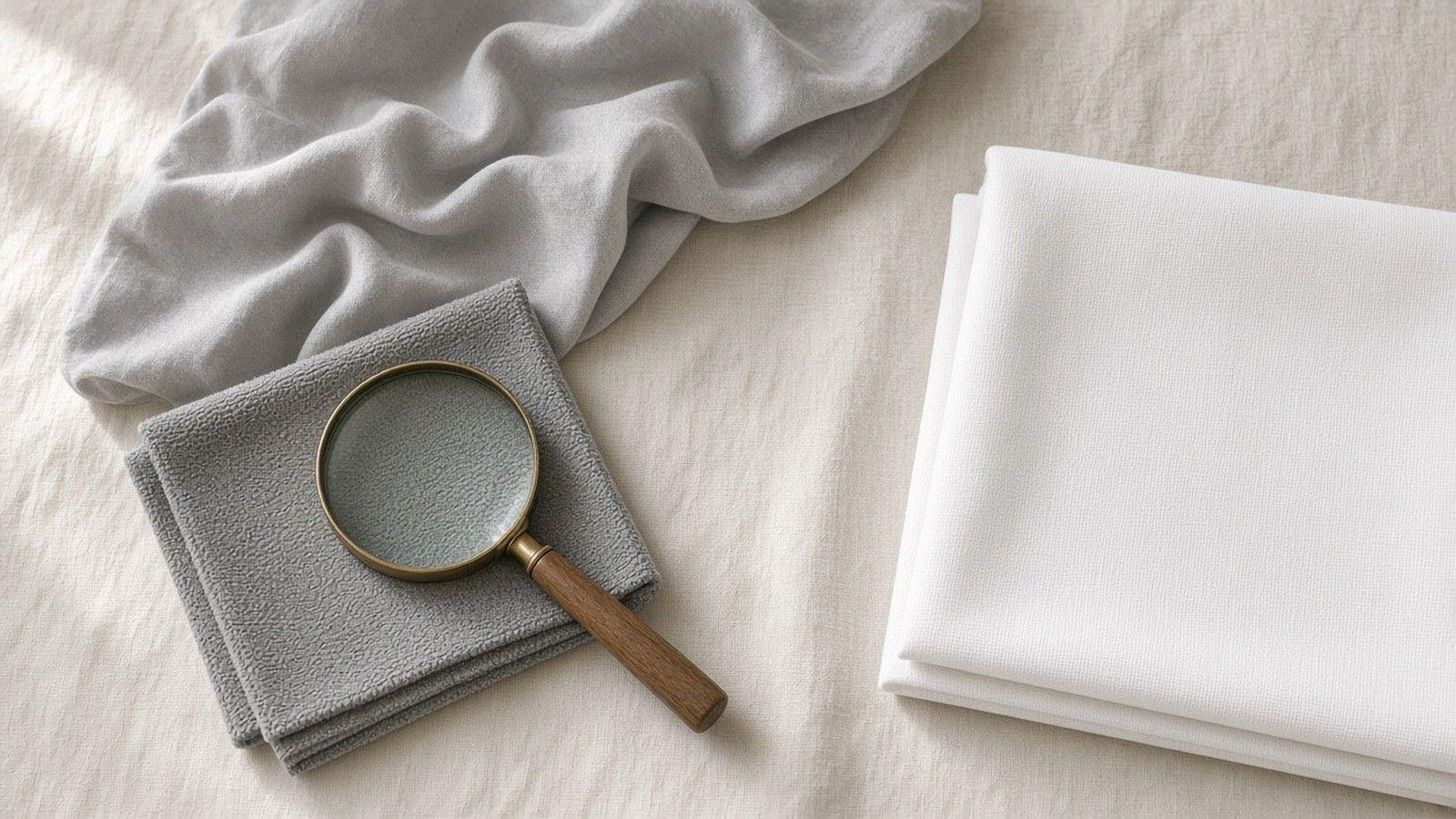
A single microfiber strand long enough to stretch 9,000 meters, about 5.6 miles, weighs less than one gram, and that's close to the actual definition. The textile industry calls a fiber "microfiber" when it is synthetic and finer than 1 denier, and a denier is the weight in grams of 9,000 meters of fiber (The Microfibre Consortium, Cotton Incorporated).
So when a label, a sheet set or a cleaning cloth says "microfiber," it's telling you the fibers are very thin and, by the industry definition, synthetic, but it doesn't tell you which synthetic.
What is microfiber?
Microfiber is mostly a size. The Microfibre Consortium, a group that works with brands, retailers and manufacturers on fiber shedding, gives the textile industry's definition as "a synthetic fibre with a linear density of less than 1 denier." The International Fiber Journal, which is owned by the nonwovens trade association INDA, puts it at under 1 denier but above 0.3 denier and notes that this is thinner than silk (International Fiber Journal). The same article points out that nothing specifies what a product sold as a "microfiber towel" has to be made of, so the word on its own doesn't tell you which fibers you're getting.
For reference, Cotton Incorporated's yarn bulletin uses a 1½ denier filament as an example, and it weighs 1½ grams per 9,000 meters. Microfiber is finer than that.
What is microfiber made of?
It's synthetic by definition, and the International Fiber Journal says the most common microfiber is "constructed of polyester and polyamides." Polyamide is the family nylon belongs to: the FTC defines nylon as a fiber made from "a long-chain synthetic polyamide" (16 CFR 303.7), and we cover it in What Is Polyamide?. The journal says the fibers are split during manufacturing, which makes them good at picking up and trapping dirt or wicking moisture, and an EPA case study on hospital mops describes the same polyester and polyamide blend, with split fibers that act like tiny hooks to grab dust and dirt.
The Microfibre Consortium's glossary defines a synthetic fiber as a man-made fiber "derived from fossil-fuels" and names polyester as one of them.
Nylon is synthetic too, and we've written more about it in Is Nylon Plastic?.
Is microfiber polyester?
Often, but you can't assume it. U.S. labels have to name each fiber that makes up 5% or more of the product's fiber weight by its generic name, like "cotton," "rayon" or "nylon" (16 CFR 303.6), and the FTC sets out the generic names for manufactured fibers, polyester and acrylic among them, in 16 CFR 303.7 under the Textile Fiber Products Identification Act. Microfiber describes how thin a fiber is, so a "microfiber" shirt or sheet set should still list its actual fibers on the label.
That gives you a quick check: flip to the fiber content line.
- "100% polyester" means the microfiber is polyester.
- "Polyester/nylon" or "polyester/polyamide" is the blend the EPA describes for microfiber cleaning cloths and mops.
- Anything else, read it as written. The word on the front of the package is marketing, and the fiber line is the part the brand is required to state.
If a product page says "microfiber" and never lists the fibers, that's worth noticing. We can't tell you what's in something the brand doesn't disclose, and neither can anyone else reading the same page.
Is microfiber plastic?
By the industry definition, yes. Microfiber is synthetic, and the most common kinds are polyester and nylon. The FTC describes both as made from long-chain synthetic polymers, and the Microfibre Consortium's glossary counts synthetic fiber fragments as microplastics. So a polyester microfiber blanket is a plastic fabric, just spun very fine.
Microfiber vs cotton
Here's how we'd compare them for everyday stuff like sheets, towels and t-shirts.
What they're made of. Cotton is a plant fiber, and the most common microfiber is a polyester and nylon blend. If you're trying to keep plastic fibers out of your bed or your kid's pajamas, that's the main difference, and the label tells you which one you have.
How they handle moisture. The split fibers are what make microfiber good at cleaning, and the EPA case study says the microfiber material in its mops can hold six times its weight in water. As for whether microfiber sheets or clothes breathe as well as cotton, we haven't found good testing that compares them head to head, so if you sleep hot, it's a fair question to ask the brand before you buy.
Wrinkles and drying. We haven't found independent testing on this either, so if a listing promises wrinkle-free or quick-drying microfiber, treat that as the brand's claim and look for reviews from people who've washed it a few dozen times.
Shedding in the wash. This is where we'd slow down, because synthetic fabrics shed fibers when you wash them. A University of Plymouth study estimated that an average 6 kg washing load could release about 496,030 fibers from polyester fabric, 728,789 from acrylic, and 137,951 from a polyester-cotton blend (University of Plymouth). That study washed polyester, acrylic and polyester-cotton items, not microfiber specifically, but polyester is one of the two fibers in the most common microfiber blend. We go deeper on this in Microplastics From Clothing and compare the two fibers garment by garment in Polyester vs Cotton.
Two meanings of "microfiber"
When people talk about microfiber pollution, the word means something else: fibers released from textiles, whatever they're made of. The Microfibre Consortium says that in this context it doesn't set a size or a fiber type, and it prefers the term "fibre fragment" to avoid mixing the two up. So a headline about "microfibers in the ocean" isn't necessarily about microfiber sheets, since it can mean shedding from any kind of fabric.
How to wash microfiber
If you already own microfiber, you don't need to toss it. A few things from the research:
- Follow the care label and go easy on heat. The 2002 EPA case study says microfiber mop heads can't go through industrial washers and dryers because the heat settings are often too high and can damage the material, and the mop vendor advised against chlorine bleach, which can degrade it.
- Go easy on extras. In the Plymouth study, adding bio-detergents or conditioners "tended to release more fibres."
- For more ways to cut shedding, see How to Avoid Microplastics in Clothing.
How we check microfiber when we shop
We skip the word "microfiber" and go straight to the fiber content. If it lists polyester or nylon, we know what we're getting, and if it lists nothing, we keep looking. Greener Closet does that check for you on the product page: we read the fibers the listing discloses and score them, and if a brand doesn't list them, we treat that as unknown instead of guessing.