What Is Velvet Fabric? What Velvet Is Made Of, Velvet vs Velour and Velveteen
Velvet is a woven pile fabric that can be polyester, viscose, cotton or silk, and "silk velvet" is often a blend. What velvet is made of, how it compares to velour and velveteen, crushed velvet, cotton velvet for kids, and how to clean it.
Organization-authored. Editorial policy · Report an error
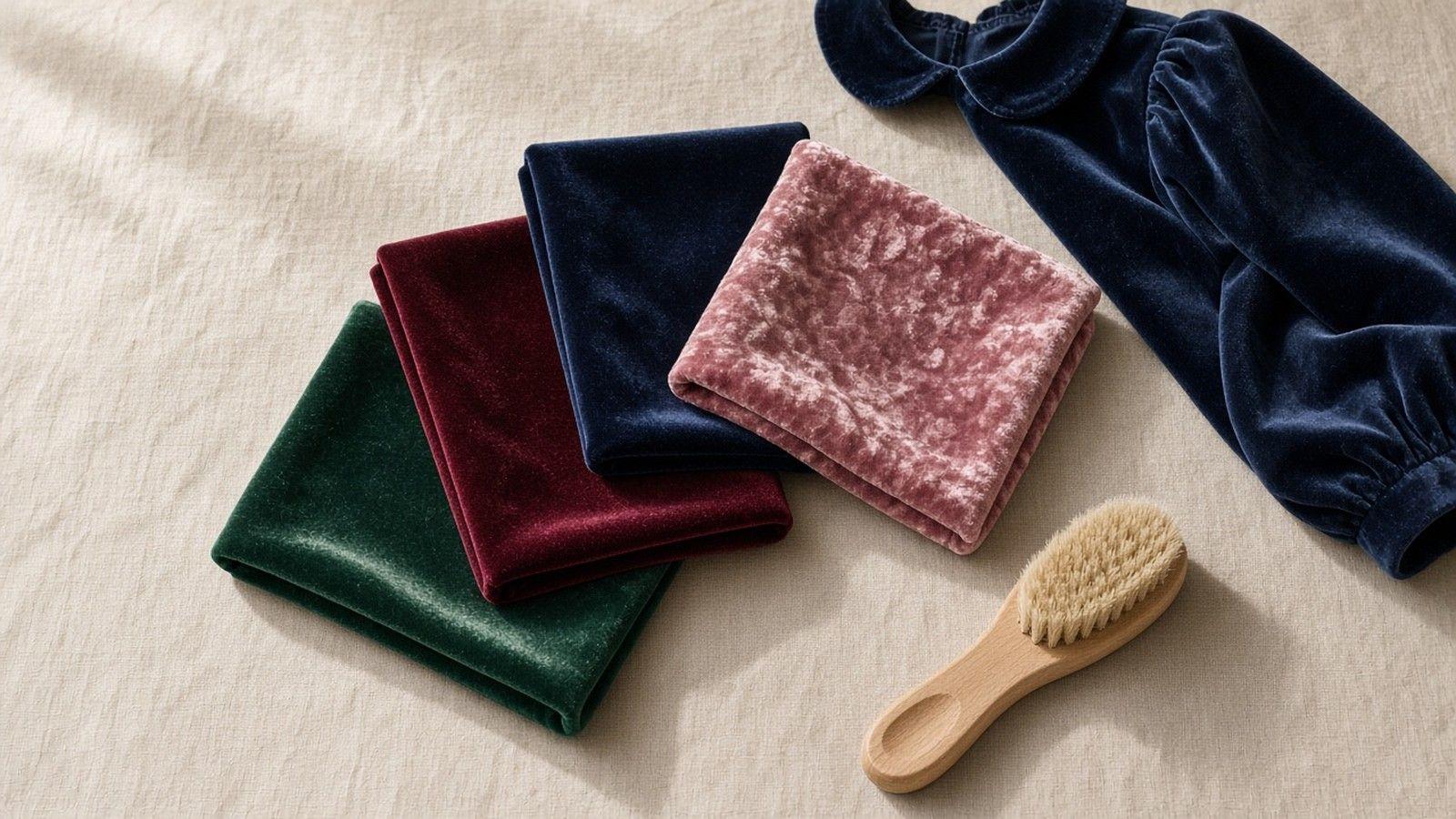
A velvet with silk in its name can be mostly something else. Mood Fabrics sells a rayon-silk velvet it suggests for dresses and blazers, and its fiber line reads "82% Rayon, 18% Silk" (Mood Fabrics). That's pretty common: Wikipedia's velvet entry says much of the velvet sold today as "silk velvet" "is a blend of silk and another fiber, often rayon or cotton," and that velvet made entirely from silk is rare (Wikipedia: Velvet).
So the word velvet tells you how a fabric is built and how it feels, but it doesn't tell you the fiber, and with holiday dresses and kids' party clothes showing up everywhere this time of year, the fiber is the part worth knowing before you buy.
What is velvet?
Velvet is a woven fabric with a dense, even pile. The pile is the layer of tiny upright fibers that makes velvet look deep in color and feel different depending on which way you brush it.
The way it's made is a little unusual. Wikipedia describes a special loom that weaves two layers of fabric at the same time, joined by an extra set of warp yarns. The two layers are then cut apart, and those cut yarns become the pile on each piece (Wikipedia: Velvet). Before industrial power looms, that made velvet expensive to produce, and Wikipedia says its high cost, along with its softness and look, is why velvet has so often been tied to nobility. King Richard II of England asked in his will, in 1399, that his body be clothed in velvet.
What is velvet made of?
Lots of things. Historically it was usually silk. Today, according to the same Wikipedia entry, velvet can be silk, cotton, linen, wool, mohair, polyester, nylon, viscose, acetate, or a blend, and a small amount of spandex is sometimes added to make stretch velvet (Wikipedia: Velvet).
What you'll actually run into while shopping:
- Polyester velvet. We looked at two women's velvet party dresses from different brands for this post, and both listed "100% Polyester" with dry clean care (Tuckernuck, Julia Amory). Wikipedia lists microfiber velvet as a polyester variety too, and we explain what the word microfiber means in what microfiber is made of.
- Stretch velvet. Wikipedia describes it as polyester with a small percentage of spandex, so it stretches in one or two directions. If you want to know what spandex is, see our elastane guide.
- Viscose or rayon velvet. Wikipedia says viscose velvet is closer to silk velvet than cotton velvet in how soft and rich it looks. We cover what viscose is and what we know about wearing it in is viscose toxic?
- Silk velvet. Often a silk blend, as above. If you want real silk, the percentage tells you more than the product name does.
- Cotton velvet. Wikipedia calls it "highly durable" but says its colors tend to be less deep than other velvets. We come back to cotton velvet for kids below.
Highest-scoring dresses we've scored
See all dresses
Silk velvet: how much silk is in it?
Check the number. In the Mood example silk is less than a fifth of the fabric, which can still make a lovely fabric, but if you're paying silk prices because you want silk against your skin, "silk velvet" in the title doesn't promise much.
US labeling rules help a little here. Labels have to list fibers by percentage of weight, in order from most to least (16 CFR 303.16). For pile fabrics, the rules let a brand list the pile and the backing separately, as long as it also shows how much of the fabric each one makes up. The example in the regulation reads "100% Nylon Pile / 100% Cotton Back (Back constitutes 60% of fabric and pile 40%)" (16 CFR 303.24).
With velvet, the part you touch and the part holding it together can be different fibers. A velvet with a silk pile on a rayon back is a different thing from a velvet that's silk all the way through. If you see the pile (or "face") listed apart from the "back" on a label, that's what's going on.
Velvet vs velour vs velveteen
These three get mixed up constantly, and the difference is mostly in how they're built.
| Velvet | Velour | Velveteen | |
|---|---|---|---|
| Built how | Woven | Knitted | Woven |
| Pile | Longest of the three, cut from warp yarns | Medium | Shortest, cut from weft yarns |
| Feel | Drapey, with more sheen | Stretchy, soft | Stiffer, less sheen |
| Usual fiber | Silk historically, now many fibers and blends | Polyester, cotton or a blend | Usually cotton |
Sources: Wikipedia: Velvet, Velour, Velveteen.
Velvet vs velour. Velour is a knit, so it stretches. Wikipedia notes it's used for activewear and loungewear, and it got popular in the 1970s through tracksuits. Velvet is woven, so it doesn't stretch unless spandex has been added.
Velvet vs velveteen. Velveteen has a shorter pile and less drape. Wikipedia says it's "usually made of cotton or a cotton-silk blend" and used where a garment needs some structure. If you want a cotton pile fabric for a kid's blazer or holiday dress, velveteen is worth searching for by name.
What is crushed velvet?
Crushed velvet is velvet whose pile has been pushed in different directions, either by pressing it or by twisting the fabric while it's wet, which gives it a shiny, patterned look (Wikipedia: Velvet). Panne velvet is a related finish where the pile is pressed flat in one direction.
Wikipedia adds that since the 1970s, "panne velvet" in ordinary fabric stores has meant a pile knit, "perhaps better called a velour," and usually polyester. So "crushed" and "panne" tell you about the look, and the fiber line is where you find out what it's made of.
Velvet for kids: what to look for
Holiday velvet for kids doesn't have to be polyester. A girls' velvet holiday dress from Jacadi lists "Main fabric: 100% cotton" and "Lining: 100% cotton" (Jacadi). Adding "cotton" to your search is a good start, but check the composition section anyway.
Two things to check on kids' velvet:
- The lining. The lining of a velvet dress can be a different fiber from the velvet itself, and on a fully lined dress it's the lining that touches the skin. US rules only require a lining's fiber to be listed separately when it's there for warmth rather than structure, or when the seller makes a claim about it (16 CFR 303.22), so a dress lining may not be listed at all. The Tuckernuck dress above says "Lined" and gives just one fiber line, while Jacadi lists both. If the lining isn't listed, ask the brand.
- The care label. The Jacadi cotton dress says to wash at 30°C on a delicate cycle and not to dry clean. The polyester party dresses we looked at said dry clean. For a dress a kid will wear to a dinner with gravy on the table, being able to wash it at home is a big deal.
One more note on safety rules, so you know what's already covered. The federal flammability standard for clothing sorts "raised surface" fabrics into their own category, which it defines as fabrics with an intentionally raised surface "such as a pile," and any fabric that lands in Class 3, "Rapid and intense burning," can't be used for clothing (16 CFR 1610). Children's sleepwear has its own, separate federal standards, and we walk through how that works in our terry cloth robe guide.
How to clean velvet
Start with the care label, because the fiber decides almost everything. Wikipedia notes velvet is "difficult to clean because of its pile" and says modern dry cleaning makes it easier, which fits the dry clean labels on the polyester dresses above.
A fabric care guide we read (Fabric Care Guide) recommends:
- Don't press an iron onto it. The guide puts it plainly: "Do not press a hot iron directly onto velvet, even through a cloth, unless the care label specifically allows it and you have a proper velvet board." Pressing flattens the pile and can leave shiny marks.
- Steam it while it hangs. Hold the steamer away from the surface, let it dry, then brush lightly with the direction of the pile.
The same guide says silk and viscose velvet can be more sensitive to water marks than many polyester velvets, while cotton velvet can hold compression marks.
Velvet can also bleed dye. The Tuckernuck listing above says "Velvet often contains excess dye that can transfer to skin or clothing" and tells you to wash it before wearing, while its care line says dry clean only (Tuckernuck). When a listing says both, ask the brand which one they mean before you wear a dark velvet piece over a light-colored top or tights, or put one on a kid. If you're wondering how much a polyester velvet will shrink, we cover polyester and rayon in does polyester shrink.
How to check a velvet listing before you buy
- Find the fiber line. "Velvet," "crushed velvet" and "panne" describe a look, so look for the fibers and percentages.
- On silk velvet, find the silk percentage. It may be well under half.
- Look for "pile" and "back" on the label. If they're listed separately, the part you touch may be a different fiber from the rest.
- On lined pieces, look for a lining line too, and if there isn't one, ask the brand. Especially for kids.
- Read the care label before you wear it, since it changes with the fiber.
That fiber line is what Greener Closet reads for you. We score what a listing discloses, so if you're looking at a velvet dress right now, paste its link into our fabric checker and you'll see the fiber blend and a score. If the listing just says "velvet," we can't tell you what's in it, and that's a fair question to send the brand.