What Is Fleece Fabric? What It's Made Of, Polar Fleece vs Cotton Fleece
Fleece is a fabric, usually a knit, brushed until its fibers stand up into a soft, fuzzy pile, and the word tells you how it's made, not what it's made of. So is fleece cotton? Sometimes: polar fleece, the fuzzy jacket and blanket kind, is polyester, while sweatshirt fleece can be cotton, polyester or a blend, and only the fiber content on the tag tells you which.
Organization-authored. Editorial policy · Report an error
Is fleece cotton?
It depends which fleece you mean. There are two main kinds, and they're usually made of different things:
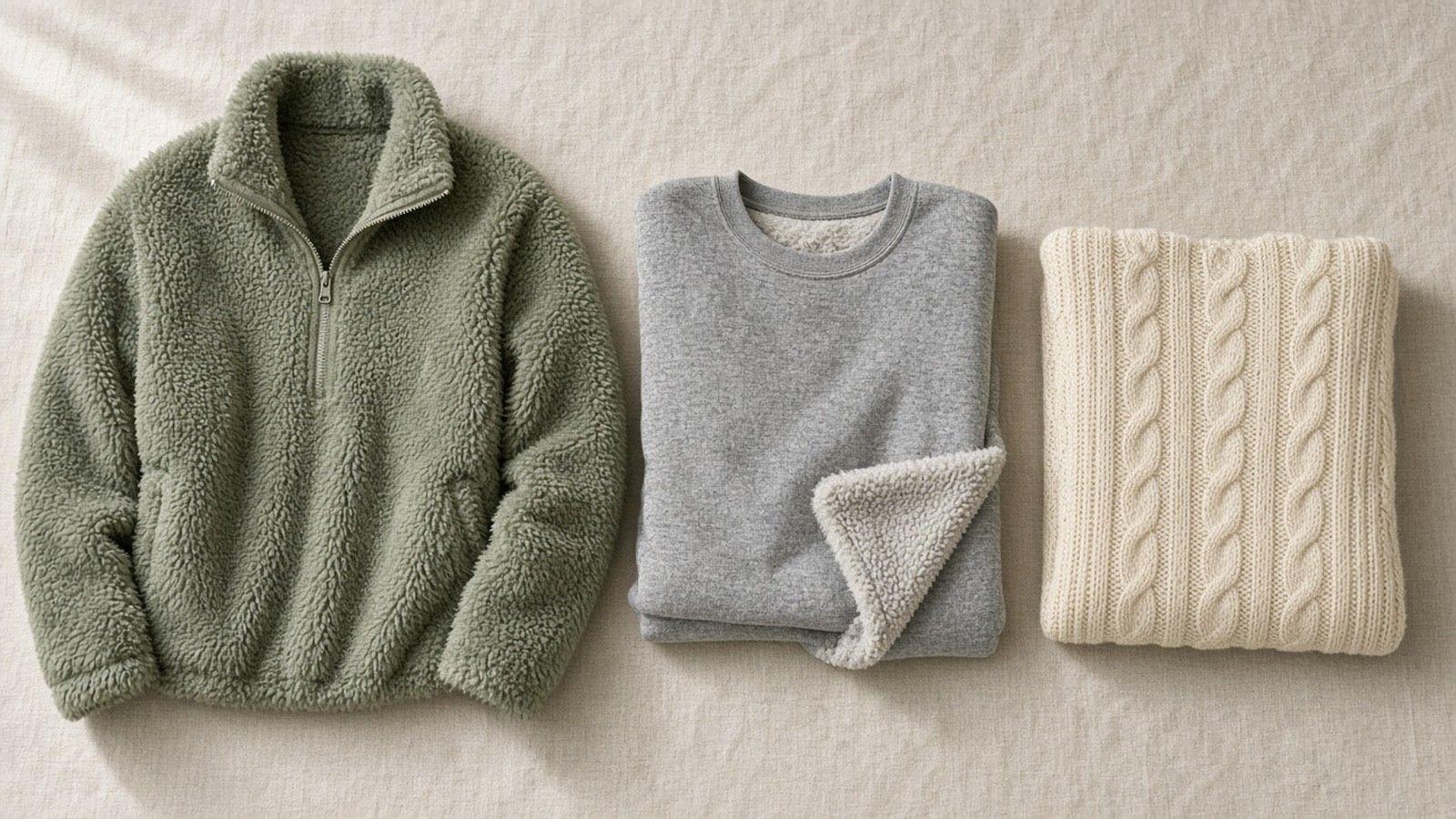
- Polar fleece is the fuzzy fabric you see on jackets, hats and blankets, and it's made from polyester. It was traditionally fuzzy on both sides.
- Sweatshirt fleece is the fabric of a classic hoodie or sweatpants: a smooth knit on the outside, with one side brushed into a soft nap. Seamwork's guide to sweatshirt fleece says it's "usually made from cotton or polyester," or a blend, and often has some spandex in it for stretch.
Cotton Incorporated's CottonWorks guide to knits puts it plainly: "Fleece can come in all cotton, cotton/poly blends, or all synthetic fibers." Even the cotton industry's own consumer page on fleece tells shoppers that fleece "is often made with polyester and other synthetic fibers," so check the label for cotton.
So a fleece is 100% cotton only when its fiber content says 100% cotton. A tag that says "100% polyester" is polyester fleece, however soft or cottony it feels, and "80% cotton, 20% polyester" is mostly cotton with some plastic in it.
What is fleece made of?
Polar fleece is polyester, sometimes recycled from plastic bottles. Polartec, the mill that developed polar fleece, says most of its fleece is made of post-consumer recycled polyester from recycled water bottles. Patagonia says it started making fleece from recycled bottles in 1993, and that the first batch was the color of the bottles it came from, "soda-bottle green." Recycled or not, it's still polyester, because recycling changes where the plastic came from and not what the fiber is once it's in your jacket.
So a fleece jacket or blanket sold as polar fleece is polyester. If a blanket or jacket listing just says "fleece" and doesn't give fiber percentages, you don't really know what you're buying.
The name doesn't mean animal fiber, either. Cotton Incorporated says the word comes from comparing the fabric to "the fleecy wool of a sheep." A polyester or cotton fleece has no wool in it, though some brands, Patagonia among them, now blend recycled wool into some of their fleece, so the tag is still where you find out.
How is fleece made?
CottonWorks describes the classic two-yarn fleece in two steps:
- Knitting. A finer yarn is knit as a smooth jersey face. A second yarn sits on the back as loops, or floats, and CottonWorks says those back yarns "tend to be coarser and contain less twist" so they brush up more easily.
- Brushing, also called napping. The back loops are brushed into a fuzzy pile. CottonWorks says this brushing is what separates fleece from French terry, which has the same knit and is "technically an un-napped fleece."
Polartec describes its version as "a knitted material, which is transformed into soft, furry pile" through surface finishing, and says the raised pile traps body warmth in its air spaces. Polartec credits that pile for fleece giving warmth without much weight.
Higher-scoring picks than fleece
See all top-scoring clothes


Does fleece shed microplastics?
Yes, and in the lab study below it shed far more than the other knits it was tested against.
In a 2017 study from the University of Gothenburg and the Swedish School of Textiles, researchers washed swatches of polyester, nylon and acrylic knits plus three polyester fleeces. Every fabric shed fibers, but the fleeces shed far more: about 930 to 1,210 fibers per 10 cm by 10 cm swatch per wash, against an average of 9 for the other knits. Scaled up to about a square meter of fabric, the size of an adult garment, they estimated one fleece garment could release around 110,000 fibers in a wash. Fabric they had sanded to mimic wear generally shed more than new fabric, and washing with detergent increased shedding for three of the four fabrics they compared.
The way fleece is made may be part of why. The same team found that loose constructions shed more and that tightly twisted yarns shed less, and the yarns that get brushed into fleece are the low-twist ones. They even suggested mills vacuum loose fibers off fabric after brushing and similar finishing steps.
A 2016 study from UC Santa Barbara washed five jackets and sweaters, four of them polyester fleece, in ordinary home machines without detergent. Across all their washes, a garment released anywhere from about 0 to 2 grams of fiber. Top-loading machines released roughly 7 times more than front-loaders, and garments aged with 24 hours of continuous washing released more than new ones.
What these studies measured is fiber in the wash water. They didn't test what fleece does to the person wearing it. For the bigger picture, we wrote about how to avoid microplastics in clothing and whether polyester is bad for you.
Can fleece shed less?
Polartec says its Micro fleece and some styles of its 200 fleece are finished with what it calls "Shed Less Technology," which it says cuts fiber shedding "up to 85% on average during home laundering" compared with its baseline fabric under the AATCC 212-2021 test. That's the company's own claim, and it covers specific fabrics, not fleece in general.
At home, the studies point to two things you control. A front-loading machine released much less fiber than a top-loader in the UC Santa Barbara study, and the Gothenburg team suggested washing less often, for example airing outerwear in the sun after you wear it. Polartec's own care advice is cold water, mild detergent, no fabric softener, and tumble dry low or hang dry.
Fleece vs cotton
This comparison is a little lopsided, because cotton is a fiber and fleece is a way of building fabric, so cotton fleece exists. What people usually mean is polyester fleece vs a cotton sweatshirt or cotton fleece.
Polyester fleece is the one that stays light when wet. Patagonia says its first fleece "held less than 1 percent of its weight in water" and dried quickly. Seamwork's guide says polyester wicks moisture better than cotton, while cotton can hold onto moisture and can shrink. The trade-off is that polyester fleece is plastic and, as the studies above show, sheds polyester fibers in the wash. We compare the two fibers garment by garment in polyester vs cotton, and our cotton guide and polyester guide cover each fiber on its own.
Fleece vs wool
Fleece was invented to stand in for wool. According to Patagonia's history of fleece, Yvon Chouinard's favorite wool sweater was warm but "became heavy when wet, was slow to dry and difficult to clean." He found an acrylic pile fabric in Canada, and Malinda Chouinard went looking in the Los Angeles fashion district for something similar. She came back with a polyester one "intended for toilet seat covers," and that roll became the first prototype fleece sweater, which started to pill after its first wash. Patagonia then partnered with Malden Mills, now Polartec, to create "the first light, strong pile fabric out of polyester."
So the choice comes down to what you need it for. For a soaked hike where drying fast matters, polyester fleece does the job it was designed for. For everyday warmth, like a kid's sweater or a throw that gets washed a lot, a wool or cotton option keeps synthetic fiber out of the wash. If you're weighing fleece against the curly, sheepskin-look fabric on lined jackets, we cover that in what is sherpa.
Quick answers
Is fleece polyester? Polar fleece is polyester. Sweatshirt fleece can be cotton, polyester or a blend, so check the fiber content.
Is fleece 100% cotton? Only if the tag says 100% cotton. Cotton fleece also comes as cotton and polyester blends.
What are fleece blankets made of? A blanket sold as polar fleece is polyester. For any other fleece blanket, the fiber content on the label tells you.
Is fleece breathable? Polartec calls its polyester fleece "highly breathable" and says it's designed to layer with base layers and outer shells. Cotton Incorporated says cotton-rich fleece is breathable too.
Is fleece made from animals? No. The name comes from sheep's wool, but polyester and cotton fleece contain no animal fiber unless the tag lists wool.
Is fleece a knit fabric? Usually. Polartec and CottonWorks both describe fleece as a knit, though Cotton Incorporated notes woven fleece exists too.
How to tell what a fleece is made of
Read the fiber content, not the product name, because "fleece" describes how a fabric is knit and brushed, not what it's made of. If an online listing doesn't give fiber percentages at all, that's worth noticing.
Before you buy, paste the listing's link into our fabric checker, or type the label from the tag. It shows the fiber blend the listing discloses, how much of it is plastic, and a score out of 100. If the brand doesn't list the fibers, we can't invent them.